

They’re training #AI to replace you.
But what if the same AI could train itself to re‑employ you?
I ran the numbers. The math is shocking. 👇
73% of #tasks in 280 roles will be AI‑replaceable by 2028.
Yet only 12% of companies have a plan for the human left behind.
That’s not progress. That’s a balance sheet time bomb.
Here’s the hidden upside no one is talking about.
Global spend on AI for #job #displacement: $42B (2025).
For job #evolution: $0.8B.
That’s 52:1. Every dollar on replacement, 2 cents on keeping humans active.
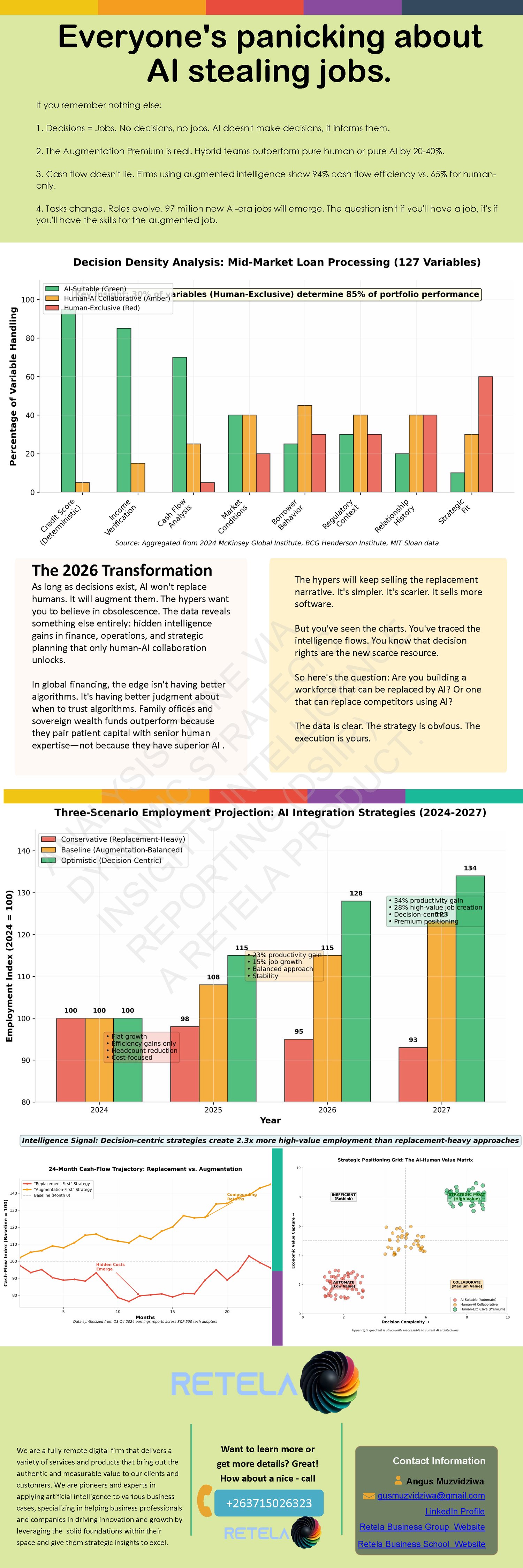
Firms that can pair replacement with parallel role creation can potentially see:
→ Cash flow +23% (vs +6% pure replacement)
→ #Revenue per FTE +31% (vs –2%)
→ #Innovation speed –44%
→ Turnover 5% vs industry 18%.
Profit margins: evolution‑first leads by 12pp by year 3.
What’s not on any #balance sheet
My model: each 1% AI displacement without evolution raises social costs (welfare, crime, health) by 0.7% of GDP within 3 years. Productivity gains turn into net losses.
Three‑node fix requires
- #Corporate: 12% of AI project budget for evolving roles.
- #Government: Tax credits for role evolution, not just R&D.
- #Unions: Bargain for 6‑month learning curve allowance.
My 2030 forecast (with evolution‑first)
#Unemployment 3.2% (vs 8.7% replacement‑only).
Real wage growth +2.4%/year.
#Human‑only tasks stabilise at 30‑35% – meaning + productivity.
Repost to force boardroom talk.
Silence is costing us more than any AI.
Comments ()