
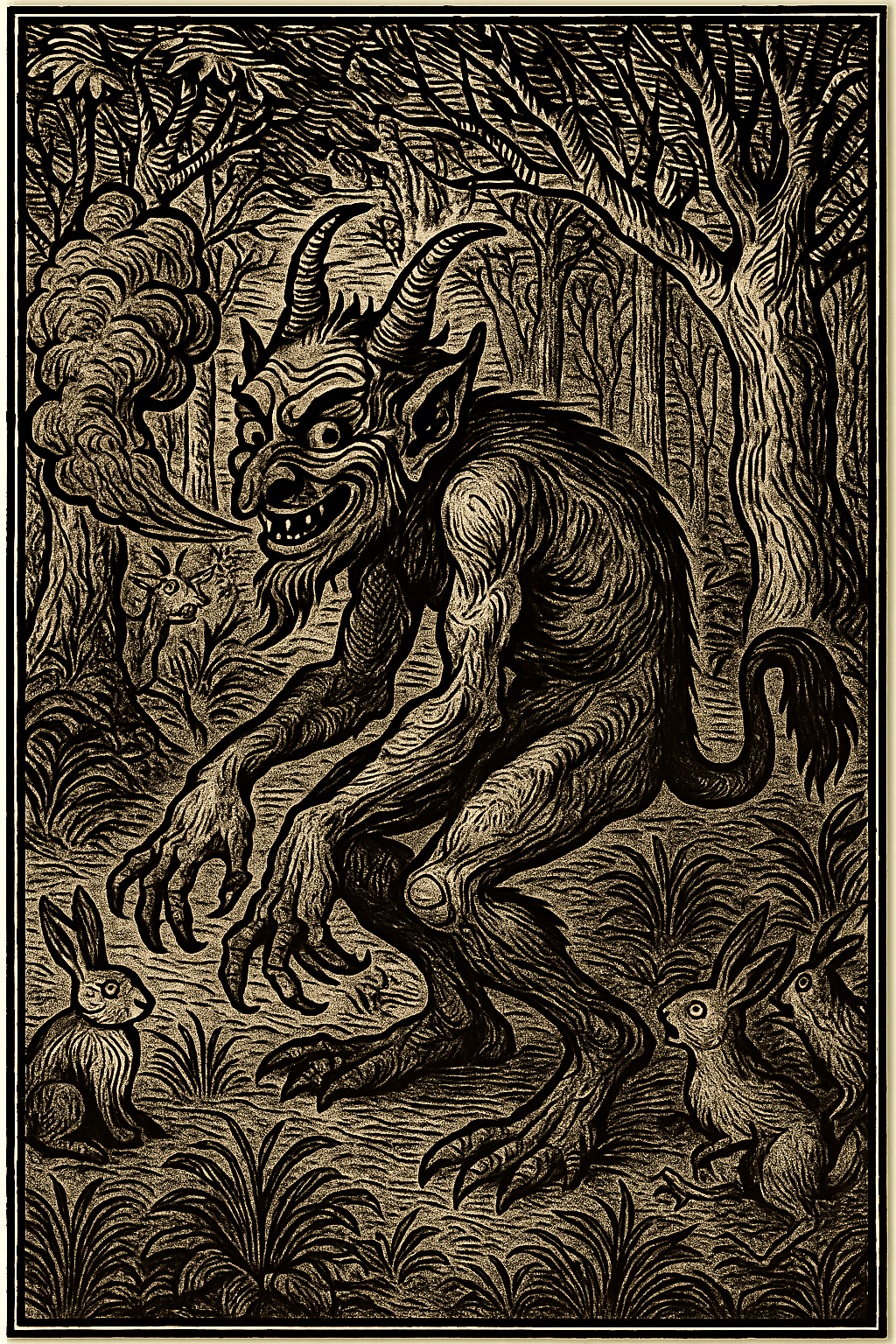
The figure of the Devil has evolved from a monolithic personification of evil into a multifaceted collection of archetypes. In contemporary occult discourse, these aspects serve as catalysts for liberation, transgression, and the reclamation of hidden power.
Below is an examination of these archetypes and how they bridge the gap between theological history, folk magic, and personal gnosis.
1. The Promethean Lucifer: The Divine Liberator
This interpretation positions the Devil as the "Light-Bringer," a figure of cosmic rebellion against a perceived demiurgic tyranny. Drawing parallels to figures like Azazel and Semyazah from the Book of Enoch, this Devil acts as a "Bodhisattva of Darkness." His descent into the material world is framed as an act of love, seeking the intellectual and spiritual liberation of humanity.
- Key Themes: Rebellion, Cupiditas (yearning), and the quest for Gnosis.
2. The Phallic Devil: Transgression and Fertility
Rooted in "Phallocentric Satanism," this archetype emphasizes the Devil as an icon of liberated queer sexuality and untamed masculinity. Often appearing as a Satyr, he occupies a liminal space, bridging the divide between beast and man. By rejecting heteronormative social conventions, he acts as an apotropaic figure of fertility, linked to the raw potency of the body and the abundance of the earth.
- Key Themes: Liminality, Bacchic rites, and the reclamation of the erotic.
3. The Devil of the Green: The Chthonic Poisoner
As established in works like Liber Falxifer and Viridarium Umbris, this interpretation moves toward a primal, ecological realization of the Devil. He is the master of the Pharmakon—the herb, the root, and the venom—acting as the spiritual potency behind plants, earthquakes, and rot. He represents the cyclical movement of life, death, and decay, linking him to the "World Serpent" and ancient chthonic deities like Dis Pater, Priapus, and Pluto.
- Key Themes: Botany, toxicity, environmental entropy, and chthonic power.
The Devil and the King/Queen of Elphame: The Otherworld Sovereign
Emerging from the folklore of Lowland Scotland, the distinction between the "Prince of Darkness" and the "King/Queen of Elphame" is often collapsed in the records of the witch trials.
- The Unholy Consort: In judicial confessions, the Devil is identified as the "goodman" (husband) to the Queen of Elphame. In this tradition, he acts as the masculine counterpart to the Queen's sovereign power over the Good Neighbors.
- The Wild Hunt: He serves as the leader of the spectral procession—the Wild Hunt—bridging the gap between the living and the dead. In this context, he is the administrator of the "teind to Hell," the tithe of spirits that sustains the Otherworld.
- The Guid Man's Croft: This links him directly to land fertility; the practice of leaving ground unploughed as an offering acknowledges his power over the harvest and the hidden wild.
The Trickster: Catalyst of Transformation
Folkloric in nature, the Trickster Devil serves as an agent of chaos who tests the aspirant. Through riddles, pacts, and games, he forces the individual to evolve. He represents the crossing of boundaries and the mastery of worldly skills, demanding "decisive action" and strategy from the initiate, linking him to the wild roar of Pan and the cunning of Mercury.
- Key Themes: Strategy, obsession, linguistic dexterity, and mental alchemy.
The Prince of the World: Lord of Karma and Fate
In this light, the Devil is the executor of natural law. Whether viewed as an extension of divine severity (as in the Book of Job) or the legitimate ruler of the material plane, he is the administrator of cause and effect. He is the stern teacher who ensures that actions have consequences, governing the spheres of limitation and time.
- Key Themes: Theodicy, Saturnian discipline, and the regulation of worldly existence.
The Avenger of Wickedness: Diabolical Justice
Bridging the gap between high demonology and folk magic, this aspect casts the Devil as a pragmatic enforcer of justice. As noted in the Black Books of Elverum, Daimonic spirits can be invoked to restore balance—recovering stolen goods or punishing those who have caused harm. He functions as an active agent of the magician's will, linked to the spheres of Mars and the shedding of blood to restore order.
- Key Themes: Retributive justice, folk-magical petition, and the exercise of power.
Comments ()