

School administrators, special education teachers, school psychologists and related service providers spend years learning special education law and procedures. Many participate in dozens—or even hundreds—of Individualized Education Program (IEP) and Committee on Special Education (CSE) meetings throughout their careers.
Parents?
Every year, thousands of parents walk into their first IEP meeting with little understanding of the special education process. They're expected to understand evaluations, educational terminology, procedural safeguards, service recommendations and individualized goals while making decisions that can shape their child's education for years to come.
That imbalance can leave parents feeling overwhelmed—not because they lack commitment, but because they're entering a process that school professionals navigate every day.
Research suggests that preparation can make a measurable difference through workbooks and toolkits.
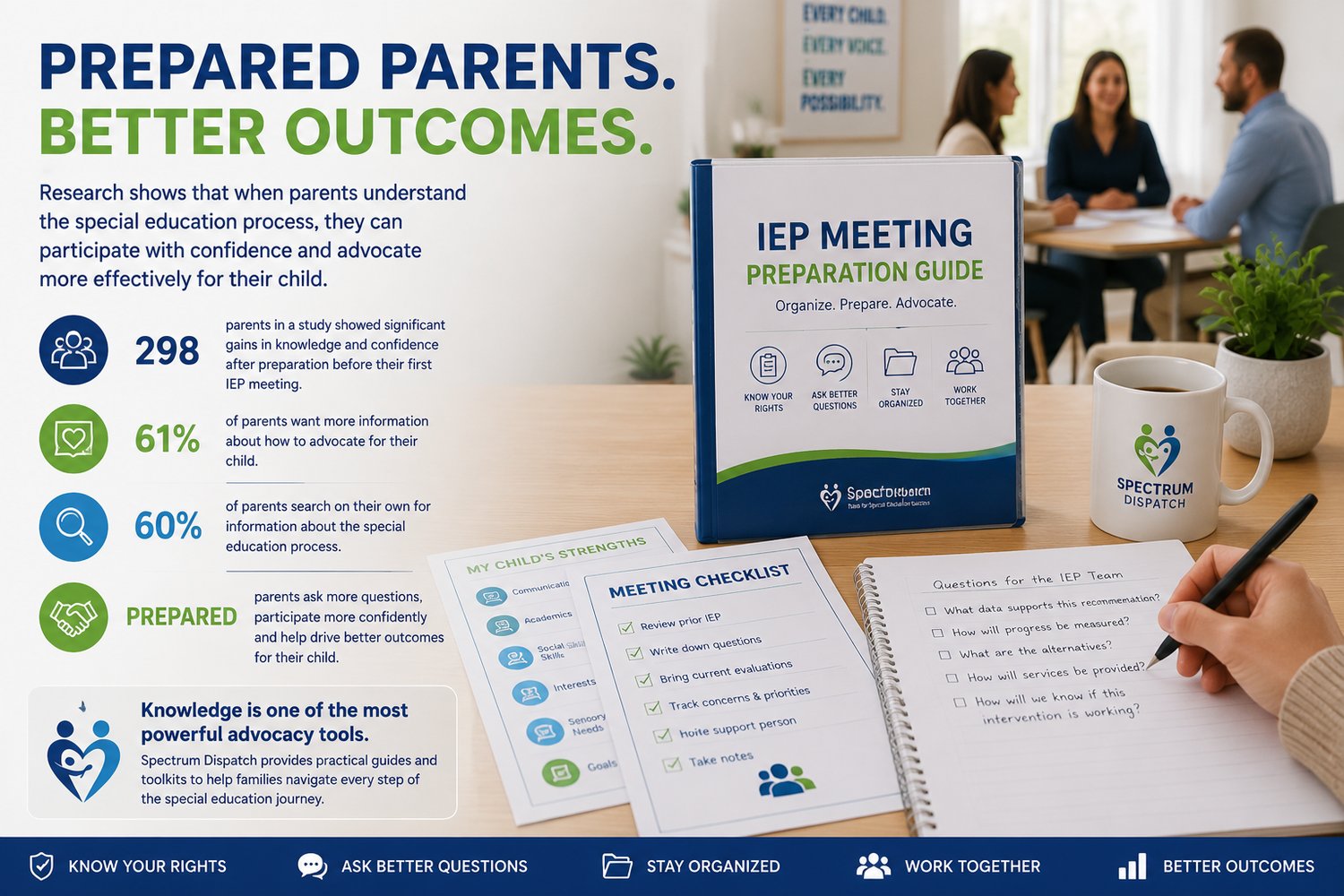
A study involving 298 parents found that families who received structured preparation, with either a workbook or toolkit, before their child's first IEP meeting demonstrated significant gains in both their understanding of the process and their confidence participating in educational decision-making. Researchers concluded that parents benefited substantially from receiving information and guidance before entering the meeting.
The findings reinforce a challenge many families describe: while parents are legally recognized as equal members of the IEP team under the Individuals with Disabilities Education Act (IDEA), they often do not feel equally prepared to participate alongside educators and specialists.
Preparation is about far more than understanding paperwork.
Parents who understand the process are often better equipped to ask meaningful questions, interpret evaluation reports, clarify recommendations and actively participate in decisions about services and supports. Instead of simply listening to the discussion, they become active contributors to it.
Research also suggests many parents recognize they need additional information.
In a study of 133 parents of students with disabilities, nearly 61% said they wanted a toolkit about how to advocate effectively for their child. More than 61% also wanted a better understanding of instruction in the general education classroom, while more than half wanted additional information about how special education services are delivered.
The same research found that although schools often provide information about services and legal rights, parents were less likely to receive guidance on advocacy strategies, resolving disagreements or understanding placement options.
Researchers also found that many families piece together their understanding of special education through conversations with teachers, other parents and independent research rather than receiving one comprehensive roadmap to the process through a workbook.
That may explain why parent guides, planning workbooks and meeting toolkits have become increasingly valuable.
These resources do not replace attorneys, advocates or school professionals. Instead, they help families organize records, understand terminology, prepare questions and enter meetings with greater confidence.
Even something as simple as arriving with a written list of questions can change the tone of a meeting.
Rather than asking, "What do you think is best?" a prepared parent may ask:
- What data supports this recommendation?
- How will progress be measured?
- What alternatives were considered?
- How will we know if this intervention is working?
Those questions often lead to more collaborative discussions and a clearer understanding of how educational decisions are being made.
The importance of family engagement extends beyond individual meetings.
Research consistently associates meaningful parent engagement with stronger family-school partnerships, improved communication and better educational outcomes for students with disabilities. When parents understand the process and feel confident participating, collaboration between families and school teams often becomes more productive.
Recognizing this need, the federal government funds Parent Training and Information Centers in every state to help families understand IDEA, navigate special education and work effectively with schools. One of the primary goals of these centers is to increase parents' knowledge of their legal rights while improving their ability to collaborate with educators and service providers.
The message across the research is remarkably consistent.
Parents are not expected to become attorneys or special education experts overnight.
But they do benefit from understanding the process before they walk into the room.
At Spectrum Dispatch, that's one of the reasons we've begun developing practical guides and planning toolkits for families navigating special education. Whether preparing for a child's first IEP meeting, organizing documents before a CSE review or planning for major school transitions, our goal is simple: to help parents participate with greater confidence.
A Parent Guide Can Help You:
- Understand the IEP process
- Organize evaluations
- Prepare questions
- Track goals
- Understand special education terminology
- Participate confidently in meetings
Because while educators may bring years of professional experience to the table, parents bring something equally important—an understanding of their child that no one else can replace.
When preparation is combined with that lived experience, parents are better equipped to ask questions, make informed decisions and become active partners in building an educational program that helps their child succeed.