
5 Powerful Ways to Calm a Busy Mind and Discover Inner Peace
Introduction
In today's fast-paced world, it's easy to become trapped in a cycle of constant thinking. Worries about the future, regrets from the past, endless to-do lists, and internal conversations can create a level of mental noise that feels impossible to escape. While the mind is one of our greatest assets, it can also become a source of stress when left unchecked.
Finding peace doesn't mean eliminating every thought or achieving a perfectly silent mind. Instead, it means learning how to create space between yourself and your thoughts, allowing calm, clarity, and balance to emerge. The good news is that even small daily habits can make a significant difference.
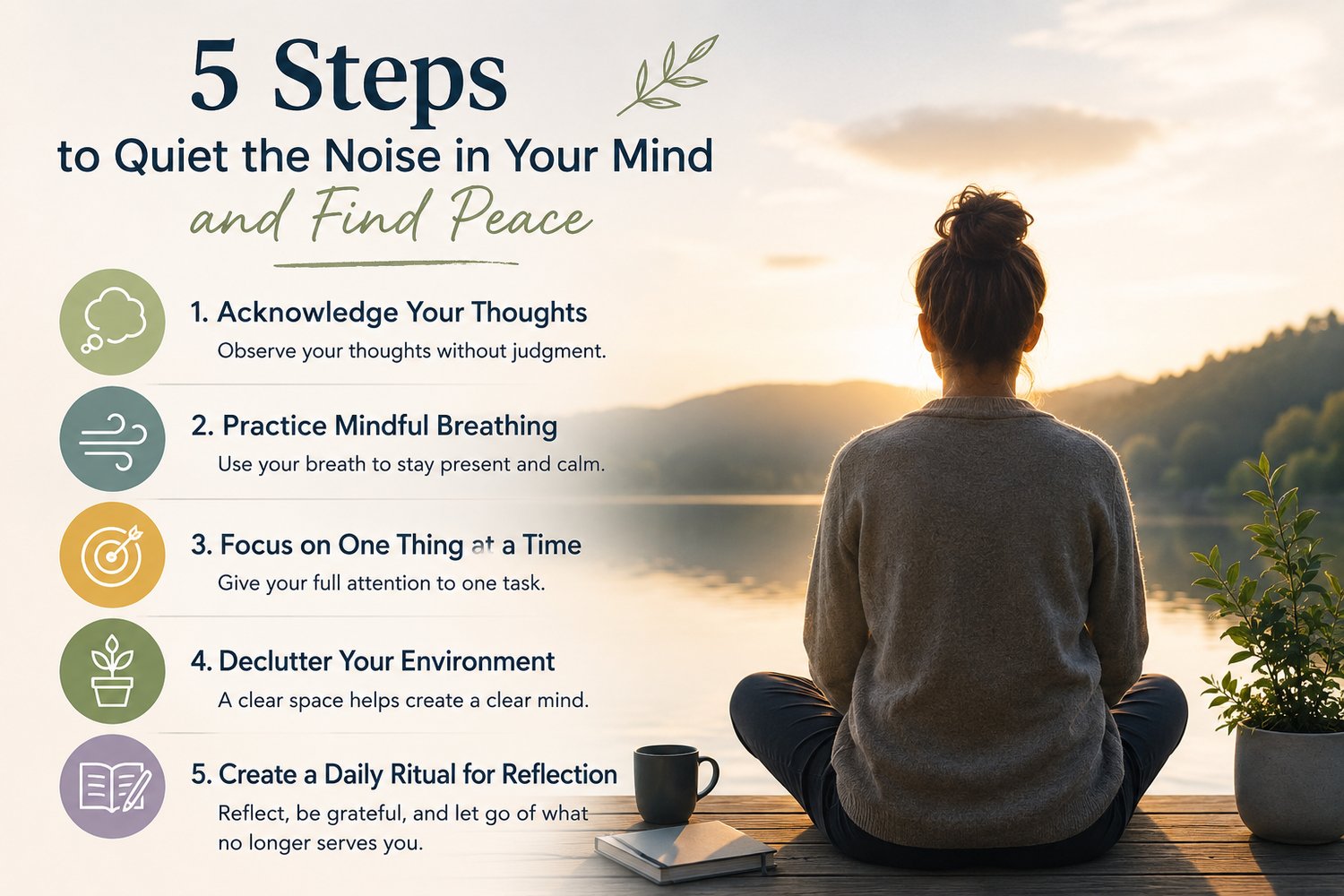
Here are five practical steps that can help quiet mental chatter and bring more peace into your life.
1. Become an Observer of Your Thoughts
Why It Works
Many people try to push away unwanted thoughts, but this often has the opposite effect. The more we resist certain thoughts, the more attention we give them. Learning to observe your thoughts without judgment allows you to regain control and create emotional distance from them.
How to Practice
Find a quiet place and sit comfortably for a few minutes. As thoughts arise, simply notice them without labeling them as good or bad. Imagine each thought floating past like a cloud in the sky. There's no need to chase it or fight it—just let it pass.
For example, if you're anxious about an upcoming presentation, acknowledge the concern and remind yourself that worrying about it repeatedly won't change the outcome.
Try This Today
Spend five minutes simply observing your thoughts. Notice any recurring themes or concerns that appear throughout the day.
2. Use Mindful Breathing to Ground Yourself
Why It Works
Your breath is one of the most powerful tools for calming the mind. Slow, intentional breathing signals your nervous system to relax, helping reduce stress and bring your attention back to the present moment.
How to Practice
Sit comfortably and take a slow breath in for four seconds. Hold your breath for four seconds, then exhale slowly for four seconds. Continue this pattern for several minutes while focusing entirely on your breathing.
Whenever your mind wanders, gently guide your attention back to your breath.
For example, during a stressful workday, taking a few deep breaths can quickly help restore clarity and reduce feelings of overwhelm.
Try This Today
Set aside five minutes to practice mindful breathing and notice how your mental state changes afterward.
3. Focus on One Task at a Time
Why It Works
Modern life encourages multitasking, but constantly switching between tasks can overload the brain and increase mental clutter. Concentrating on one activity at a time improves focus, productivity, and overall peace of mind.
How to Practice
Choose one task and give it your complete attention. Turn off unnecessary notifications, close unrelated browser tabs, and create an environment that supports concentration.
Whether you're answering emails, writing a report, or cooking dinner, commit fully to the activity in front of you.
Try This Today
Select one important task and dedicate 20 uninterrupted minutes to it. Notice how much more focused and calm you feel.
4. Create Order in Your Physical Space
Why It Works
Your surroundings can have a powerful impact on your mental state. A cluttered environment often contributes to feelings of stress, distraction, and overwhelm. Creating a clean, organized space can promote clarity and a greater sense of control.
How to Practice
Start small. Organize your desk, clear off a countertop, or tidy your bedside table. Focus on removing items that no longer serve a purpose or add value to your life.
A cleaner environment often leads to a calmer mindset and makes it easier to focus on what truly matters.
Try This Today
Spend ten minutes organizing one small area of your home or workspace. Even a minor improvement can create a noticeable sense of relief.
5. Make Time for Daily Reflection
Why It Works
Reflection allows you to process experiences, release emotional tension, and gain perspective on your day. It creates a valuable opportunity to slow down and reconnect with yourself.
How to Practice
At the end of each day, spend a few minutes journaling about your thoughts, experiences, and emotions. You can also write down three things you're grateful for or reflect on one positive moment that stood out.
Some people find that quiet walks, meditation, or simply sitting in silence can be equally effective forms of reflection.
Try This Today
Dedicate ten minutes this evening to reflecting on your day. Consider what went well, what challenged you, and what lessons you can carry forward.
Final Thoughts
A peaceful mind isn't built overnight. It's the result of small, consistent actions that help you manage stress and reconnect with the present moment. By learning to observe your thoughts, practicing mindful breathing, focusing on one task at a time, creating an organized environment, and embracing daily reflection, you can gradually reduce mental noise and cultivate a deeper sense of calm.
Start with just one of these practices today. Over time, you'll discover that peace isn't something you have to find—it's something you can create.