

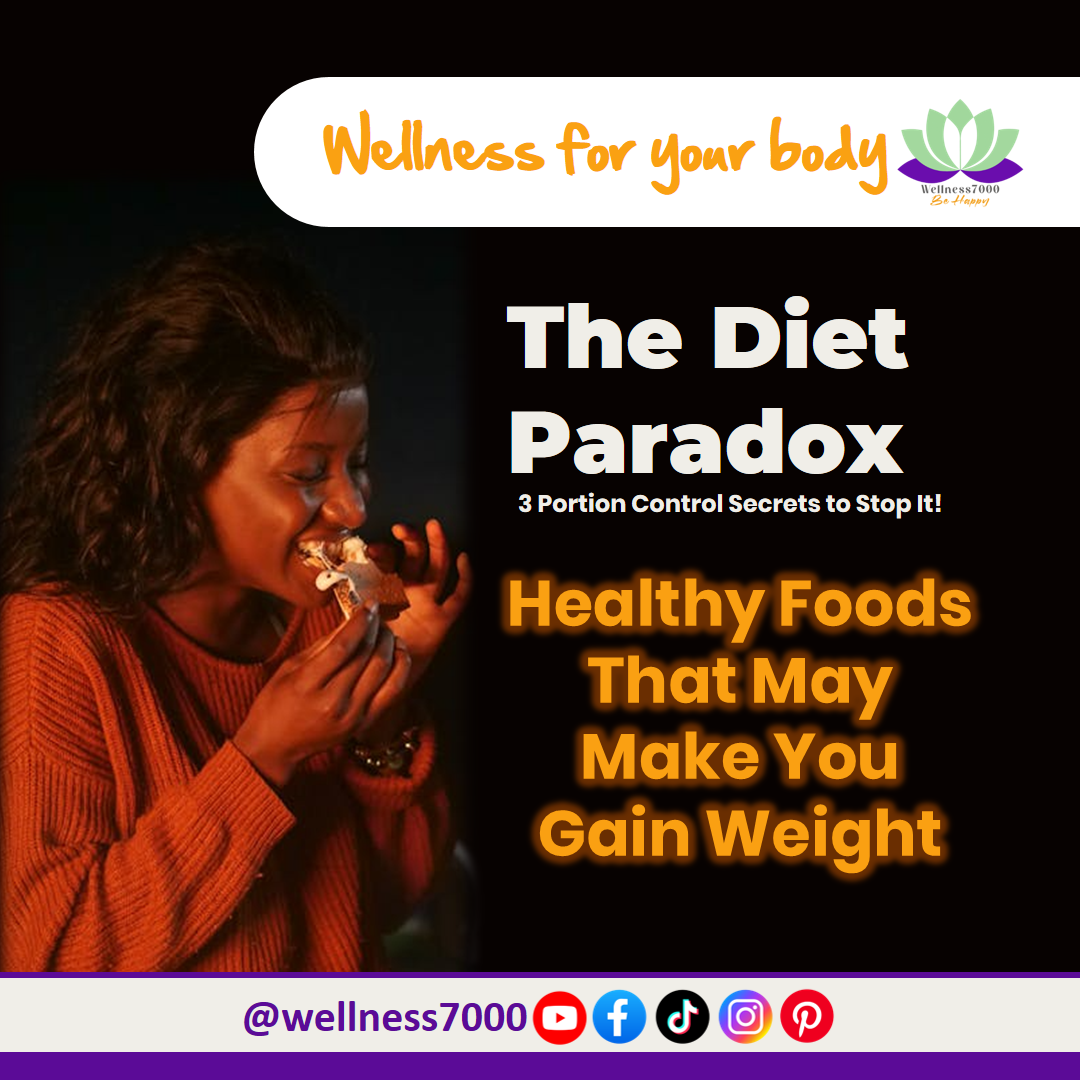
Why Your "Clean" Diet Isn't Working: The Hidden Calorie Bombs You Need to Track
Hello, wellness warriors! If you're diligently adding avocados, nuts, and smoothie bowls to your day, only to wonder why your pants feel tighter, let me give you a massive hug. It's not your fault!
The wellness industry has done a great job selling us on quality, but often fails to mention quantity. The truth is, many of the planet's most nutrient-dense, health-boosting foods are also incredibly calorically dense.
This isn't a food shame session—this is an empowerment session! We are going to shine a spotlight on these healthy calorie bombs, understand why they pose a risk, and learn the simple strategic adjustments needed to keep your body goals on track.
Ready to unlock the secret to eating healthily without overdoing it? Let's dive in!
Section 1: The Caloric Density Culprits
Why "Good Fat" and "Good Fiber" Can Equal Too Much Energy
The foods that often lead to unintentional weight gain are packed with the most valuable nutrients: healthy fats and fiber. The issue is their caloric density—the number of calories packed into a small volume.
- Culprit 1: The Nut and Seed Trap.
- The Issue: Nuts (almonds, walnuts) and seeds (chia, flax) are superstars for Omega-3s, fiber, and protein. But because they are very low in water, they are extremely calorie-dense. A handful of almonds (1/4 cup) is about 160-180 calories. It’s easy to accidentally eat 400-500 calories mindlessly snacking from a container.
- The Adjustment: Pre-portion. Buy single-serving packs or measure out a precise 1-ounce serving (about 23 almonds) into a small dish.
- Culprit 2: The Avocado Factor.
- The Issue: Avocados are rich in monounsaturated fats, great for heart health and satiety. However, a single large avocado can contain well over 300 calories. If you put a whole avocado on your toast and eat a large nut mix, your healthy fat intake quickly becomes high-calorie intake.
- The Adjustment: For standard weight maintenance, stick to 1/4 to 1/3 of a medium avocado per meal.
Section 2: The Liquid and Topping Hazards
Where the "Health Halo" Hides the Calories
This is where the most common overages happen: liquid calories and toppings where the "health halo" blinds us to the energy content.
- Culprit 3: The Smoothie/Juice Overload.
- The Issue: A smoothie bowl can quickly top 700-1000 calories when you add banana, nut butter (high fat/calorie), multiple types of fruit (high sugar/calorie), and a heavy layer of granola (carb/fat/calorie combo). Juices, while nutrient-rich, remove the fiber, making them pure liquid sugar that spikes blood glucose.
- The Adjustment: Use Water/Ice Base. Limit high-sugar fruits (like bananas/mangoes) to one serving, stick to 1 tablespoon of nut butter, and use low-sugar berries. Focus on greens for volume.
- Culprit 4: The Dressing and Oil Mistake.
- The Issue: Salad dressing, olive oil, and coconut oil are healthy fats, but all oils contain about 120 calories per tablespoon. Drenching a salad with an unmeasured oil-and-vinegar mix or using a heavy hand with coconut oil in a recipe can add hundreds of unintended calories.
- The Adjustment: Measure, Don't Pour. Use a tablespoon measure for all oils and dressings. Better yet, swap oil-based dressings for a squeeze of lemon/lime or vinegar for flavor.
Section 3: Your 3 Portion Control Secrets
The Strategy to Eat Healthy Foods Without Gaining
The solution is not to avoid these foods—it's to be mindful and strategic. Implement these three simple rules for sustainable success:
- The "Thumb, Palm, Fist" Rule (Visual Portioning): Stop using guesswork. Use your hand as a visual guide for appropriate, healthy portions:
- Fats: Use your thumb as the visual size for nut butter, avocado, or a serving of oil (about a tablespoon).
- Protein: Use your palm (deck of cards size) as the guide for meat, fish, or tofu.
- Veggies/Fiber: Use your fist for non-starchy vegetables and greens (eat these liberally!).
- The High-Water Swap: Use low-calorie, high-water foods to create volume and satiety around your calorie-dense foods. If you want a lot of granola, mix 1/4 cup of granola with 2 cups of plain Greek yogurt and a cup of low-sugar berries. The volume satisfies your eyes, while the protein and fiber satisfy your gut.
- The "Slow Down and Savor" Policy: Fats take time to register satiety with your brain. When eating nuts, seeds, or avocado, put your fork or the bag down between bites. Chew slowly and consciously register the flavor and texture. This allows your hormones time to signal fullness before you overeat.
Conclusion: Be Strategic, Not Scared
My intelligent readers, never be afraid of healthy food! Knowledge is power. By understanding the caloric density of these nutrient superheroes and implementing smart portion control, you can fully reap the benefits of healthy fats and fiber without sabotaging your weight goals.
Be strategic, be mindful, and be proud of the delicious, nutrient-dense choices you make!
Which of the Calorie Culprits are you going to start measuring first? Share your commitment in the comments!
Comments ()