
Stay Sharp, Stay Happy: The Science-Backed Link Between Continuous Learning and Psychological Well-being
The Curiosity Cure: Why Lifelong Learning is the Ultimate Secret to Mental Resilience and Joy in 2026
The Introduction: The "Cognitive Static" Hook
Hello, vibrant souls! Have you ever felt that "mental fog" or a sense of stagnation, even when your life looks "fine" on paper? In our fast-paced 2026 world, our brains can easily fall into a rut of repetitive loops.
Lifelong learning is the intentional, self-motivated pursuit of knowledge for personal or professional reasons. It’s not about grades; it’s about growth. And the psychological benefits? They are staggering. When you learn something new, you aren't just gaining a skill—you are bulletproofing your mental health.
Section 1: The Neuroplasticity Factor
Keeping the Brain "Elastic"
Your brain is like a muscle: use it or lose it. When we challenge ourselves with new information, we engage in Neuroplasticity. This is the brain's ability to create new neural pathways. We can think of the Cognitive Vitality (CV) of a lifelong learner using this relationship:
CV = (Novelty of Information x Frequency of Engagement) \ Cognitive Stagnation
· The Result: By constantly learning, you build "Cognitive Reserve" This helps delay the onset of age-related decline and keeps your mind agile enough to handle the stresses of modern life.
Section 2: The Emotional "High" of Mastery
Confidence and Competence
There is a specific chemical reward that happens when you finally "get" a difficult concept or master a new chord on the guitar.
· Dopamine Release: Small wins in learning trigger dopamine, the "reward" chemical. This provides a natural boost to your mood and motivation.
· Self-Efficacy: Every time you learn a new skill, your belief in your own ability to handle life's challenges increases. You move from "I can't" to "I haven't learned that yet."
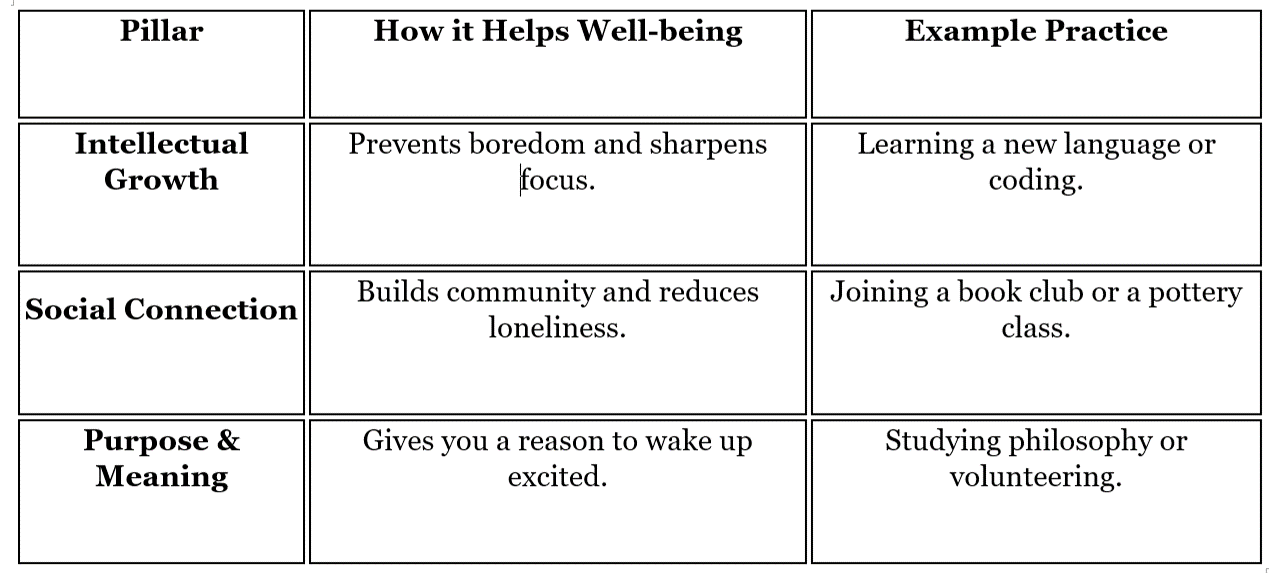
Section 3: The 3 Pillars of Learning for Well-being
Section 4: Starting Your "Learning Protocol"
It’s Easier Than You Think
In 2026, access to knowledge is a superpower. You don't need a degree to be a lifelong learner:
1. The "15-Minute Rule": Dedicate just 15 minutes a day to a topic that fascinates you. Consistency beats intensity.
2. Follow the Spark: Don't learn what you "should"; learn what makes your eyes light up. Curiosity is the best teacher.
3. Vary the Medium: Listen to a podcast during your commute, watch a documentary, or take a hands-on workshop.
Conclusion: Never Stop Growing
My resilient friends, your brain was designed for discovery. When you stop learning, you stop growing—and when you stop growing, your well-being takes a hit.
In 2026, the most successful and happy people aren't the ones who "know it all," but the ones who are willing to "learn it all." Stay curious, stay humble, and keep reaching for that next piece of the puzzle.
What is the one thing you’ve been dying to learn this year? A new language? A craft? A deep dive into history? Let’s share our "Learning Lists" in the comments! 👇
Comments ()