

Fat Loss vs. Muscle Gain: How to Achieve the 'Holy Grail' of Body Transformation without Bulking or Cutting
Can You Lose Weight and Gain Muscle Simultaneously? The Science of Body Recomposition Explained for 2026
The Introduction: The "Thermodynamic" Myth
Hello, vibrant souls! For decades, we were told that the human body is a simple calculator: calories in vs. calories out. To lose weight, you need a deficit. To build muscle, you need a surplus. Therefore, doing both at once was considered a "scientific impossibility."
But here is the 2026 reality: Your body is not a calculator; it’s an adaptive chemical plant. Fat is stored energy. Muscle is functional tissue. Under the right conditions, your body can harvest the energy from your "storage" (fat) to fuel the construction of "infrastructure" (muscle).
Section 1: The Science of "Body Recomp"
Energy Allocation (E)
To build muscle while losing fat, we have to look at how your body handles energy. The law of thermodynamics states:
𝐸𝑖𝑛−𝐸𝑜𝑢𝑡 = ΔStored Energy
However, in Body Recomposition (BR), we aren't just changing the amount of energy; we are changing the partitioning. We want to send a signal to the body that says: "Burn the fat for fuel, but keep the protein for building."
The "Sweet Spot" Candidates:
- The Beginners: Those new to lifting have the highest potential for "newbie gains."
- The "Detrained": Those returning to the gym after a break.
- The High-Body-Fat Group: Those with significant energy stores (fat) to pull from.
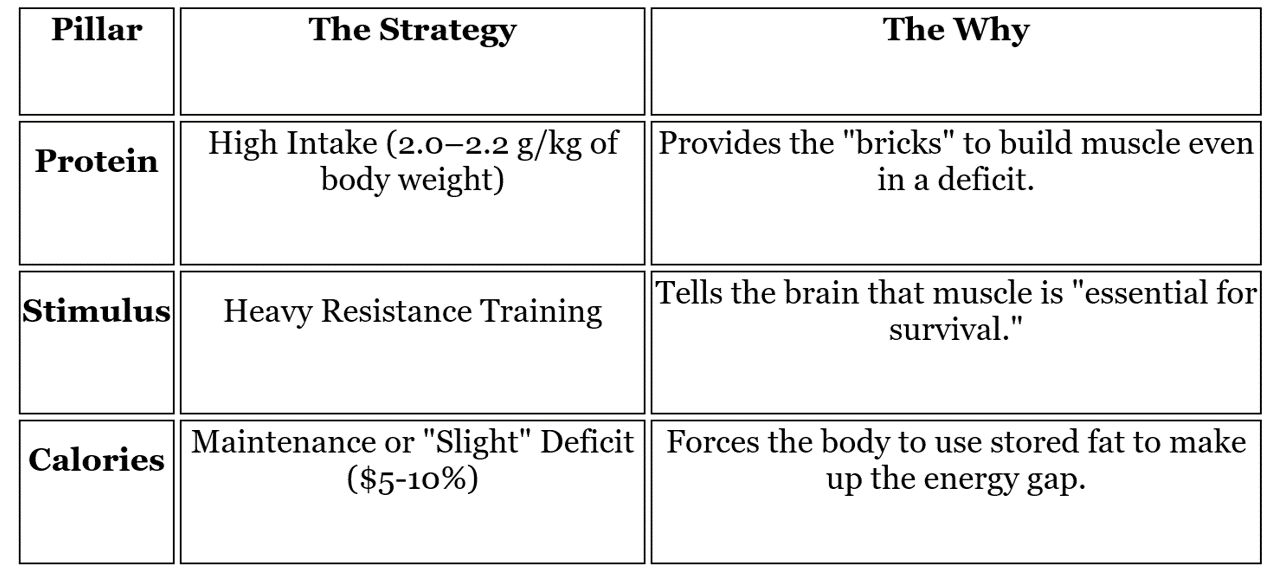
Section 2: The Three Pillars of Recomposition
Section 3: The Protocol for 2026
1. Prioritize Progressive Overload
You cannot "tone" your way to muscle growth. You must challenge your central nervous system. If you aren't lifting heavier or doing more reps than you did last month, your body has no reason to build new tissue.
2. Protein Timing
In 2026, we focus on Muscle Protein Synthesis (MPS). To keep MPS high throughout the day, aim for 30-40 g of high-quality protein every 3-4 hours.
3. Don't Fear the Scale
This is the hardest part for my community! In a "Recomp," the scale might not move for weeks. Why? Because a pound of muscle is much denser (and takes up less space) than a pound of fat.
Pro-Tip: Trust the mirror, your strength gains, and your clothing fit over the digital number on the scale.
Section 4: The Recovery Paradox
Sleep is Your Secret Weapon
Muscle isn't built in the gym; it’s built in bed. High-intensity training creates micro-tears, but Growth Hormone (GH)—the master of repair—is primarily released during deep sleep. If you’re cutting calories and training hard but only sleeping 5 hours, your body will choose to burn muscle for energy instead of fat.
Conclusion: The Long Game
My resilient friends, Body Recomposition is a marathon, not a sprint. It requires more patience than a traditional "cut," but the results are far more sustainable. You aren't just getting smaller; you are getting stronger, tighter, and more metabolically active.
You don't have to choose between being lean and being strong. In 2026, we choose both.
Are you currently trying to lose fat, build muscle, or both? Tell me your current goal in the comments and let's build a strategy together! 👇
Comments ()