
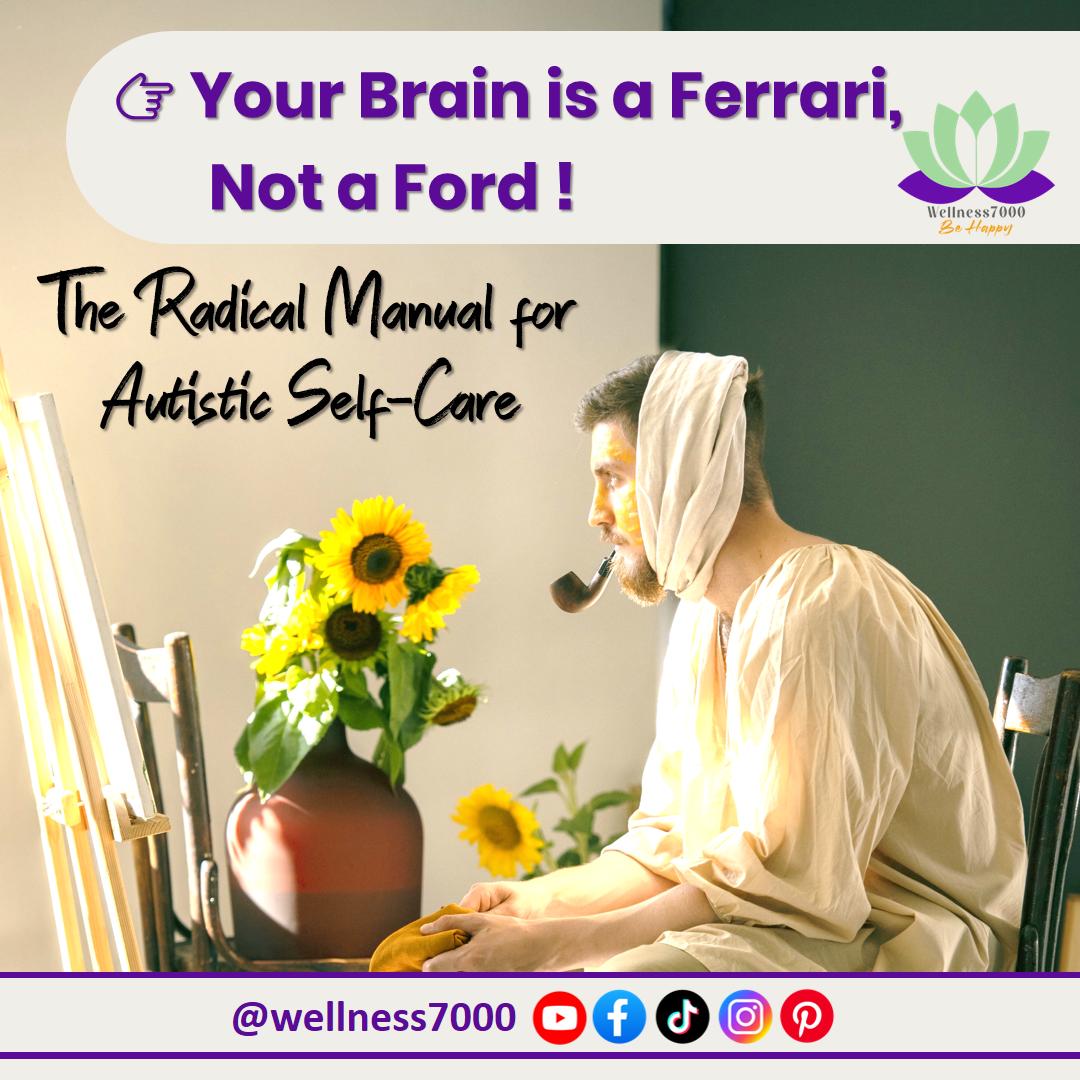
Discover the secret tools to regulate your nervous system and reclaim your energy.
If you are autistic, the standard advice for "self-care" often feels like a joke. A bright, noisy yoga class? A crowded brunch with friends to "reconnect"? For a neurodivergent nervous system that is already processing the world at 110% volume, these aren't relaxing activities. They are minefields leading straight to burnout. Living in a neurotypical world is exhausting. It’s a constant barrage of sensory assaults, unspoken social demands, and the crushing weight of "masking"—pretending to be someone you aren't just to survive the workday.
Real self-care for autistic individuals isn’t a luxury; it is essential nervous system maintenance. It’s about moving from a state of constant overwhelm to a place of authentic well-being.
It’s time to rewrite the rulebook. Here is your guide to the neurodivergent reset.
1. Mastering Your Sensory Shield (Regulation is Everything)
If your brain doesn't filter out background noise, fluorescent lights, or itchy tags, you are constantly running a low-grade fever of anxiety. You cannot think your way out of sensory overload; you have to physically manage it.
The Toolkit:
- The Armour: Never apologize for wearing noise-canceling headphones at the grocery store, sunglasses indoors, or using a weighted blanket to compress your nervous system back into neutral. These are medical necessities, not accessories.
- Stimming is Healing: Society tells us to stop fidgeting. Ignore that. Humming, rocking, shaking your hands, or using fidget toys are how your body processes intense energy. Lean into movement to calm your system.
- Grounding When the World Spins: When dissociation hits, bring yourself back. Name five things you see. Rub a textured fabric between your fingers. Find the floor beneath your feet.
2. The sacred Power of "Special Interests" (SPINs)
Neurotypical culture often dismisses autistic passions as "obsessions." They couldn't be more wrong.
Your special interests—whether it’s quantum physics, mid-century architecture, Pokémon, or historical fashion—are your battery chargers. Engaging deeply with your SPINs is one of the most restorative things you can do. It provides comfort, immense joy, and a positive hyper-focus that drowns out the chaos of the outside world.
The takeaway: Never let anyone make you feel guilty for the time you spend deep-diving into what you love. It’s vital self-expression.
3. The Safety of Routine and Predictability
Executive dysfunction (the brain's ability to plan and execute tasks) is a real struggle. When every minor decision requires immense energy, you run out of spoons fast.
Routines are not boring; they are safety scaffolding. Developing consistent systems for daily tasks—like hygiene, eating, and dressing—reduces decision fatigue. Knowing exactly what comes next creates a profound sense of comfort and control in an unpredictable world.
Practical Tip: Give yourself choices to feel in control (e.g., "Which of these two safe-food shirts will I wear?"), but build in extra buffer time for demanding transitions like leaving the house.
4. Emotional Processing and Finding Your "Neurokin"
Autistic people feel deeply, often intensely. Sometimes that emotion gets stuck. We need outlets that don't rely just on talking.
- Creative Release: Paint, play music, code, or craft. Let the internal world out through your hands without the pressure of verbal communication.
- The Emotion Wheel: Sometimes we experience alexithymia (difficulty identifying emotions). Using visual aids like an emotion wheel or journaling can help track what you are actually feeling.
- Find Your Community: Masking drops when you are with people who "get it." Connecting with other neurodivergent people—online or in person—validates your lived experience in a way nothing else can.
The Final Word: Radical Self-Compassion
The most crucial element of autistic self-care is self-compassion. You are likely carrying years of internalized ableism—feeling like you are "too much" or "broken."
You are not broken. You have a different operating system.
Acknowledge your accomplishments, no matter how small they seem to others. Give yourself permission to need more downtime than your peers. If you need to cry in a safe space to release the pressure valve, do it.
Unmasking is a journey. Be gentle with yourself as you learn who you are when you aren't trying to be everyone else.
Comments ()