
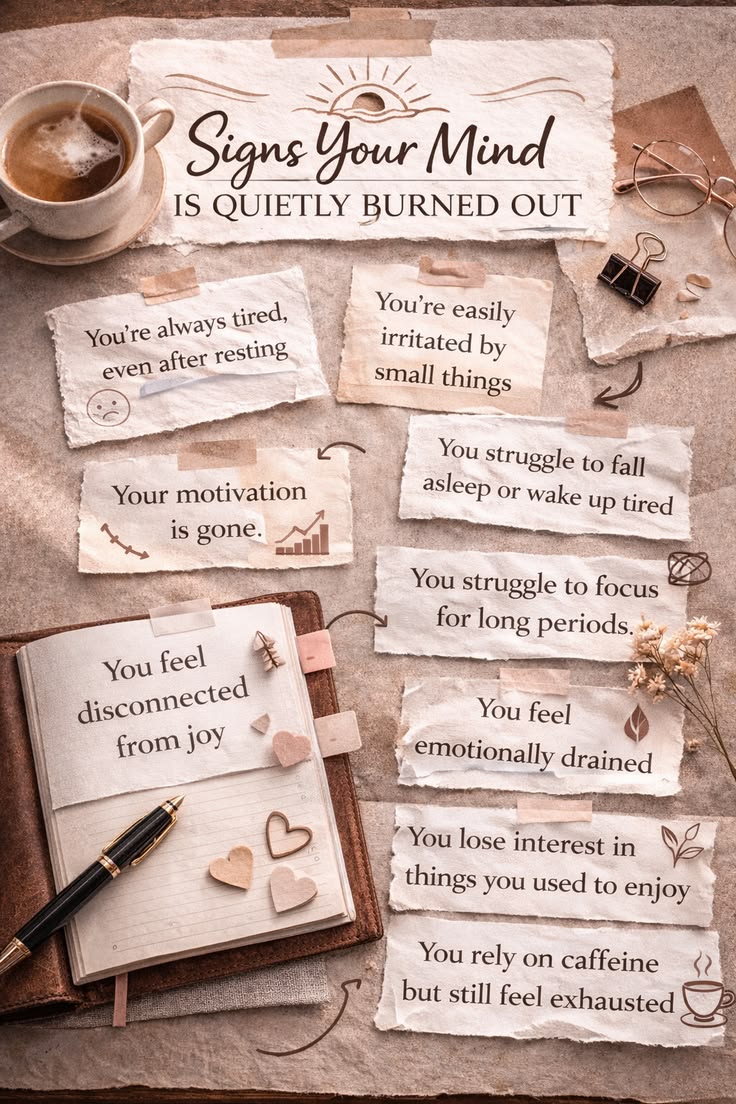
Signs Your Mind Needs Rest & A Mental Reset
How To Recognize Emotional Burnout, Stress & Mental Exhaustion
Sometimes the body keeps going even when the mind is exhausted.
You may continue working, responding to people, scrolling through social media, and managing daily responsibilities — while silently feeling emotionally overwhelmed inside.
Mental exhaustion and emotional burnout are becoming increasingly common in today’s fast-moving world.
When your nervous system stays in constant stress mode for too long, your mind begins asking for rest in subtle ways.
Learning to recognize the signs of emotional burnout is an important step toward protecting your mental wellness and creating a calmer, healthier life.
In this guide, you’ll discover common signs your mind needs rest and simple ways to begin your mental reset journey naturally.
What Is Mental Exhaustion?
Mental exhaustion happens when your mind experiences ongoing stress, emotional overload, anxiety, or overstimulation without enough recovery.
Unlike physical tiredness, mental burnout can affect:
- emotions
- focus
- sleep
- energy levels
- motivation
- emotional balance
Over time, emotional stress can impact both mental and physical wellness.
That is why creating calming routines and self-care habits is essential for emotional healing.
1. You Feel Constantly Overwhelmed
One of the biggest signs your mind needs rest is feeling emotionally overwhelmed by even small tasks.
You may notice:
- simple tasks feel exhausting
- your mind races constantly
- everything feels mentally “too much”
- decision-making feels difficult
When the nervous system becomes overloaded, the brain struggles to process stress efficiently.
2. You Struggle To Relax
Even during quiet moments, your mind may continue overthinking.
You may experience:
- racing thoughts
- anxiety at night
- difficulty being present
- constant worrying
- feeling mentally “on edge”
This often happens when your brain has not had enough emotional rest.
Mindfulness practices and calming exercises can help slow mental overstimulation naturally.
3. You Feel Emotionally Drained
Emotional burnout often creates a feeling of emptiness or emotional fatigue.
You may feel:
- emotionally numb
- disconnected
- irritable
- unmotivated
- mentally tired all the time
Mental exhaustion is not laziness.
It is often a sign your mind has been carrying too much stress for too long.
4. Your Sleep Quality Has Changed
Stress and anxiety directly affect sleep.
Signs your nervous system may need rest include:
- difficulty falling asleep
- waking up exhausted
- overthinking at night
- restless sleep
- feeling tired even after sleeping
Creating calming nighttime routines and reducing screen time can help support emotional recovery and better sleep habits.
5. Small Things Trigger Strong Reactions
When your mind is emotionally exhausted, patience becomes harder.
You may notice:
- irritation over small problems
- emotional sensitivity
- frustration more easily
- crying unexpectedly
- feeling emotionally reactive
These reactions are often signs your nervous system is overwhelmed and needs recovery.
6. You Feel Mentally Foggy
Stress and burnout can affect focus and concentration.
You may struggle with:
- forgetfulness
- lack of clarity
- difficulty focusing
- low motivation
- mental confusion
Mental fog often improves when the brain gets proper emotional rest and less overstimulation.
7. You Have No Energy For Yourself
One major sign of burnout is losing energy for things that once felt comforting or enjoyable.
You may stop:
- journaling
- exercising
- spending time in nature
- practicing self-care
- connecting with yourself emotionally
This is often a sign your mind needs gentleness and recovery instead of pressure.
How To Begin A Mental Reset
Healing does not require dramatic life changes.
Small calming habits can slowly help your nervous system feel safe again.
Simple Ways To Reset Your Mind Naturally
Practice Deep Breathing
Slow breathing calms anxiety and reduces stress naturally.
Reduce Screen Time
Digital overload increases mental exhaustion.
Journal Your Thoughts
Brain dump journaling helps release emotional overwhelm.
Spend Time In Nature
Nature helps calm the nervous system.
Create Calming Routines
Peaceful habits create emotional stability.
Prioritize Rest
Rest supports healing and mental clarity.
Practice Mindfulness
Mindfulness helps reduce overthinking and anxiety.
A Gentle Reminder
You do not need to wait until complete burnout to rest.
Your mind deserves care before it reaches exhaustion.
Slowing down is not weakness.
Protecting your peace is part of emotional wellness.
Final Thoughts
Mental exhaustion is your body and mind asking for gentleness, stillness, and recovery.
The more you ignore stress and overwhelm, the louder your nervous system becomes.
Small mindful habits can help you:
- reduce anxiety
- calm overthinking
- improve emotional wellness
- create healthier routines
- reconnect with yourself
Healing begins when you stop pushing yourself beyond your emotional limits.
Calm Mind Workbook ♡
If you’re looking for calming exercises, mindfulness worksheets, healing prompts, anxiety relief tools, self-care practices, and peaceful routines…
Explore the Calm Mind Workbook — a beautifully designed 45-page printable wellness workbook created to help you reduce stress, calm your mind, and create a more peaceful life.
✨ Instant digital download available now.