

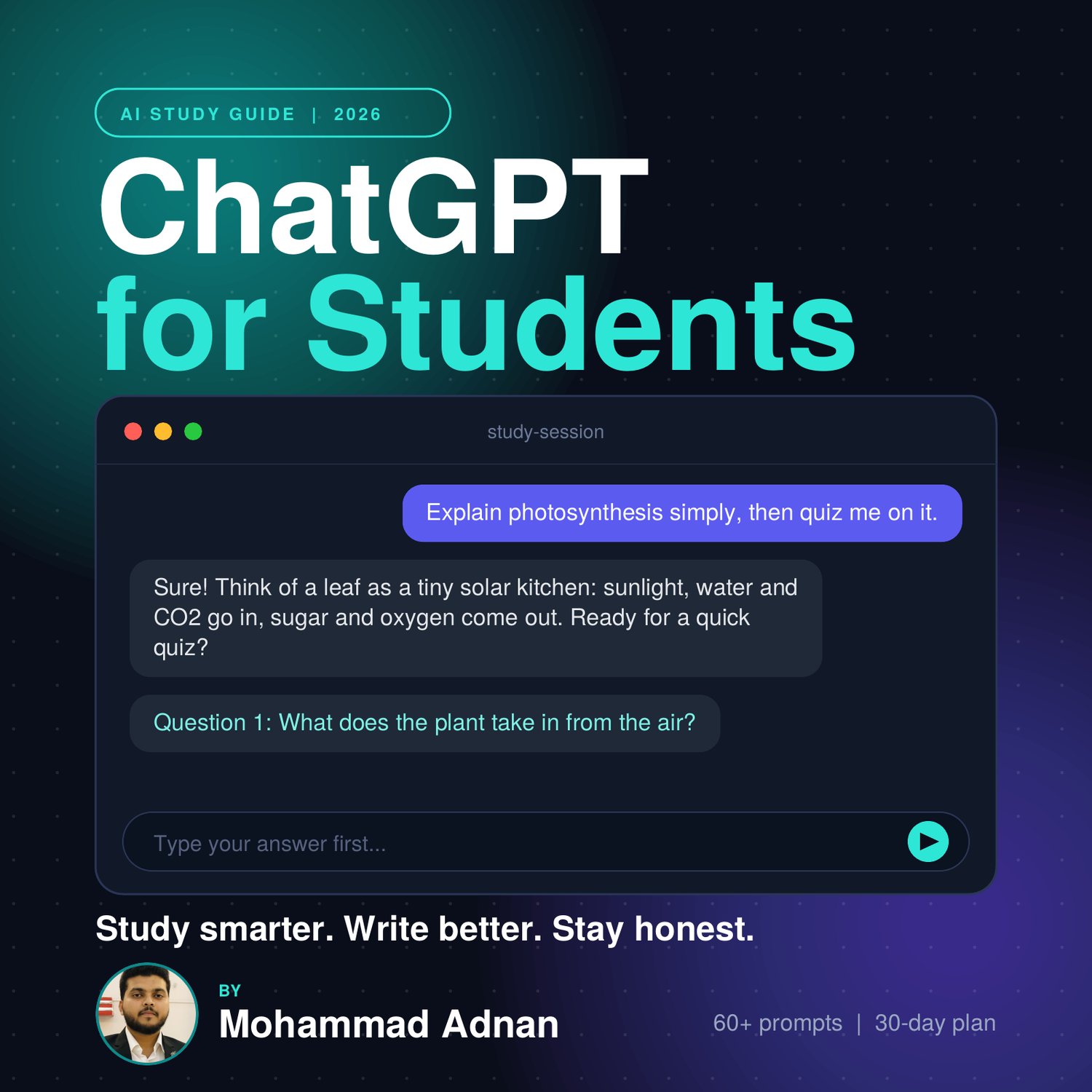
Most students use ChatGPT the same way: paste a question, copy the answer, move on. It saves an hour tonight, but it costs you the learning you're supposed to get. The good news is that the same tool can also make you a much better student, if you change who does the thinking.
Here's the simple rule I follow in my guide: use ChatGPT as a tutor, not a ghostwriter. The AI coaches. You think, solve, and write.
1. Use the traffic-light test
Before using AI on any assignment, ask yourself which color it is:
- Green (learning): asking it to explain a concept, quiz you, critique your outline, or plan your week. These are generally fine.
- Yellow (ask first): brainstorming essay topics, getting help with code, or having your sentences rewritten. Check with your teacher first.
- Red (never): submitting AI-written work as your own, using AI in a closed-book exam, or making up citations.
Rules differ from course to course, so always read your syllabus or simply ask your instructor.
2. Give better prompts with R-C-T-F
A vague prompt gets a vague answer. Include four things:
- R (Role): who should ChatGPT act as?
- C (Context): what is your level, and what material are you working with?
- T (Task): what exactly do you want?
- F (Format): how long, and what rules should it follow?
Compare these two prompts:
Weak: Explain the French Revolution.
Strong: Act as a history tutor for a first-year university student. Explain the main causes of the French Revolution in about 300 words, then give me three questions to check my understanding. Wait for my answers before giving feedback.
Same topic, far more useful result.
3. Let it quiz you
Reading a clear explanation only gives you the feeling of understanding. Testing yourself is what makes it stick. Try this:
Quiz me on [topic] at [level]. Ask one question at a time and wait for my answer. If I'm wrong, give me a hint first instead of the answer. After 10 questions, tell me my weakest areas.
4. Ask for criticism, not praise
Chatbots tend to agree with you. If you ask "Is my essay good?", you'll probably hear yes. Instead ask: "What would a tough grader criticize in this paragraph?" or "Argue against my thesis." That's where the real improvement comes from.
5. Always verify
ChatGPT can sound confident and still be wrong, and it can invent sources that don't exist. Check facts, numbers, and especially citations against your textbook or your library database before you use them.
The bottom line
The goal isn't to use AI more. It's to learn more. Try to solve or write something yourself first, then use ChatGPT to test, question, and improve your work.
Want the full system? My eBook, ChatGPT for Students, has 15 chapters, 60+ ready-to-use prompts, and a 30-day plan to build these habits step by step. Get the eBook here
Comments ()