

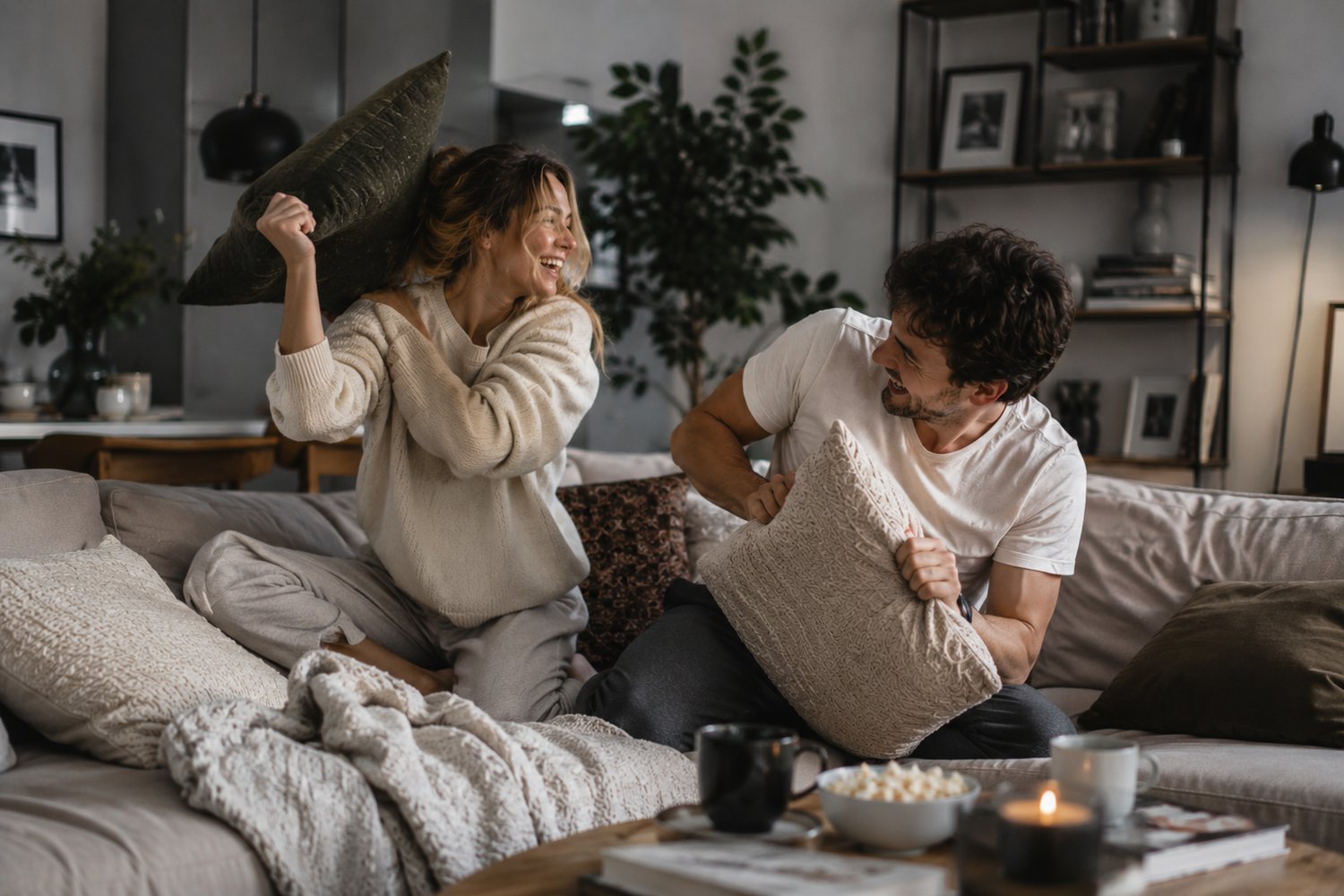
Somewhere along the way, most relationships become serious.
Not in a dramatic way. Nothing goes wrong exactly. It just happens slowly. Life gets busier, responsibilities increase, and conversations start revolving around what needs to be done instead of how it feels to spend time together. At first, it even feels like progress. Like maturity.
But something quietly disappears in that shift.
Playfulness.
Not childishness. Not immaturity. Just the ability to interact without always needing a purpose. To joke, to tease, to explore each other a little without everything being structured or outcome-driven.
In the early stages of a relationship, this comes naturally. People laugh more, they experiment with how they talk, they don’t overthink every interaction. There’s a kind of lightness to it. You’re not trying to “do things right,” you’re just responding to each other.
And then, over time, that changes.
Interactions become more practical. Conversations become more functional. Even time spent together starts to follow a pattern. Nothing is wrong, but everything starts to feel… familiar in a way that doesn’t always feel alive.
What most people don’t realize is that playfulness isn’t just a personality trait. It’s a skill. And like any skill, if you stop using it, it fades.
Playfulness does something very specific in a relationship. It lowers pressure. It reduces overthinking. It makes space for people to show up a little more freely. There’s less need to control how things go, and more room to just respond in the moment.
Without it, relationships can become overly functional. Everything has a reason, a direction, a purpose. Which is useful for life, but not always for connection. When every interaction becomes predictable, there’s very little room left for curiosity.
There’s also something deeper happening here.
Playfulness signals safety.
When someone is willing to be playful, it usually means they feel comfortable enough to step out of rigid roles. They don’t feel like they have to manage the moment perfectly. And that creates a kind of ease between two people that’s hard to fake.
The problem is, most adults don’t lose playfulness because they want to. They lose it because there’s no space for it.
After a long day, it’s easier to sit quietly, scroll, or default to familiar patterns than to initiate something different. Not because people don’t care, but because they’re mentally tired.
That’s why telling someone to “just be more playful” doesn’t really work.
It’s not a switch.
It needs the right kind of space to exist.
Interestingly, this is where a bit of structure can actually help. Not in a rigid way, but in a way that removes the pressure of figuring things out. When there’s a shared context or a small framework, people don’t have to think about how to begin. They can just step into it.
And once that happens, playfulness tends to show up on its own.
In small ways. A different tone. A quick response. A moment of laughter that wasn’t planned. These things seem minor, but they change how a relationship feels.
Another common assumption is that playfulness takes away from depth.
In reality, it often does the opposite.
When people feel relaxed and engaged, they open up more easily. Conversations flow better. Emotions come out more naturally. There’s less pressure, which makes honesty feel safer.
Playfulness and depth are not opposites. They support each other.
Most people already understand that playfulness matters. The difficult part is keeping it alive over time.
It doesn’t require anything dramatic. Just small moments where interaction feels slightly different. Slightly lighter. Slightly less controlled.
Because in the end, playfulness isn’t about what you do.
It’s about how you show up with each other.
And sometimes, that alone is enough to bring a relationship back to life.
Comments ()