

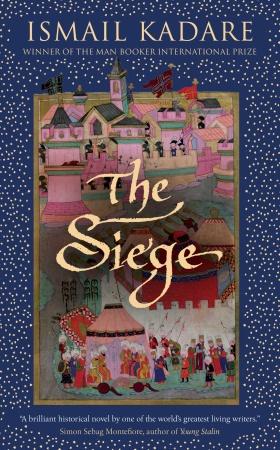
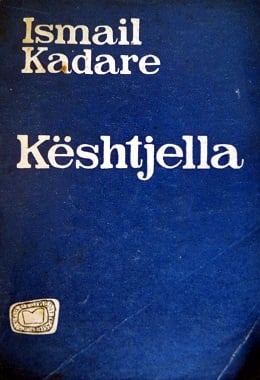
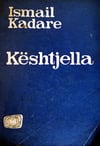
Ismail Kadare - The Siege
Amazing Author, one of my favorites.
Extraordinary Novel.
The Siege is a historical novel by Albanian author Ismail Kadare, first published in 1970 in Tirana as Kështjella (The Castle). It concerns the siege of an unnamed Albanian fortress by troops of the Ottoman Empire during the time of Skanderbeg, loosely based on the historical Siege of Krujë (1450). It was translated into French by Jusuf Vrioni and then from French into English by David Bellos. The novel was partly rewritten by Kadare after he moved from Albania to France in 1990; most of the changes were references to the Christian beliefs of the Albanian garrison, which had been cut from the original version by the communist censors.
Kadare originally intended for the novel to be called Daullet e Shiut ("The Drums of Rain"), but the Albanian publisher changed this to Kështjella ("The Castle"), which was felt to be more heroic and also served to emphasise the role of the Albanian garrison. The original title was revived when the novel was translated for the first time, in 1971, being calqued into French as Les Tambours de la Pluie. However, in Albania it continued to be known as "The Castle", and when it was translated into English for the first time, in 2007, Kadare asked the translator David Bellos to come up with a new title, referring to besiegers and besieged collectively. He alighted upon The Siege, the name by which it has been known ever since.
One summer in the early 1450s, an Ottoman army invades Albania and lays siege to a castle loyal to the charismatic Albanian rebel Skanderbeg. The besieging army vastly outnumbers the beleaguered garrison, and is led by the experienced commander Tursun Pasha, but it is also racked by petty jealousies and rivalries. One of the most profound splits within the Council of War is between the military officers and Islamic mufti, who all favour traditional Turkic methods of war, and its scientific and technical experts, who include the unnamed Quartermaster-General, the gunsmith Saruxha, the physician Sirri Selim and a renegade Christianmilitary architect. Not part of the Council of War, but privy to most of its discussions, is the official campaign chronicler Mevla Çelebi. The majority of the story is told from his point of view, though some chapters instead focus on other members of the Turkish army. Each chapter is followed by a short 'inter-chapter', written in the style of a European mediaeval chronicle, narrating the action from the perspective of the castle garrison.