

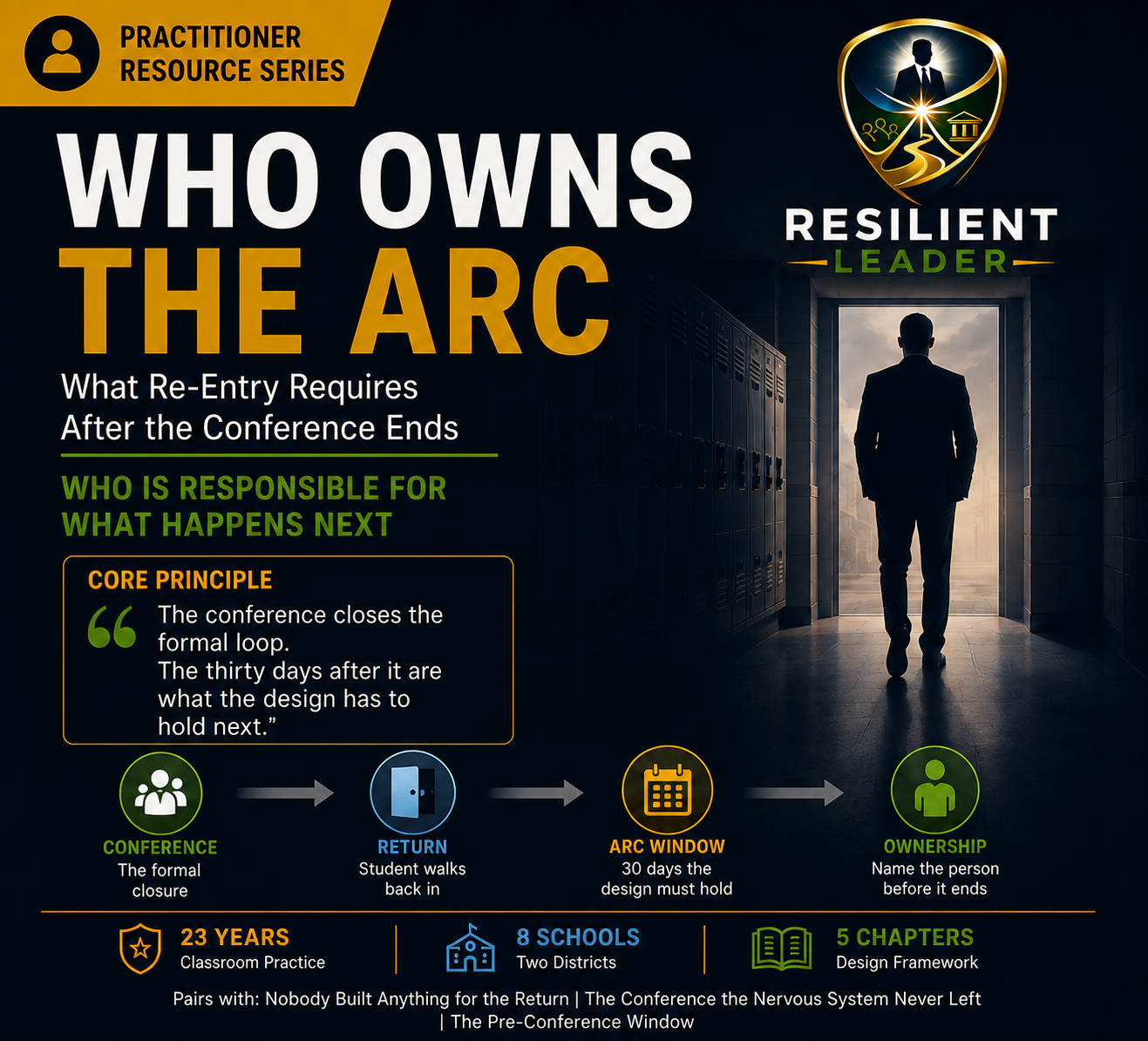









Who Owns the Arc: What Re-Entry Requires After the Conference Ends
The conference only scratches the surface. It closes the paperwork loop, sure, but the real challenge is designing a system robust enough to hold whatever happens over the following thirty days.
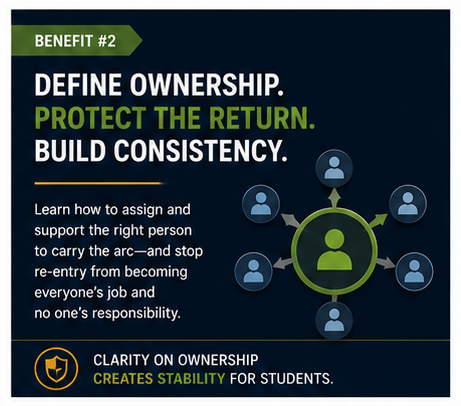
Think about how a standard discipline protocol usually goes: a form gets signed, notes get filed away, and everyone goes over the expectations one more time . But what actually happens the exact second that student steps back into the hallway? The administrator immediately pivots to put out the next building crisis. The counselor slides back into a mountain of backlogged cases. The classroom teacher goes right back to keeping a room of twenty-eight other kids focused. Because there is a complete systemic vacuum where process infrastructure should be, the critical month required to rebuild a damaged relationship is left entirely to chance . Re-entry happens by default, not by design. The result? An ownership gap that continually recycles the same student conflict week after week.
The fallout from this design failure is devastating. Data shows that without tight, consistent tracking, suspended youth are far more likely to repeat a grade or drop out of school entirely. Conversely, when a building implements rigorous post-conference monitoring, repeat infractions drop by a staggering 44% within six months.
Written by a 23-year Title I school administrator and classroom teacher, this guide gives you a concrete, 5-step blueprint to assign named, explicit ownership of that post-conference window before the meeting even breaks. Stop settling for quick, performative apologies that fall apart by Friday morning. It is time to design behavioral repair that actually sticks.
Who This Is For
- School Counselors drowning under intense caseloads who need an explicit process for relationship repair instead of another theoretical training session.
- Deans of Students and Assistant Principals who are exhausted from running the exact same behavioral meetings for the same handful of kids every six weeks.
- Classroom Teachers absorbing the heavy biological and emotional toll of managing post-conflict student dynamics with zero systemic backing.
What’s Inside
- 5-Chapter Design Framework: A deep operational breakdown mapping the hidden emotional labor of student re-entry and what a real return demands from staff.
- The 3 Core Re-Entry Requirements: Tactical guides on establishing continuity of adult posture, mapping out a clean reset pathway, and locking down definitive arc ownership.
- The 4 Architecture Decisions Blueprint: Clear guidance on four non-negotiable details you must finalize before a conference ends (Name the Owner, Define the Reset Sequence, Set the Check-In Point, and Define the Flag) .
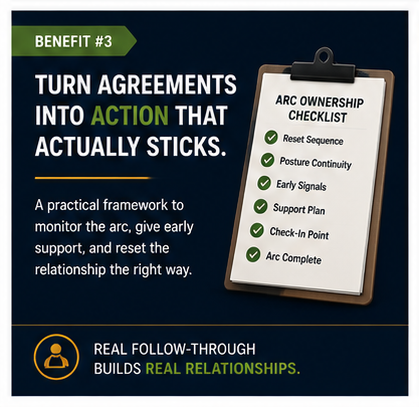
- The Arc Ownership Checklist: A plug-and-play reference sheet to quickly evaluate whether your team is closing the behavioral arc or just checking off a compliance box.
- Arc Stage Reference Table: A visual matrix outlining each chronological milestone of the 30-day window alongside the exact diagnostic questions leadership needs to ask.
What It Pairs With
To engineer a bulletproof disciplinary and restorative ecosystem in your building, this text links up directly as part of a comprehensive re-entry trilogy:
- Nobody Built Anything for the Return: For mastering the five specific environmental adjustments and structural moves required before a suspended student even steps back into the room.
- The Conference the Nervous System Never Left: For building necessary processing loops and recovery infrastructure to support educators navigating high-stakes, high-activation conflict.
- The Pre-Conference Window: For establishing pattern-based behavioral evidence and structural documentation parameters before an accountability meeting begins.