










Everything Is for Sale: 72 Ways to Turn What Your Business Already Has into Cash + + 45-Minute Model-Fit Call with the Author
Most owners sell one thing, one way, to one kind of customer, and then work harder when the margin gets thin. The printing company's real asset was a list of four hundred marketing managers who trusted it. The logistics company's real asset was its empty return legs. The restaurant's real asset was a dining room that was dark from two until five every afternoon. None of those things appeared on a price list, and all of them turned out to be for sale.
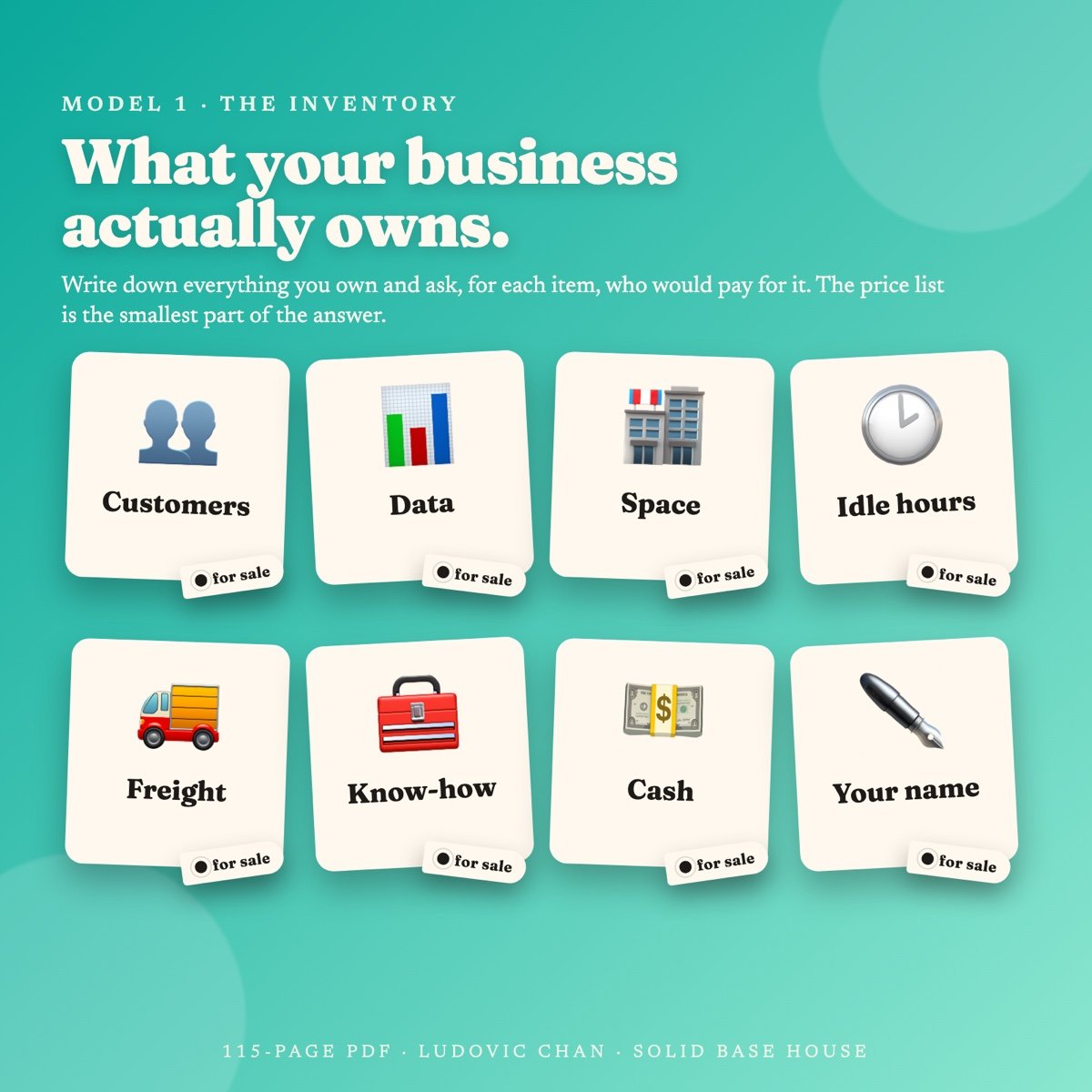
A business is not a product. It is a bundle of assets: customers, data, space, time, relationships, know-how, capacity, cash, reputation, and the attention of the people who already buy from you. Each of those can be charged for, rented, licensed, traded, bundled, or financed.
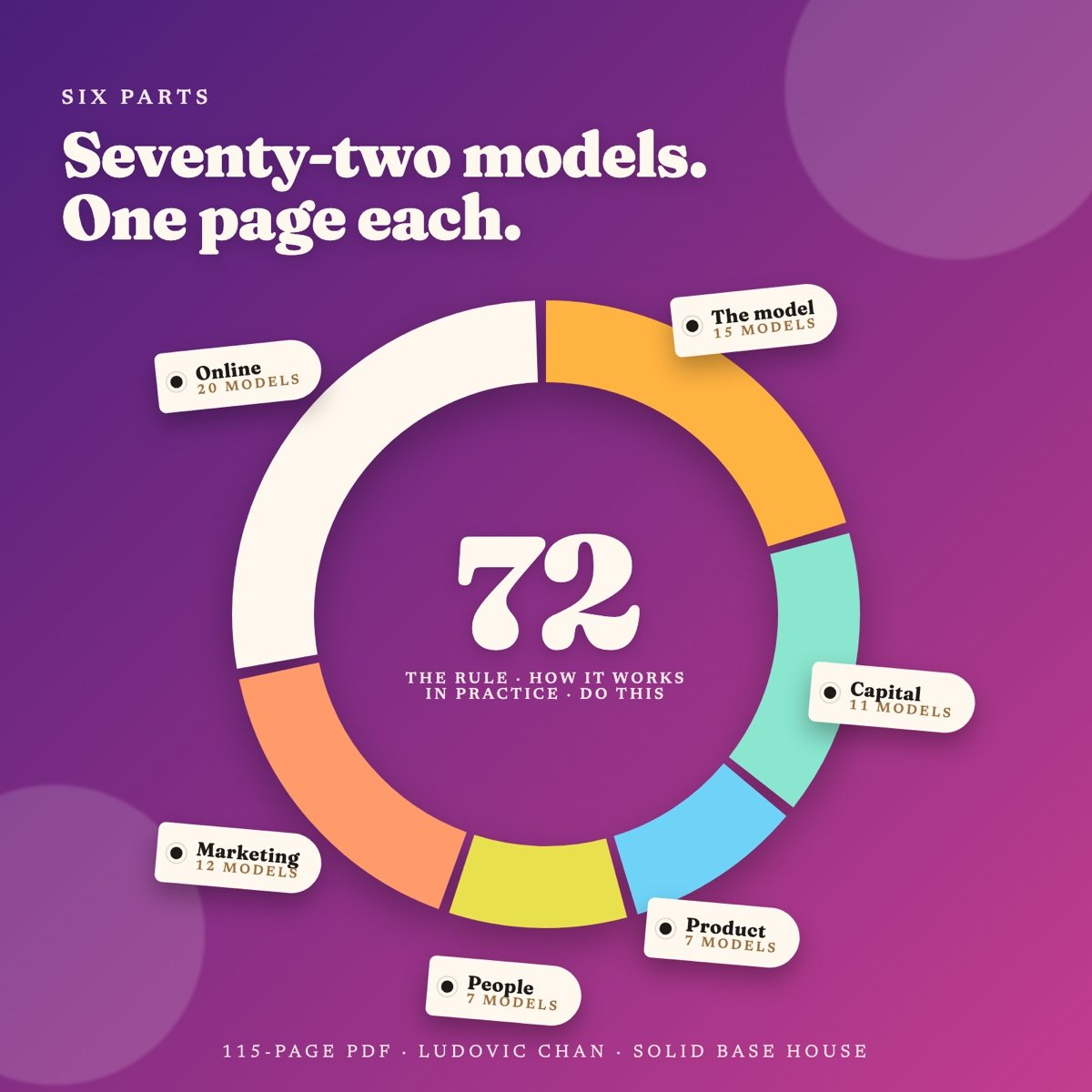
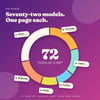
Everything Is for Sale is a 115-page playbook of the seventy-two ways to do it, written by an owner who has built, bought and sold more than a dozen companies and advised a few hundred more. Every model gets one page: the rule in a sentence, how the mechanism works, the well-known company that runs it at scale, a client who ran it in one town, where it goes wrong, and three or four things to do this month. The client stories are composites with the names, places and figures changed. The mechanics are exactly what happened.
You are not meant to use all seventy-two. You are meant to read the list once, fast, notice the five or six that describe money you are already leaving on the table, and build one.
INSIDE, YOU'LL LEARN
• Stay light: put the barrier in the product or the service, never in the assets, and let partners carry the balance sheet (Model 1)
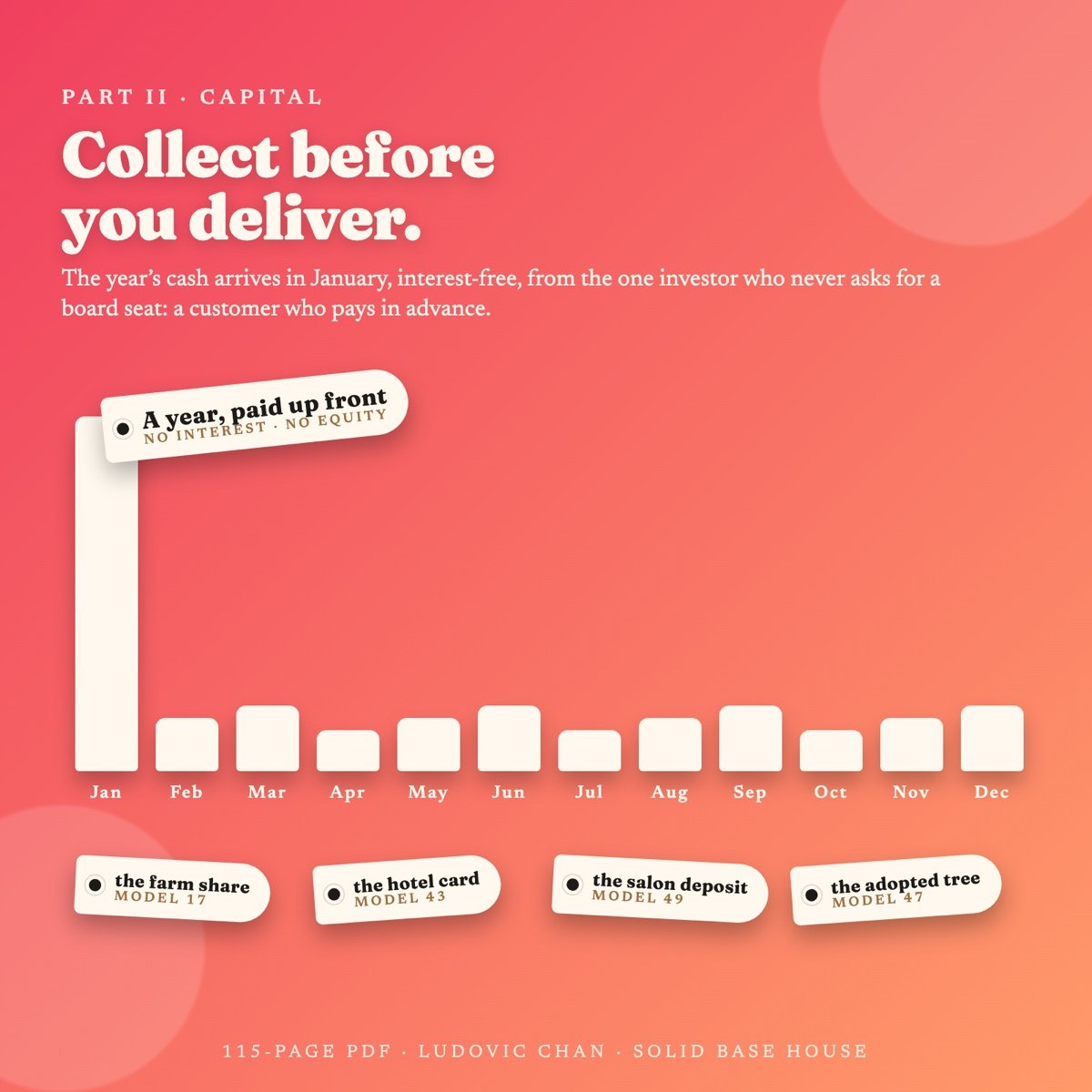
• Collect before you deliver: farm shares, prepaid plans, memberships and deposits that bring the year's cash in January (Models 17, 22, 43, 49)
• Rent, don't sell: the machine that becomes a meter, from jet engines to espresso machines (Model 11)
• Buy competitors with other people's money: seller notes, earn-outs and backed loans, and what to do with thirty of something (Model 19)
• Build it to sell: why value is a multiple, and the eighteen months that doubled a cleaning company's price (Model 20)
• Make it scarce, move it upmarket, build the hero product: the three decisions that set the margin on the same product (Models 28, 32, 33)
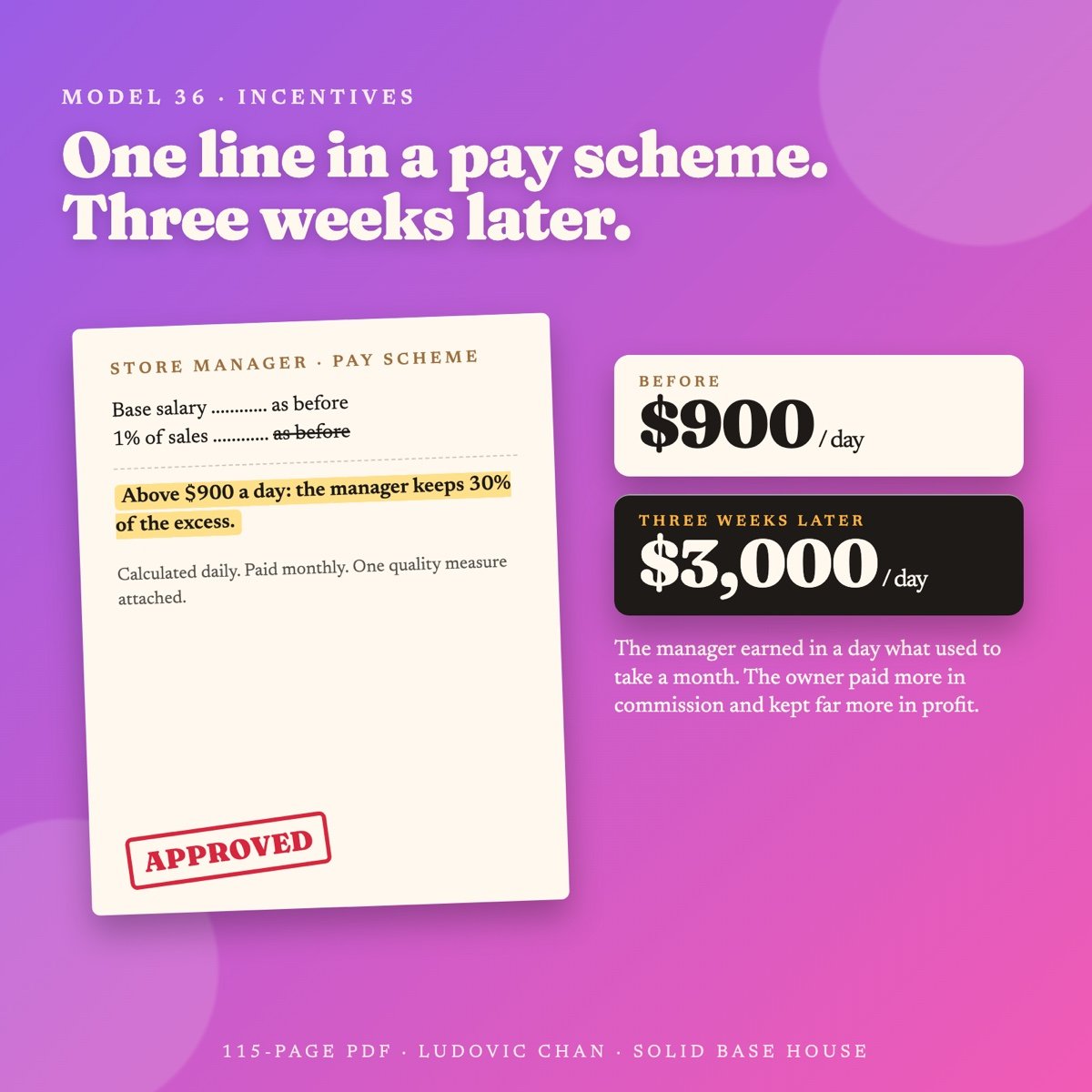
• Pay for the behaviour you want: the one line in a pay scheme that took a store from $900 a day to $3,000 (Model 36)
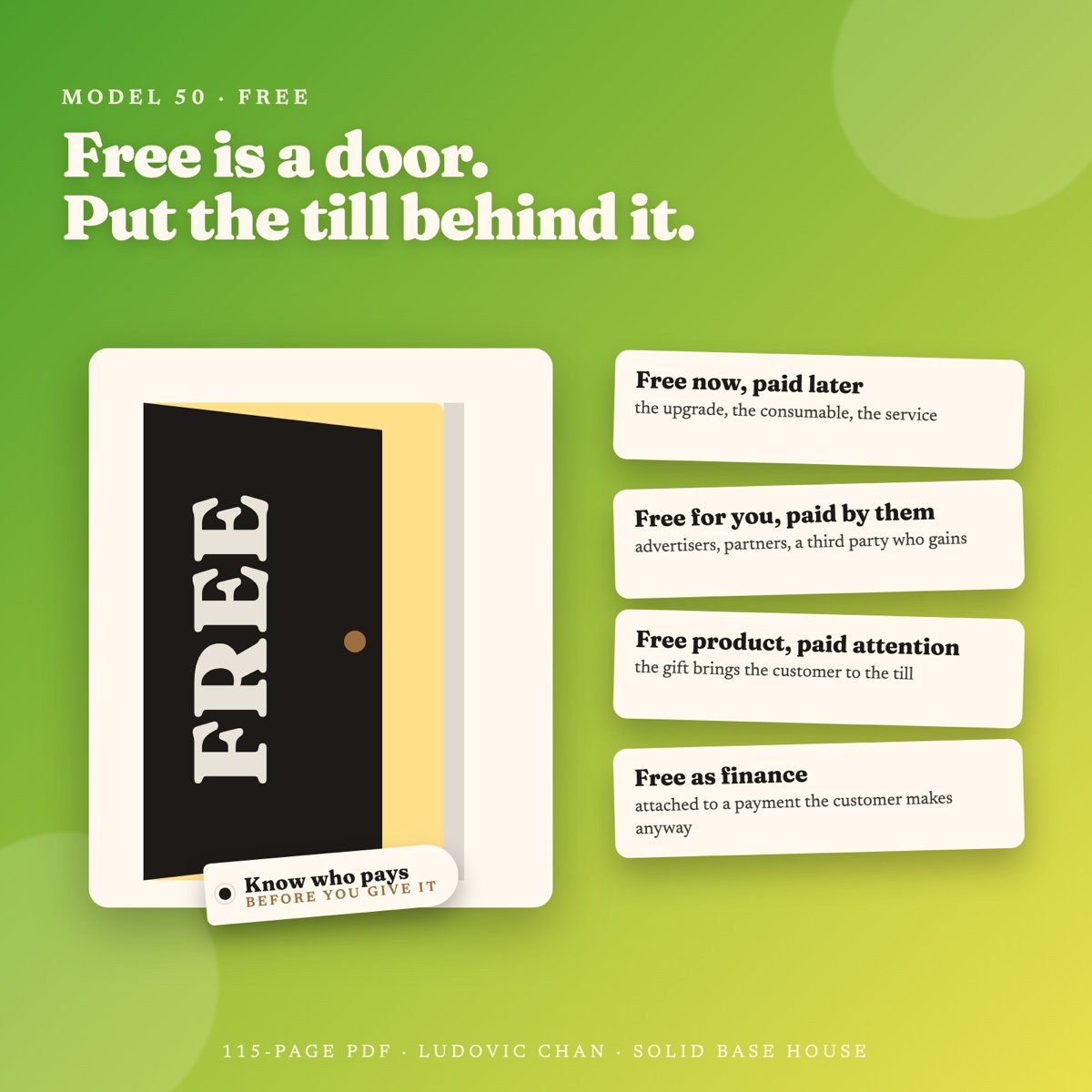
• Membership, free, deposits, referral: the deal designs behind a warehouse club, a casino shuttle, a salon and a fruit shop (Models 43, 49, 50, 51)
• The six flows: why the owner who says "I need cash" usually needs customers, and the giveaway that filled a furniture showroom (Model 56)
• Subscription, advertising, tips, live selling, content, data and AI: the twenty online models that work for a business that already has customers (Part VI)
READY TO USE
• Appendix A: the 72 models on one page, with the kind of business each fits
• Appendix B: which models fit your business, by type, and the three questions to ask before choosing
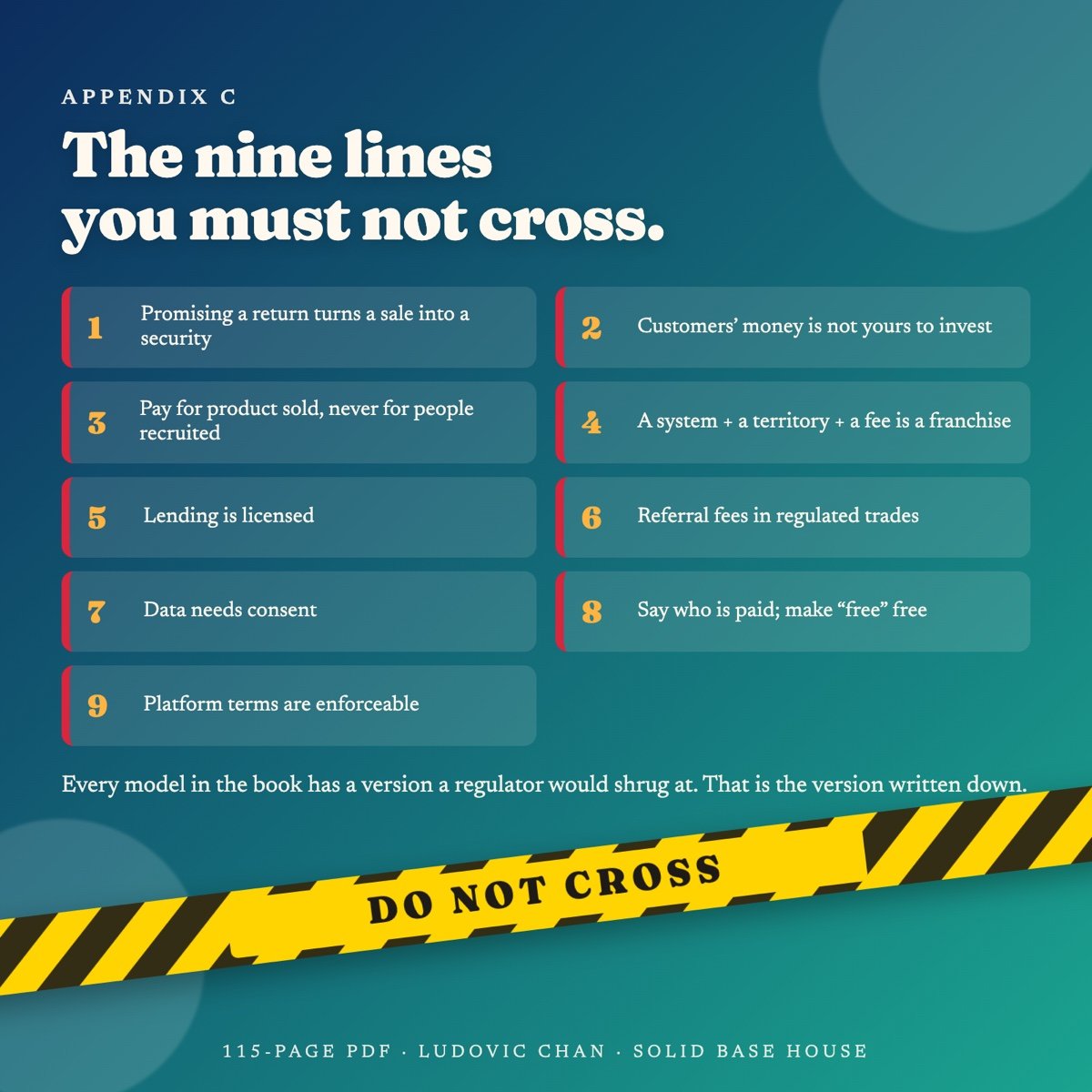
• Appendix C: the nine legal lines you must not cross (securities, deposits, pyramids, franchise rules, lending, referral fees, privacy, disclosure, platform terms), with the lawful version of each model
• Appendix D: the 30-day plan, week by week
• Appendix E: glossary
NOT IN THIS BOOK
No schemes. Several of these models were first taught in a form that would be a crime in the countries where this book is sold: guaranteed returns, bonuses for recruiting, customers' money invested. Each has been rewritten in the version a regulator would shrug at, and the book says so where it did.
WHO IT IS FOR
Owners of businesses that already have customers: restaurants, salons, clinics, trades, shops, online sellers, producers, distributors, professionals and multi-site operators. Not a start-up looking for its first customer; an owner who has customers and sells them one thing.
INCLUDES
• The 115-page Everything Is for Sale PDF (sent by email after purchase)
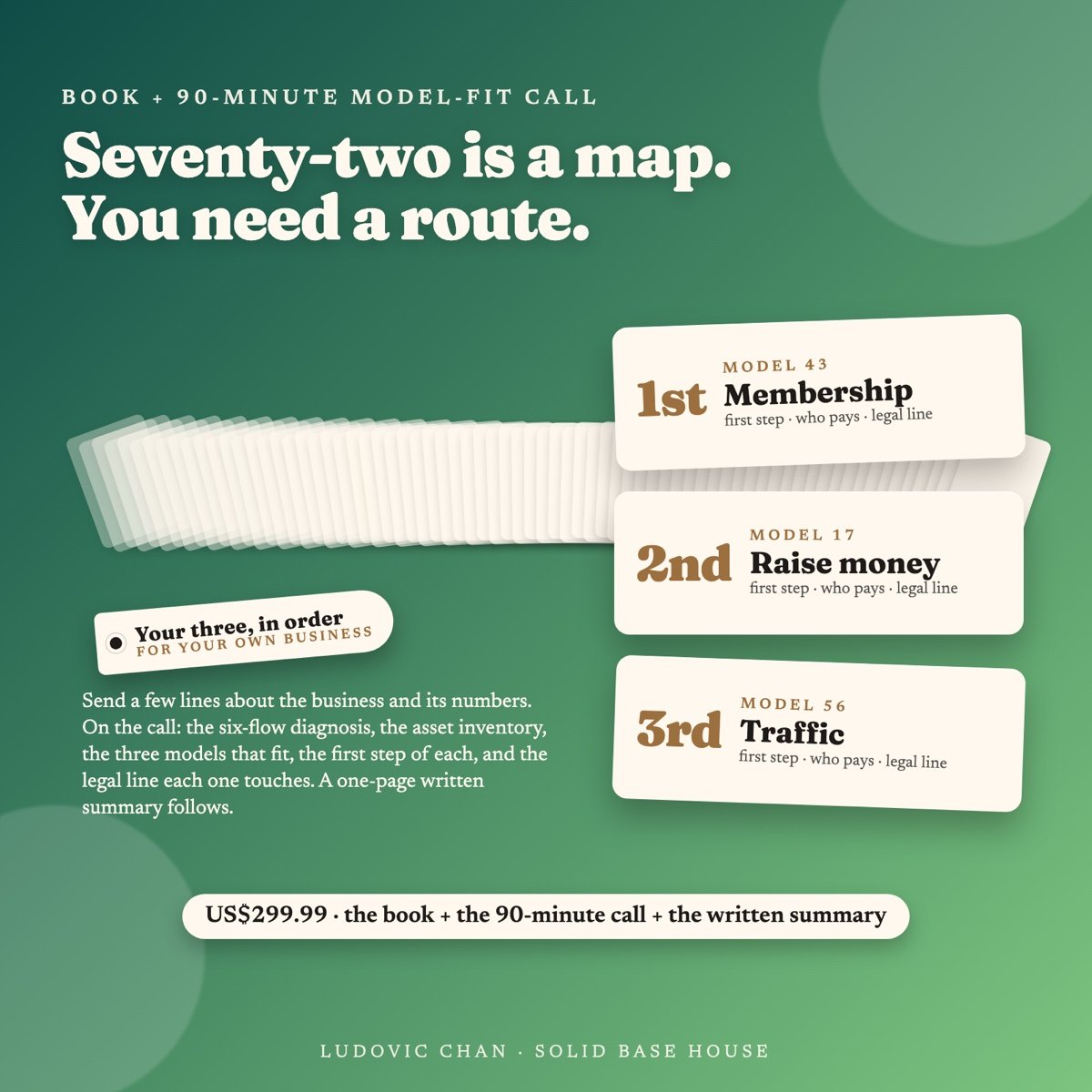
• A private 90-minute call with Ludovic Chan on your business: which three of the seventy-two models fit, in order, and the first step of each
• The legal check from Appendix C on each chosen model, so the version you build is the lawful one
• A one-page written summary after the call: the three models, the offer for the first one, who pays, the staff script, and the measure for day thirty
You have read the list and marked eight models. You cannot tell which to build first, or whether the one you like most works for a business your size. Or a consultant has already sold you a scheme, and a chapter of this book has made you wonder where it stands.
This option gives you the book plus a second pair of eyes on your actual business. Before the call you send a short description: what you sell, roughly what it earns, who buys, and the assets you own that nobody pays for (the list, the space, the idle hours, the data, the name). On the call, Ludovic Chan goes through it with you: the six-flow diagnosis from Model 56, the asset inventory from Model 1, the three models that fit in order, the first step of each, and the legal line each one touches. Afterwards you receive a one-page written summary to build from.
HOW IT WORKS
- Buy this option. The book arrives by email the same day.
- Reply to the delivery email with a few lines about your business and its numbers, and the models you have marked, if any.
- Pick a time on the booking calendar for the 90-minute call.
- The written summary arrives within three business days of the call.
FORMAT
PDF ebook, A4, 115 pages, typeset to read on a tablet or print at home. Instant download. First edition, 2026.
GUARANTEE
If the book doesn't show you at least one way to earn from something you already own, reply to the delivery email within seven days and the price is refunded. Keep the PDF.