

The Apple iPhone Duo Total Cost of Ownership
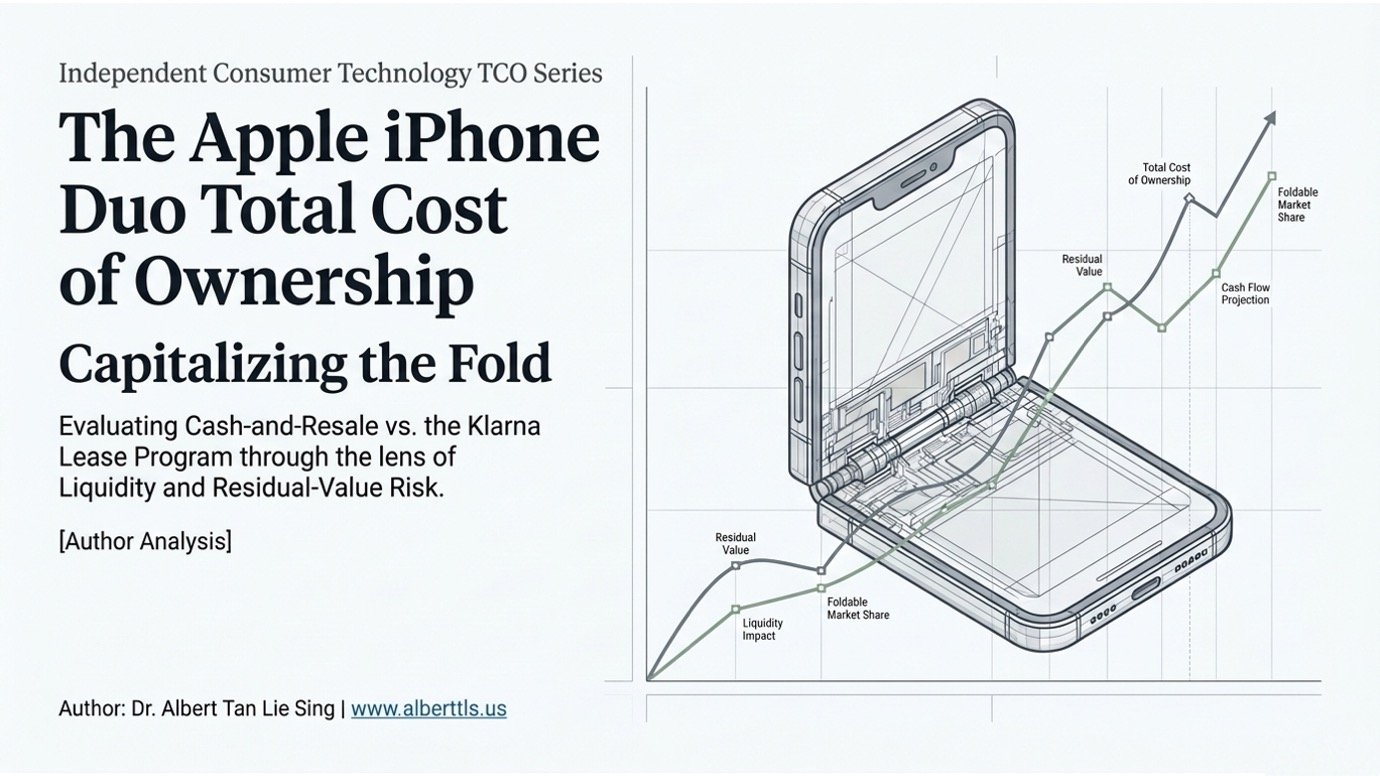
The Apple iPhone Duo Total Cost of Ownership: Capitalizing the Fold examines a question that the retail price alone cannot answer: what does ownership actually cost over 24 months?
This independent research brief compares two acquisition strategies—an outright $1,999 purchase followed by resale and the Apple Upgrade lease structure—through total cost of ownership, liquidity, residual-value exposure, and scenario-based risk analysis.
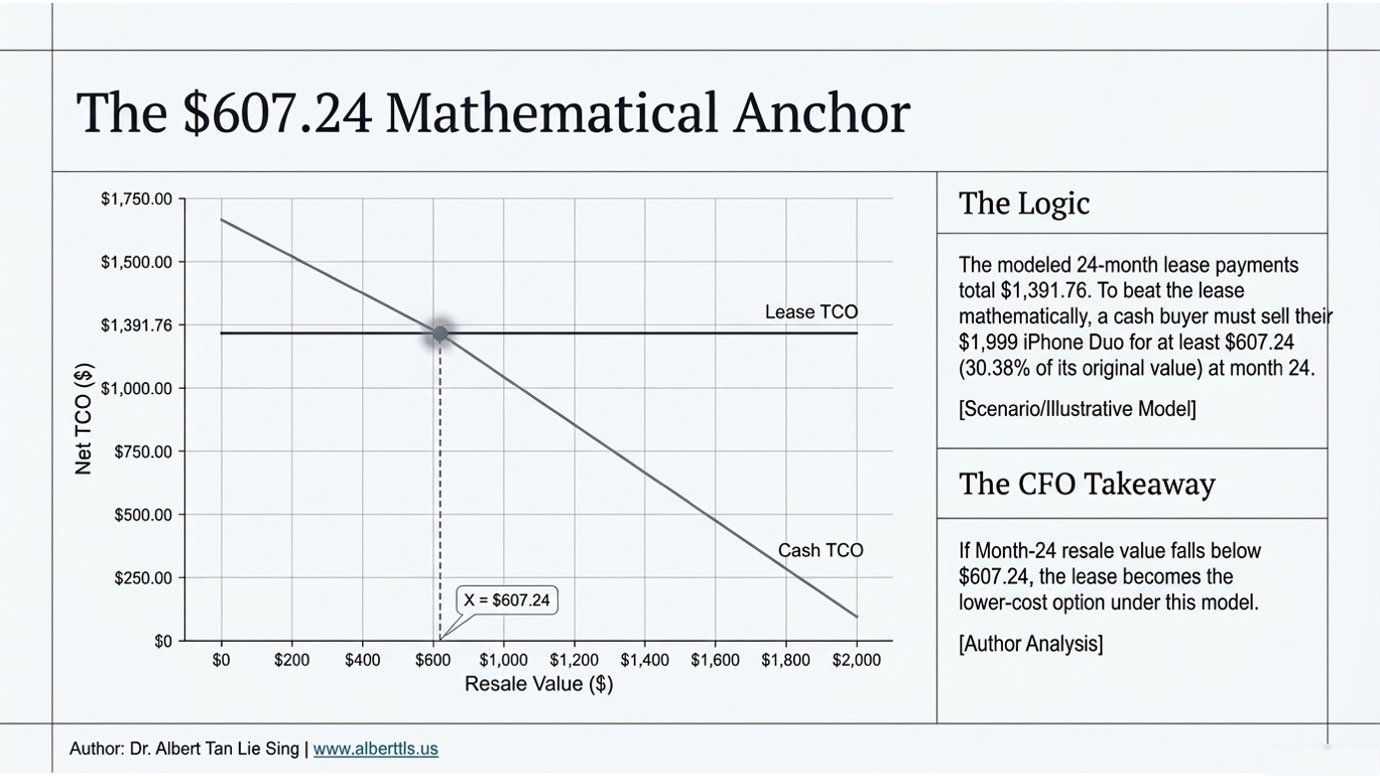
Rather than assuming that buying or leasing is universally superior, the report identifies the financial crossover between them. Its central model derives a Month-24 break-even resale value of approximately $607.24, or 30.38% of the original purchase price. Above that threshold, outright ownership produces the lower modeled cost; below it, the lease becomes economically competitive under the stated assumptions.
The report also examines cumulative cash flow, first-generation foldable risk, buyer profiles, pessimistic and optimistic resale scenarios, and the difference between minimizing expected cost and preserving liquidity.
Sources and interpretations are explicitly separated into official Apple sources, documented engineering, third-party reporting, scenario-based modeling, and author analysis.
Written for technology buyers, analysts, consultants, finance-minded professionals, and readers who want to understand the economics behind premium consumer technology rather than simply its specifications.
Independent publication. Not affiliated with or endorsed by Apple Inc. or Klarna. Educational and informational use only.
Note: Single-user personal and professional reference license. Redistribution, resale, sublicensing, or public file sharing is prohibited.
The reader will learn:
- how the TCO equation works for ownership versus leasing;
- why cash ownership can be cheaper even though it requires much more money upfront;
- why Apple Upgrade can preserve liquidity while reducing secondary-market resale exposure;
- the key $607.24 / 30.38% Month-24 resale-value break-even point;
- how pessimistic, baseline, and optimistic resale scenarios change the decision;
- which strategy better fits a capital optimizer, risk hedger, or liquidity-focused buyer;
- why there is no universally superior option—the better choice depends on expected resale value, liquidity preference, and risk tolerance.