
Scrap Reduction-Due-to-Machine-Malfunction-A-Complete-Playbook - Level 1
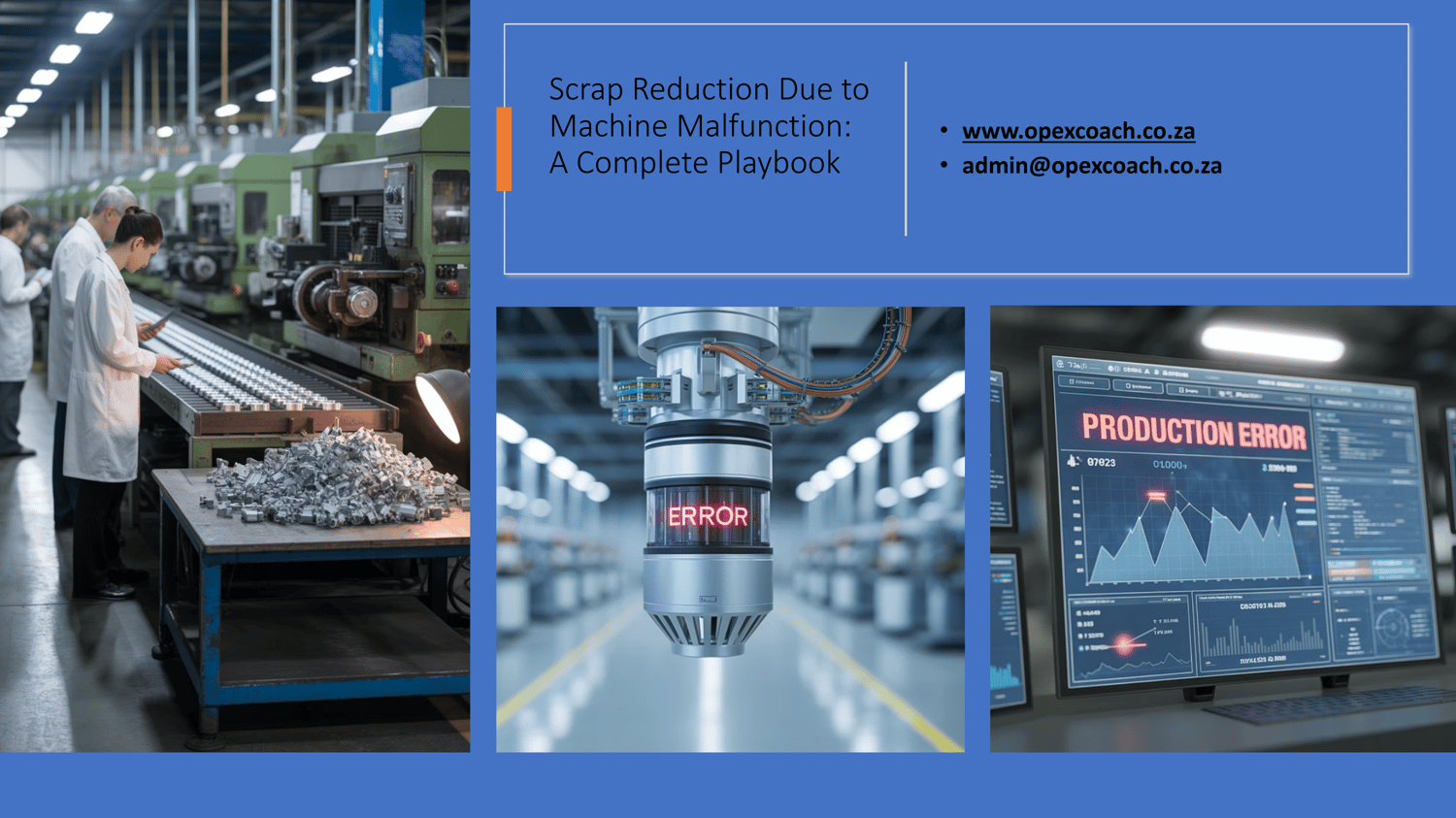
Scrap Reduction Due to Machine Malfunction: A Complete Playbook – Level 1
Machine-related scrap is one of the most preventable forms of manufacturing waste, yet it can cost facilities tens of thousands of dollars monthly and erode both profitability and productivity. This comprehensive playbook provides manufacturers with practical, data-driven strategies to identify, prevent, and systematically reduce scrap caused by equipment malfunctions.
Key Highlights:
- The Problem: Machine malfunctions—ranging from worn tooling and misalignments to sensor and software errors—cause 15–30% of manufacturing waste, driving up material costs, labor, downtime, and excess inventory.
- Impact: Targeted scrap reduction programs can cut losses by 35–42% within 90 days and reduce material and operational costs by over $70,000 annually, with proven ROI within 6–8 months.
- Identification & Analysis: Use systematic data collection, pattern recognition, and machine health monitoring to detect issues early. Predictive analytics can prevent 92–94% of scrap-producing failures.
- Root Cause Elimination: Lean methodologies (DMAIC, 5 Whys) and structured problem-solving tackle the top causes: poor maintenance, worn tools, misconfiguration, software faults, and sensor errors.
- 5-Step Scrap Reduction Strategy:
- Preventive & Predictive Maintenance: Scheduled servicing, condition monitoring, and predictive analytics prevent failures before they occur.
- Real-Time Machine Monitoring: IoT sensors and MES integration detect deviations 35–40% faster, reducing scrap by 18–23%.
- Operator Training & Standard Work: Visual instructions, 5S workplace organization, and tiered skills certification ensure consistent quality.
- Rapid Response Protocols: Cross-functional teams, clear escalation procedures, and emergency toolkits minimize downtime and scrap during failures.
- Data-Driven Continuous Improvement: Ongoing analysis, targeted interventions, and measurement of results create a self-sustaining cycle of improvement.
Benefits of Implementation:
- Up to 74% reduction in scrap compared to reactive approaches
- Average 40% cost reduction and 35% quality improvement
- Enhanced equipment life, uptime, and operational efficiency
- Approx. 20% resource conservation, supporting sustainability goals
Example Success: MidWest Manufacturing cut scrap by 91% and saved $71,240 annually by implementing predictive blade monitoring and proactive maintenance.
This playbook empowers manufacturers to transform reactive scrap management into proactive prevention, achieving measurable financial, operational, and environmental gains.