





The District Leader's Case for Restorative Practice: A Policy-Facing Guide for Superintendents, Curriculum Directors, and Decision-Makers Building the Case for Restorative Infrastructure
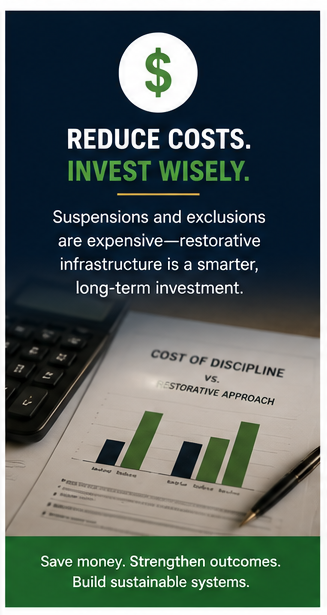
Suspensions are not free. The district must decide whether it pays for resolution or pays for repetition.
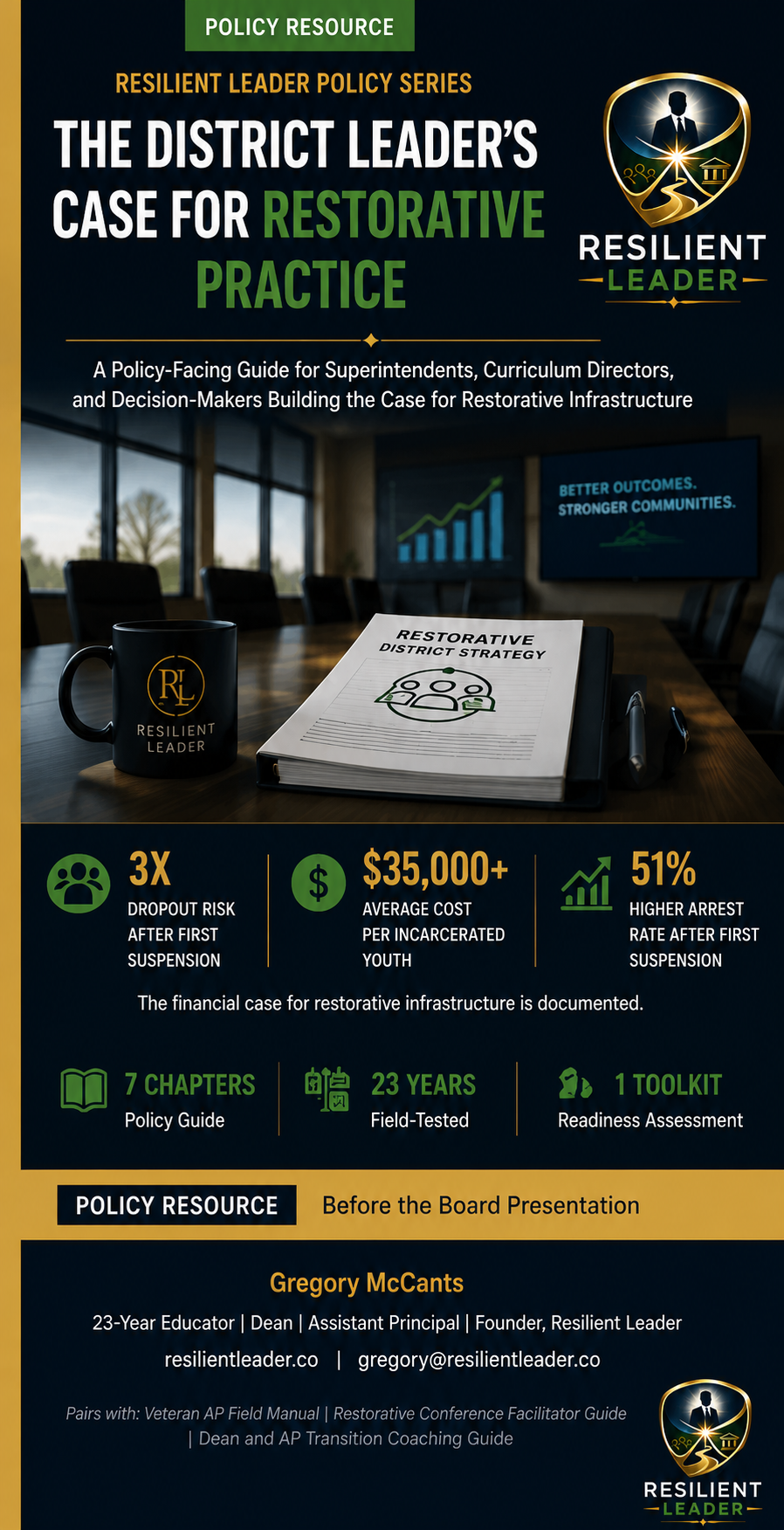
When a school district pushes a student out of a classroom through exclusionary discipline, central office often logs it as a localized administrative action. It feels like a zero-cost safety valve. But look closer at the longitudinal data: a single out-of-school suspension spikes a child's dropout risk by a factor of three. Worse, historical state task force data reveals that suspended youth are 51% more likely to be arrested two or more times than their non-suspended peers.
The line items don't disappear; they just show up later on a different municipal ledger. Your district is bleeding funding, teacher retention, and community trust through a policy design that funds repetition instead of resolution.
Most district-level restorative justice initiatives collapse because they are introduced as a soft-hearted alternative to consequences or treated as an optional program layered onto a punitive system. It doesn't work. True restorative practice requires structural, schoolwide policy infrastructure—not a reactive crisis circle format deployed by a few isolated staff members. When implemented with deliberate systemic design, district-wide frameworks yield massive institutional returns. Look at the benchmarks: districts like Oakland Unified cut their suspension rates by more than 50 percent over a decade of structured implementation, while Denver Public Schools achieved massive long-term drops in exclusionary discipline.
Written by a 23-year school administrator and Title I educator, this policy-facing guide shifts the conversation away from emotional pleas and bases it strictly on fiscal, operational, and equity realities. It strips away the academic abstraction to give you the exact structural evidence required to justify system-wide infrastructure investment to your school board, grant providers, and community stakeholders. Stop paying for the compounding costs of a broken discipline pipeline. Start engineering a sustainable foundation for district-wide retention and accountability.
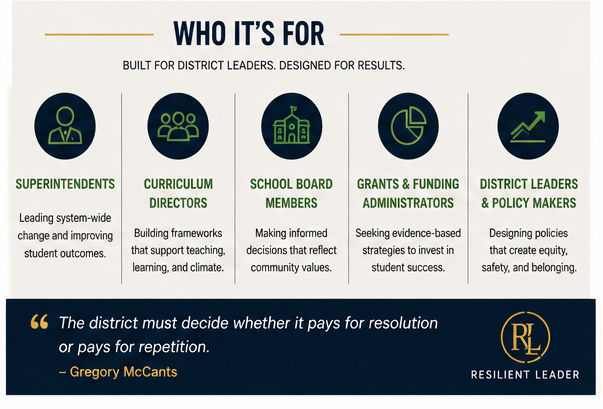
Who This Is For
- Superintendents & Assistant Superintendents looking to permanently break the cycle of high-poverty school talent bleed and build scalable, sustainable building cultures.
- Curriculum & Instruction Directors wanting to protect academic instructional hours from being constantly eroded by systemic classroom behavioral dropouts.
- Grant Administrators & Finance Officers needing an objective, data-backed operational rationale to secure and satisfy major Title I, equity, or juvenile justice funding metrics.
What You Get
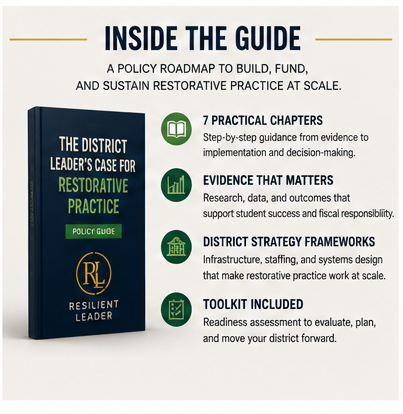
- 7-Chapter Institutional Guide: A rigorous policy manual mapping out the financial mechanics of suspension pipelines, systemic equity gaps, and structural culture design.
- The "Before the Board" Presentation Toolkit: Core evidence frameworks and messaging pillars engineered to cleanly articulate the operational case for restorative infrastructure to boards and skeptics.
- The District Readiness Assessment: A plug-and-play evaluation matrix to audit your current system's capabilities, map structural alignment, and identify critical policy friction points before deployment.
- Longitudinal Case Study Analyses: Hard performance metrics drawn from landmark district-wide rollouts, including Oakland and Denver data profiles, to validate long-term financial and behavioral impact models.
- Platform Infrastructure Blueprints: Detailed operational overviews of how to deploy automated data captures like Truth-Link (pre-conference student reflection), Parent Advocate Bridge (relational trust alignment), and Veteran AP (legally defensible documentation) simultaneously across multiple building sites.
What It Pairs With
To construct an airtight, system-wide framework that permanently transforms your district's operational environment, this policy manual links directly with:
- Veteran AP Field Manual: For standardizing upstream disciplinary documentation, legal risk management templates, and defensible writing protocols across every administrator's office in your district.
- Dean and AP Transition Coaching Guide: For providing your frontline building leaders with the exact operational competencies and onboarding support needed to survive the brutal shift into administration.
- Restorative Conference Facilitator Guide: For equipping your school-level counselors and coordinators with copy-and-paste scripts to maintain adult alignment and process fidelity under extreme pressure.