
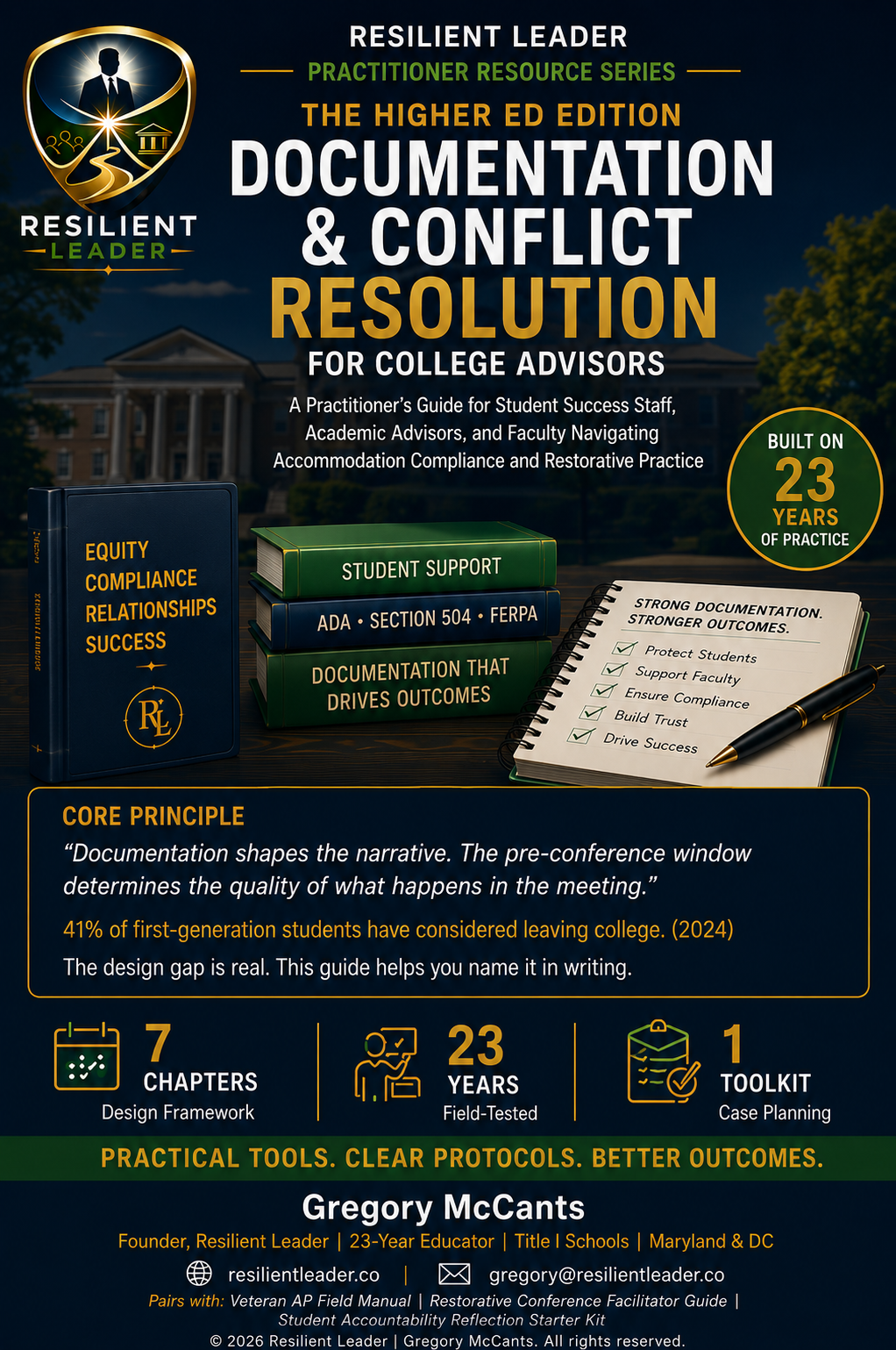



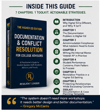
The Higher Ed Edition - Documentation and Conflict Resolution for College Advisors: A Practitioner's Guide for Student Success Staff, Academic Advisors, and Faculty Navigating Accommodation Compliance and Restorative Practice
The design does not have to answer for itself as long as the individual can be made the explanation. You are in a position to change that dynamic.
In higher education, we treat student attrition like a personal motivation problem or an isolated academic failure. When a student vanishes mid-semester, the institution logs their withdrawal and moves on. But the hard data reveals a massive design gap: 41 percent of first-generation students have seriously considered leaving college, and they remain twice as likely to leave without completing a degree compared to their continuing-generation peers, regardless of income or academic preparation.
They do not fail because they don't care; they fail because the system was engineered for an assumed student, and they are not that student.
The regulatory landscape you navigate every single day is a minefield of intersecting pressures: the ADA, Section 504, Title IX, FERPA, and your campus's specific honor code. When accommodation tracking breaks down, the exposure is severe. Office for Civil Rights (OCR) complaint filings are climbing steadily across the country. Look at the data from professional pipelines: disability disclosures in medical schools rose from 10.8 percent to 17.6 percent in a four-year span, yet fewer than half of those students actually received their approved accommodations. Meanwhile, a massive April 2026 DOJ Title II deadline requires public institutions to meet strict WCAG 2.1 Level AA standards for digital content, while nearly 95 percent of university homepages are actively failing standard accessibility checks.
When an accommodation concern surfaces months into a term, the documentation trail is usually paper-thin. Faculty send frantic emails, advisors log vague notes in separate silos, and the student's academic decline accumulates in absolute silence.
You cannot fix pattern blindness with individual memory or informal logs.
Written by a 23-year educator, dean, and assistant principal, The Higher Ed Edition takes the unyielding logic of the Resilient Leader framework and applies it directly to the complex power dynamics of colleges and universities. This manual strips away the soft, corporate-wellness rhetoric to hand you a tactical engineering manual for student success. Learn how to utilize Veteran AP to draft fact-based, measured internal memos that formally escalate systemic gaps to the Dean's office without burning your professional bridges with academic departments. Stop acting as a reactive clerk in a siloed system, and start acting as a functional architect of institutional accountability.
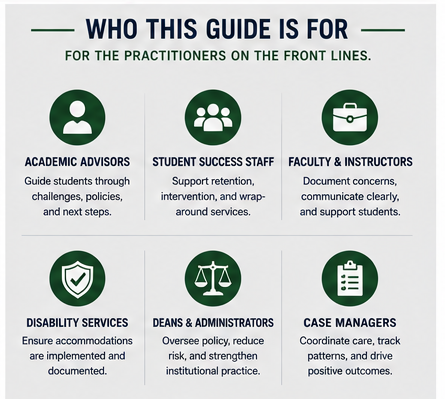
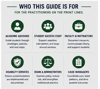
Who This Is For
- Academic Advisors & Student Success Staff managing heavy student loads who are often the very first people to see the gap between an accommodation plan and a student's actual classroom experience.
- Disability Resource Specialists & Compliance Officers who need an objective, legally defensible, and standardized documentation method to minimize institutional liability before complaints reach the OCR.
- Higher Education Administrators & Department Chairs navigating complex student-to-faculty conflicts who need a neutral, restorative framework that centers repair over performative discipline.
What You Receive
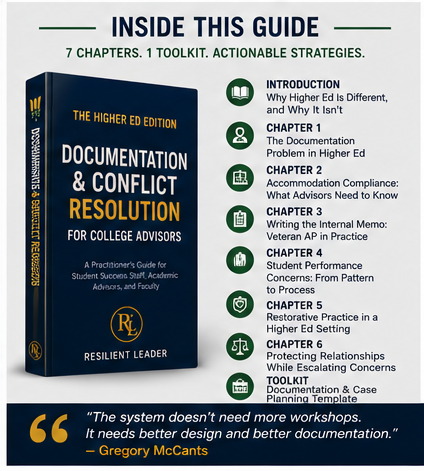
- 6-Chapter Operational Roadmap: A comprehensive practitioner manual mapping out higher education documentation design, regulatory frames, memo architecture, and relational escalation.
- The Inconsistent Documentation Cost-Analysis: A critical diagnostic detailing how institutional silos produce pattern blindness, relationship liability, equity gaps, and compliance exposure.
- The Process-Gap Memo Framework: Step-by-step instructions to structure internal memos that frame accommodation or performance concerns as systemic procedural failures rather than personal accusations against faculty.
- The Advising Conversation Principle: A tactical communication protocol to handle mid-semester performance declines, open conversations without attributing premature cause, and establish yourself as an advocate .
- The Rigorous Accountability Restorative Lens: A blueprint to separate restorative intervention from leniency, ensuring student accountability is built through active impact recognition rather than a passive record.
- The Student-to-Faculty Conflict Protocol: Explicit guidelines on navigating power differentials and selecting neutral third-party facilitators (such as ombudspersons or faculty mediators) to protect student voice.
- The Pre-Escalation Dialogue Script: Raw verbal scaffolding to execute high-leverage, informal check-ins with faculty colleagues before formal institutional momentum takes over.
- Higher Ed Documentation and Case Planning Template (Bonus): A clean, reproducible workspace layout featuring designated sections for Student and Situation Audit, Documentation Evidence Tracks, Escalation Sequencing, and After-Submission Metric Logs.
What It Pairs With
To construct an automated, legally bulletproof restorative pipeline across your entire campus site, this guide pairs natively with:
- The Veteran AP Field Manual: For standardizing your core text formatting patterns, narrative design laws, and upstream administrative filing evidence.
- Restorative Conference Facilitator Guide: For accessing a deep bank of 7 copy-and-paste verbal scripts to guide high-activation rooms through intense accountability circles.
- Student Accountability Reflection Starter Kit: For adapting paper-and-pen trauma-informed intake forms to handle student conduct preparation during the pre-conference window.
- Inside the Room: For mastering real-time behavioral postures, physical room layout equity, and boundary-holding techniques during multi-party campus interventions.