
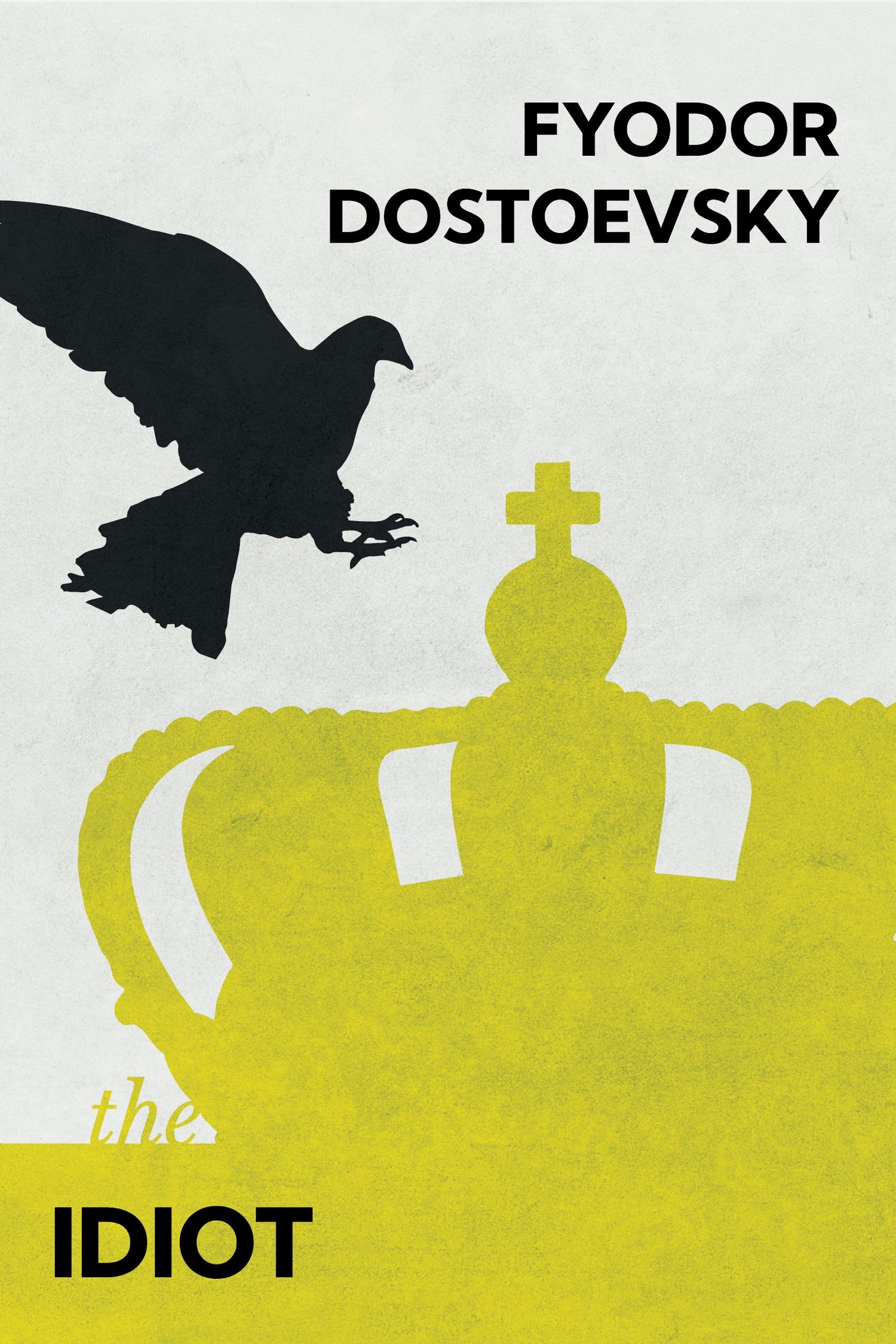
The Idiot
Fyodor Dostoevsky’s The Idiot asks an impossible question: What would happen if a genuinely good person, someone Christ-like in compassion and honesty, walked into modern society? Prince Lev Myshkin returns to St. Petersburg after years abroad treating his epilepsy, penniless but expecting a small inheritance. He’s gentle, forgiving, and sees the good in everyone, which makes him either a saint or a fool depending on who’s judging. St. Petersburg society finds him fascinating and absurd—he takes people at their word, forgives insults instantly, and believes human beings are fundamentally redeemable. His honesty is so radical it seems like naivety. People call him an “idiot,” but they can’t stop confessing their secrets to him, seeking his blessing, or trying to use his goodness for their schemes.
Myshkin becomes entangled with Nastasya Filippovna, a beautiful woman whose childhood abuse by a wealthy predator has turned her into a weapon of self-destruction. She’s kept as a mistress, treated as damaged goods, and has transformed her rage into a performance designed to humiliate every man who wants her. When the merchant Rogozhin offers her a fortune to become his wife, she accepts out of spite, then runs away, then accepts again—a pattern of self-sabotage that pulls Myshkin in deeper. He wants to save her through pure compassion, but he also loves Aglaya, a passionate young woman from a respectable family who’s drawn to Myshkin’s goodness while also despising what she sees as his weakness. The two women represent Myshkin’s impossible choice: redemptive suffering or conventional happiness, martyrdom or normal life.
The situation spirals into tragedy. Myshkin tries to love everyone equally and ends up satisfying no one. Nastasya and Aglaya confront each other in a devastating scene where Myshkin’s inability to choose destroys both relationships. Money is squandered, reputations ruined, and Rogozhin’s jealous obsession builds toward murder. The climax is haunting: Myshkin finds himself keeping vigil over a corpse with the murderer, two men united in their love for a woman neither could save. By the novel’s end, Myshkin has relapsed into a complete mental breakdown, his attempt at Christ-like compassion in a fallen world leaving him destroyed rather than redemptive. The Idiot is Dostoevsky’s most heartbreaking novel—a meditation on whether goodness can survive in a world of self-interest, whether compassion without judgment is possible, and whether trying to save everyone means saving no one. Prince Myshkin remains literature’s most sympathetic failure, a protagonist whose very virtues become his destruction. Essential reading for anyone grappling with the cost of moral purity in an imperfect world.
About the author
Fyodor Dostoevsky (1821–1881) was one of Russia’s greatest novelists, celebrated for his profound psychological insight and exploration of moral and existential dilemmas. His works, including The Brothers Karamazov, The Idiot, and Notes from Underground, continue to resonate with readers worldwide for their timeless examination of the human condition.