
Free Data Center Career Starter Guide
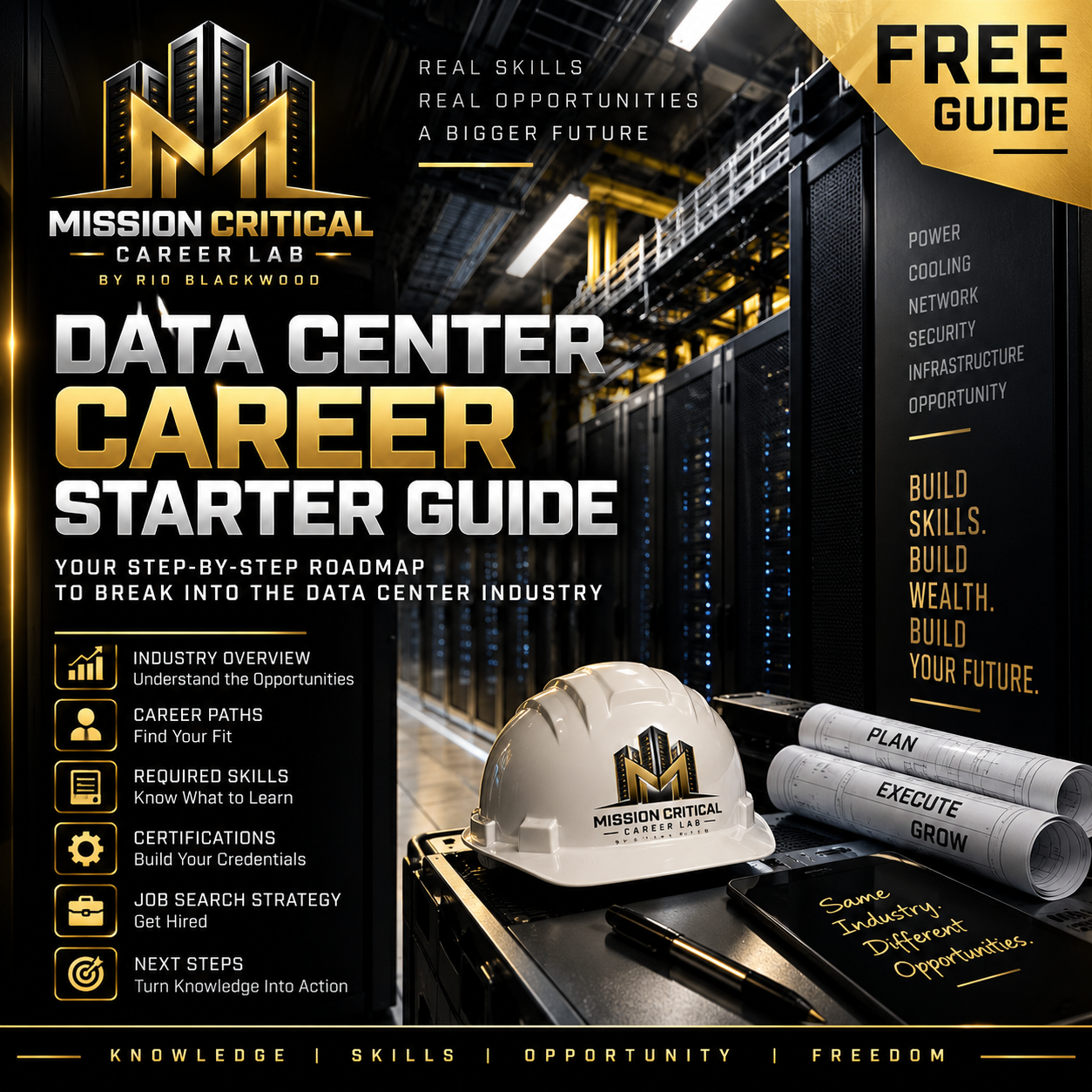
Data Center Career Starter Guide
Trying to break into the data center industry but not sure where to start?
The Data Center Career Starter Guide from Mission Critical Career Lab by Rio Blackwood gives you a clear, beginner-friendly introduction to the roles, systems, skills, terminology, and career paths found throughout mission-critical data center construction and operations.
This free guide is designed for career changers, technicians, construction professionals, military veterans, aspiring project coordinators, future Assistant Project Managers, and anyone exploring opportunities in the rapidly growing data center industry.
Inside the guide, you'll learn:
- How the data center industry is structured
- Common entry-level and career-growth roles
- Major systems including electrical, mechanical, low-voltage, cooling, networking, and infrastructure
- Skills employers commonly look for
- Certifications and training worth exploring
- Common mission-critical terminology
- Career paths from field roles into project management and construction leadership
- Practical ways to prepare for interviews and job searches
- What to study next as you build your career
Who This Is For
This guide is especially useful if you are:
- New to data centers
- Coming from construction, electrical, low voltage, IT, facilities, or another technical field
- Transitioning from military service
- Interested in project coordination or Assistant Project Manager roles
- Trying to understand how mission-critical construction works
- Looking for a structured starting point before investing in deeper training
Start Building Your Mission-Critical Career
You do not need to understand everything on day one.
You need a roadmap.
Use this guide as your starting point, then continue developing your knowledge through the Mission Critical Career Lab learning library, toolkits, courses, study resources, and career-development materials.
Created by Rio Blackwood
Mission Critical Career Lab
Educational content only. This guide does not replace employer training, approved construction documents, engineering guidance, safety procedures, manufacturer instructions, or applicable codes and standards.