

Beyond the Formula — Part II: The Science of Learning and Teaching Physics
Beyond the Formula — Part II: The Science of Learning and Teaching Physics
From Active Engagement to Conceptual Assessment and Evidence-Informed Educational Practice
What does it take to move from memorizing physics formulas to developing meaningful scientific understanding?
Beyond the Formula — Part II builds on the cognitive foundations introduced in Part I and examines how physics learning can be supported through active engagement, conceptual reasoning, and improved assessment.
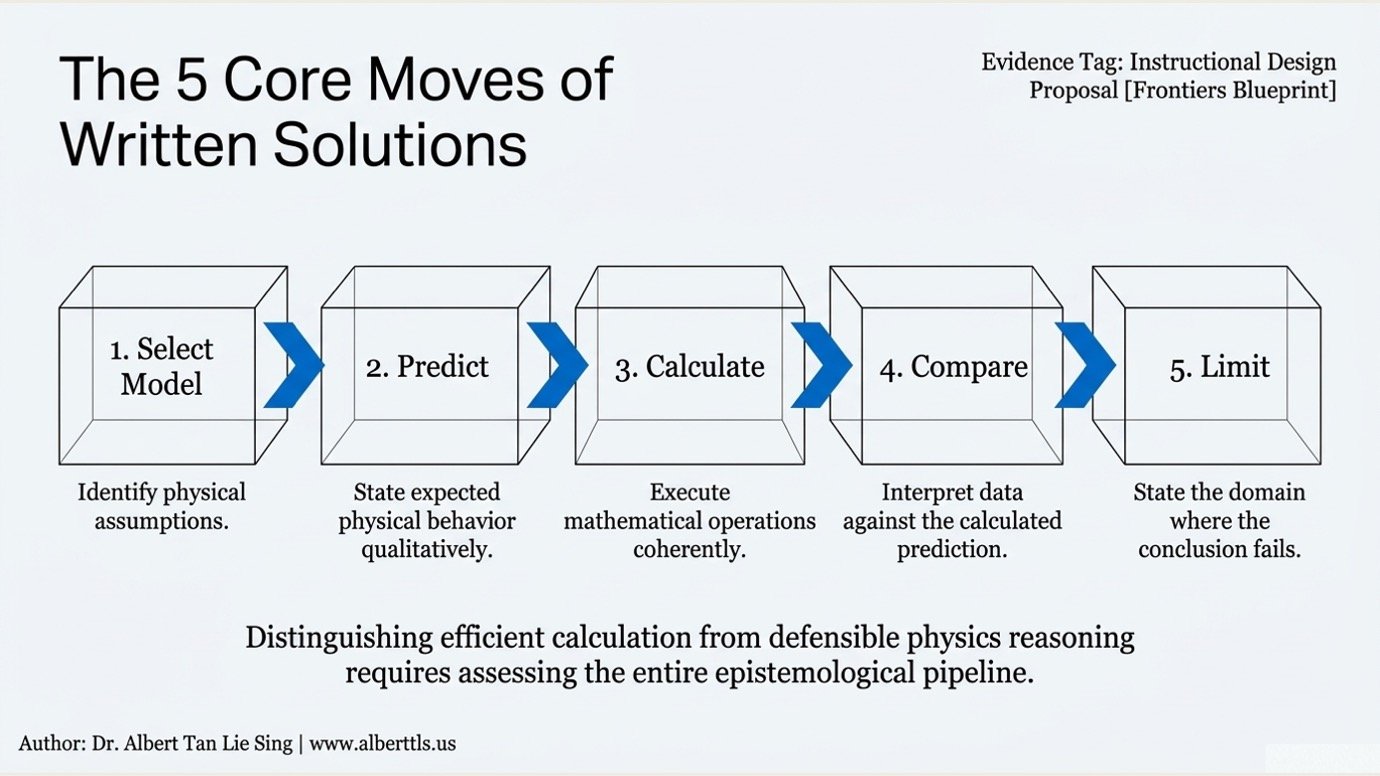
Drawing on physics education research, this illustrated guide introduces Peer Instruction, cognitive pauses, modeling instruction, concept-focused tasks, and strategies for evaluating the physical reasoning behind mathematical answers.
The publication also considers the practical challenges of implementation, including classroom design, cognitive workload, educational equity, and sustainable instructional change.
Inside this 19-page illustrated guide:
- Research supporting interactive engagement
- Peer Instruction and structured discussion cycles
- Modeling instruction and collaborative learning environments
- Conceptual assessment and changed-condition questions
- Separate evaluation of mathematical accuracy and physical reasoning
- Educational equity and a proposed implementation roadmap
For: Physics learners, educators, parents, science communicators, and readers interested in evidence-informed science learning.
Format: Downloadable, illustrated landscape PDF
Author: Dr. Albert Tan Lie Sing
Edition: Version 1.0 (2026)
Part II of the Beyond the Formula two-volume series. Can be read independently, but is designed to complement Part I.
What You Will Learn:
Discover how physics understanding can be strengthened through active learning, meaningful discussion, physical modeling, conceptual assessment, and reflection. Learn why correct calculations alone may not demonstrate understanding, how to recognize the limitations of equations, and how evidence-informed learning strategies can encourage deeper scientific reasoning.