

Carlo Emilio Gadda
On Sale
MXN5.00
MX$5.00
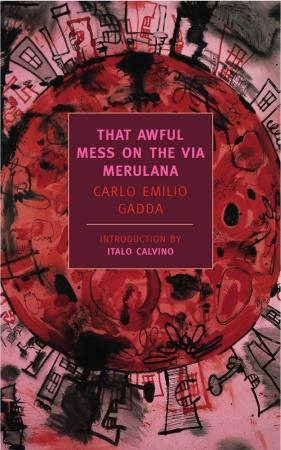
Quer pasticciaccio brutto de via Merulana (That Awful Mess on Via Merulana or El zafarrancho aquel de via Merulana) is a landmark 20th-century Italian novel by Carlo Emilio Gadda.
- Rome, 1927, during the height of the Fascist regime of Benito Mussolini.
- Plot: Detective Francesco Ingravallo (known as "Don Ciccio"), an admirer of philosophy and linguistics, investigates a double crime in an apartment building on via Merulana.
- The Crimes: First, a jewelry theft from the Countess Menegazzi; second, the brutal murder of Liliana Balducci, a wealthy and melancholic woman.
- Unresolved Ending: The investigation fractures, expands into a web of local characters (gigolos, petty criminals, neighbors)
Carlo Emilio Gadda's writing was a cosmos of digression that takes you to infinite labyrinths of footnotes.
In the context of Carlo Emilio Gadda's masterpiece novel, Quer pasticciaccio brutto de via Merulana (That Awful Mess on the Via Merulana), the topic of footnotes involves a fascinating evolution between the original Italian serialized text, the final book format, and the famous English translation by William Weaver.
1. The Original Serialization vs. The Book Form
- Gadda's Original Footnotes: When Gadda first published the novel in serial installments in the literary journal Letteratura (1946–1947), the text was heavily enriched with long, dense, and highly discursive footnotes written by Gadda himself.
- The Deletion: When the novel was finally collected and published in its definitive book form in 1957, Gadda removed these extensive footnotes to streamline the text's unique prose flow.
2. The English Translation Footnotes
- William Weaver's Additions: For the celebrated English translation, translator William Weaver added his own extensive footnotes specifically to assist non-Italian readers.
- Why They Are Necessary: Gadda’s novel is famously intricate and "lost in translation" without context. The book takes place in 1927 during the stifling years of Italian Fascism. Weaver's footnotes serve to explain:
- Political Satire: Direct and indirect jabs, puns, and "subtweets" aimed at Benito Mussolini and his regime's slogans, customs, and laws.
- Linguistic Complexity: Explanations of Gadda’s complex multilingual "pastiche," which blends standard Italian with heavy Roman, Molise, Neapolitan, and Venetian dialects.
- Classical & Historical Allusions: Context for the rapid-fire high-brow philosophical, mythological, and localized Roman historical references.
A must read for any initiate in world literature masterpieces.