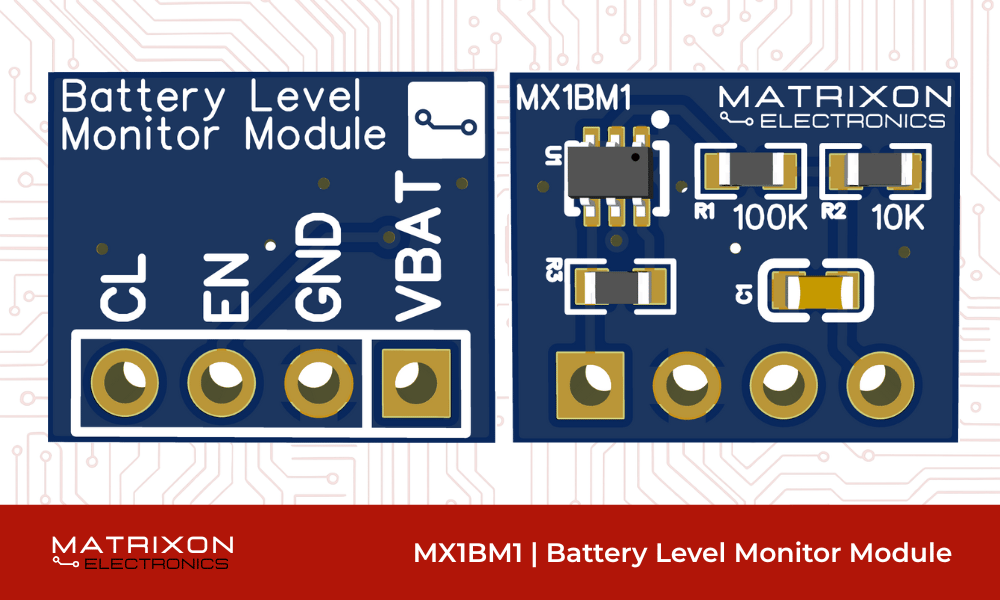
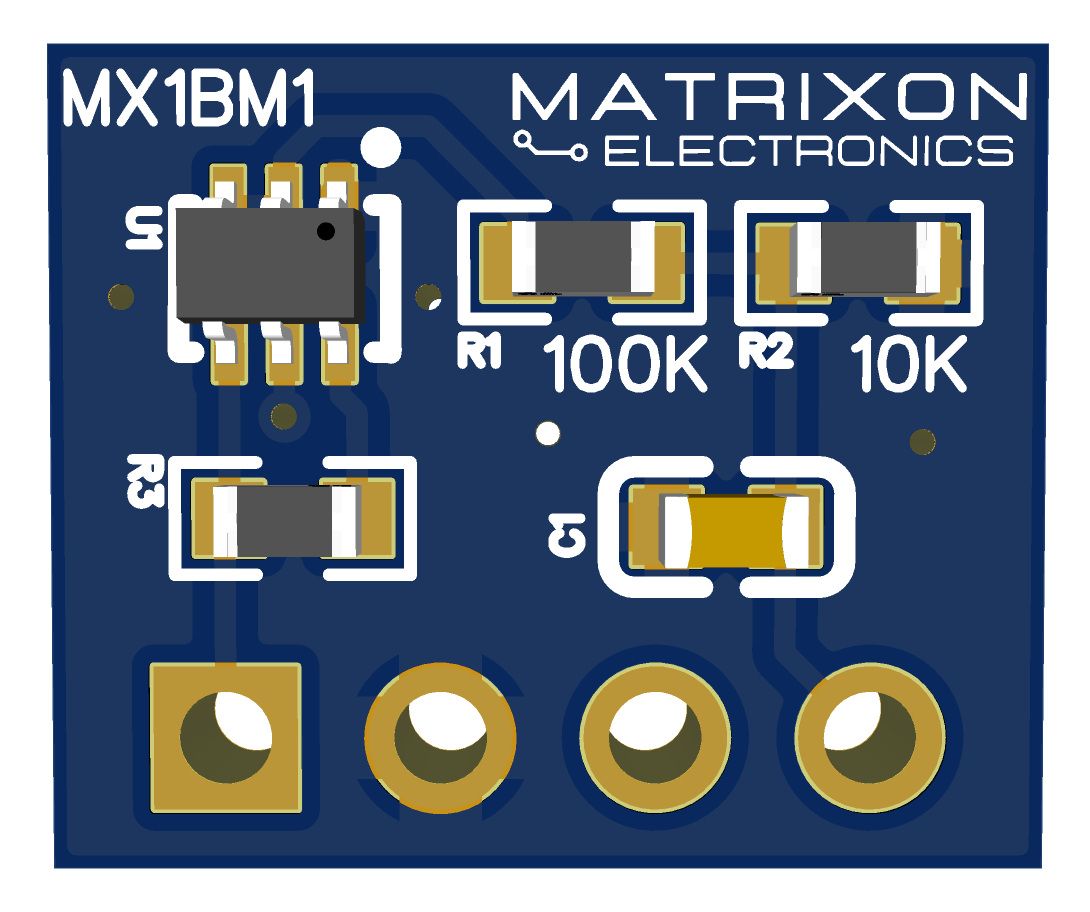
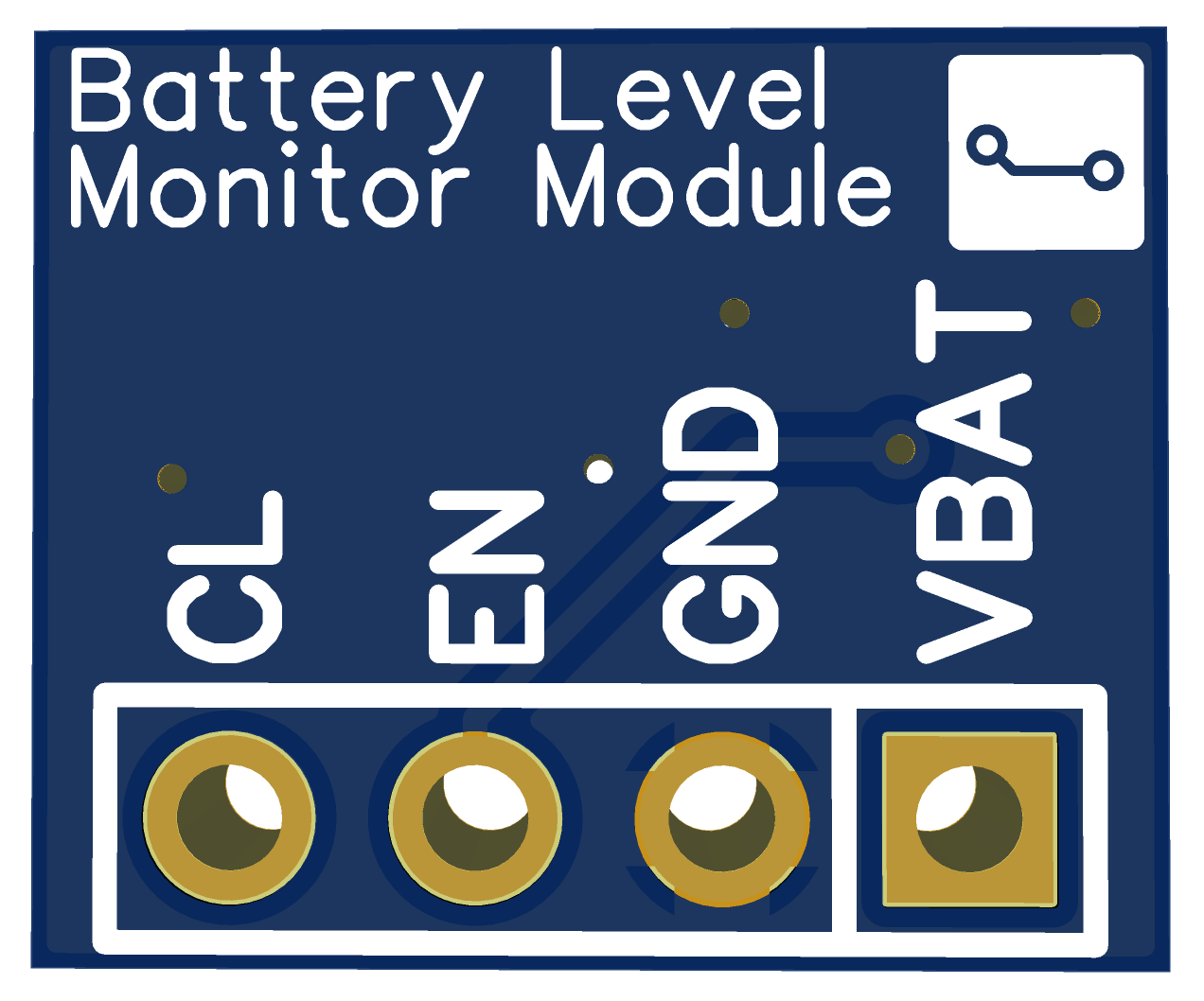
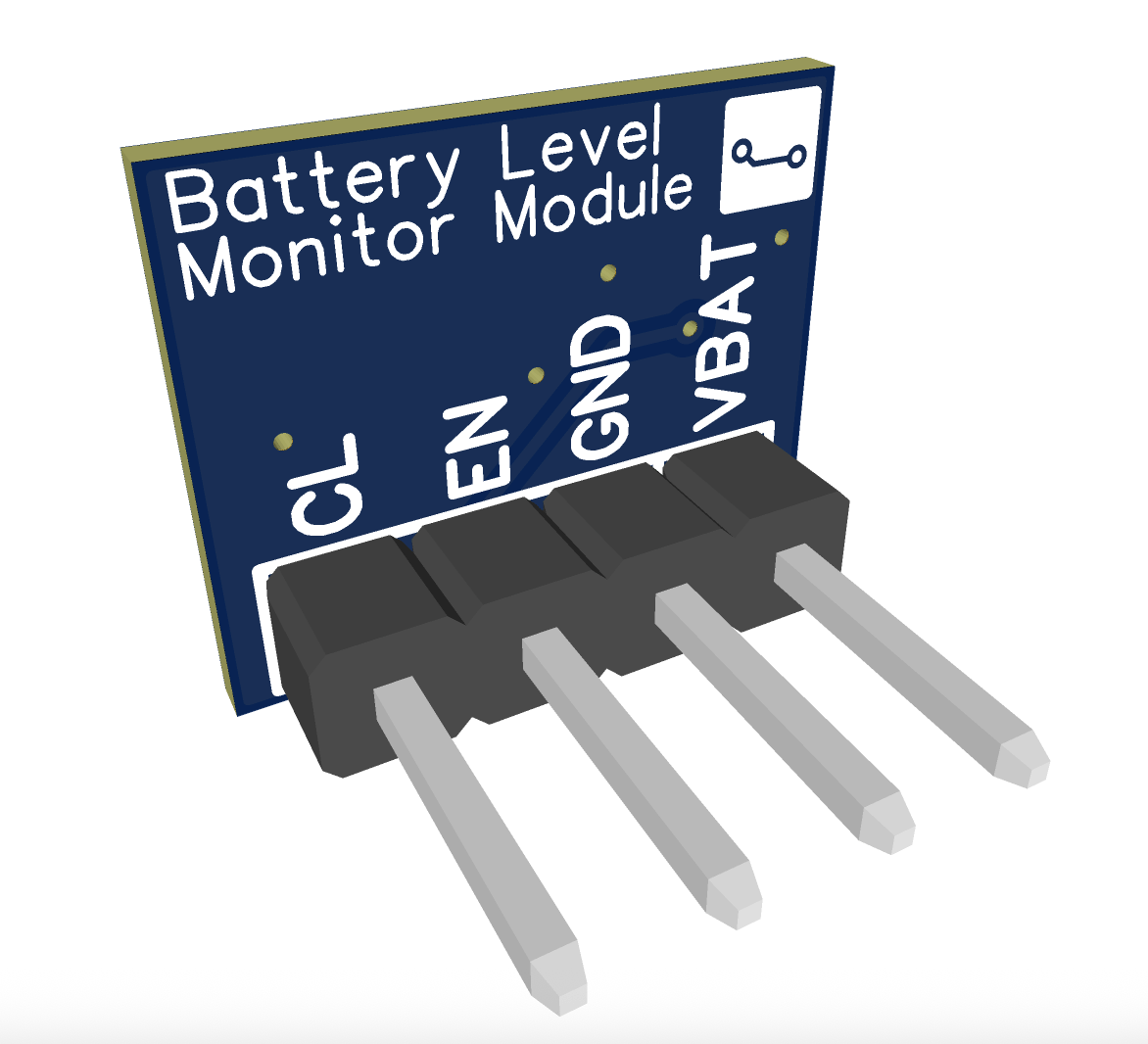
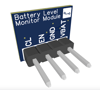
Battery Level Monitor Module - MX1BM1
Disclaimer:
This is a production pack (Gerber files, BOM, and documentation) of the board, not a physical product. You will receive digital files that can be used to manufacture the PCB. No assembled or physical boards are shipped.
Overview
The MX1BM1 - Battery Level Monitor Module is a compact, precision-designed battery voltage measurement board used for battery monitoring, battery management, and embedded power analysis. It safely scales input voltages from 3.0V to 5.2V, making it ideal for measuring Li-ion, LiPo (1S), USB power, and other low-voltage sources using the ADC of microcontrollers.
Engineered for modern embedded systems, this module integrates a low-power MOSFET-controlled voltage divider, allowing accurate voltage readings without draining the battery during sleep cycles. It is optimized for ESP32, ESP8266, ESP32-C6, STM32, Arduino, Raspberry Pi Pico, and any microcontroller with an analog-to-digital converter.
This module is perfect for users searching for battery level indicator circuits, battery monitor PCBs, ready-to-use Gerber files, voltage divider modules, power management boards, or DIY battery monitoring solutions.
Key Features
- Supports 3.0V to 5.2V battery input (ideal for 1S LiPo, Li-ion & USB-powered devices)
- Provides a scaled analog output safe for 3.3V ADC microcontrollers
- Enable-pin controlled voltage divider for ultra-low power consumption
- Includes a 10 µF smoothing capacitor for stable, noise-free ADC measurements
- Standard 2.54mm 4-pin header - compatible with breadboards and jumper wires
- Small, lightweight, and highly reliable
- Excellent for hobbyists, makers, and engineers building battery-powered electronics
Applications
This battery monitoring module is ideal for:
- IoT and battery-powered devices
- Wireless sensor nodes
- Low-power microcontroller projects (ESP32, STM32, Arduino)
- Battery level reporting and telemetry
- Smart wearables and compact embedded systems
- Battery cut-off circuits and protection systems
- USB power diagnostics and portable electronics
- Prototyping using breadboards with minimal wiring