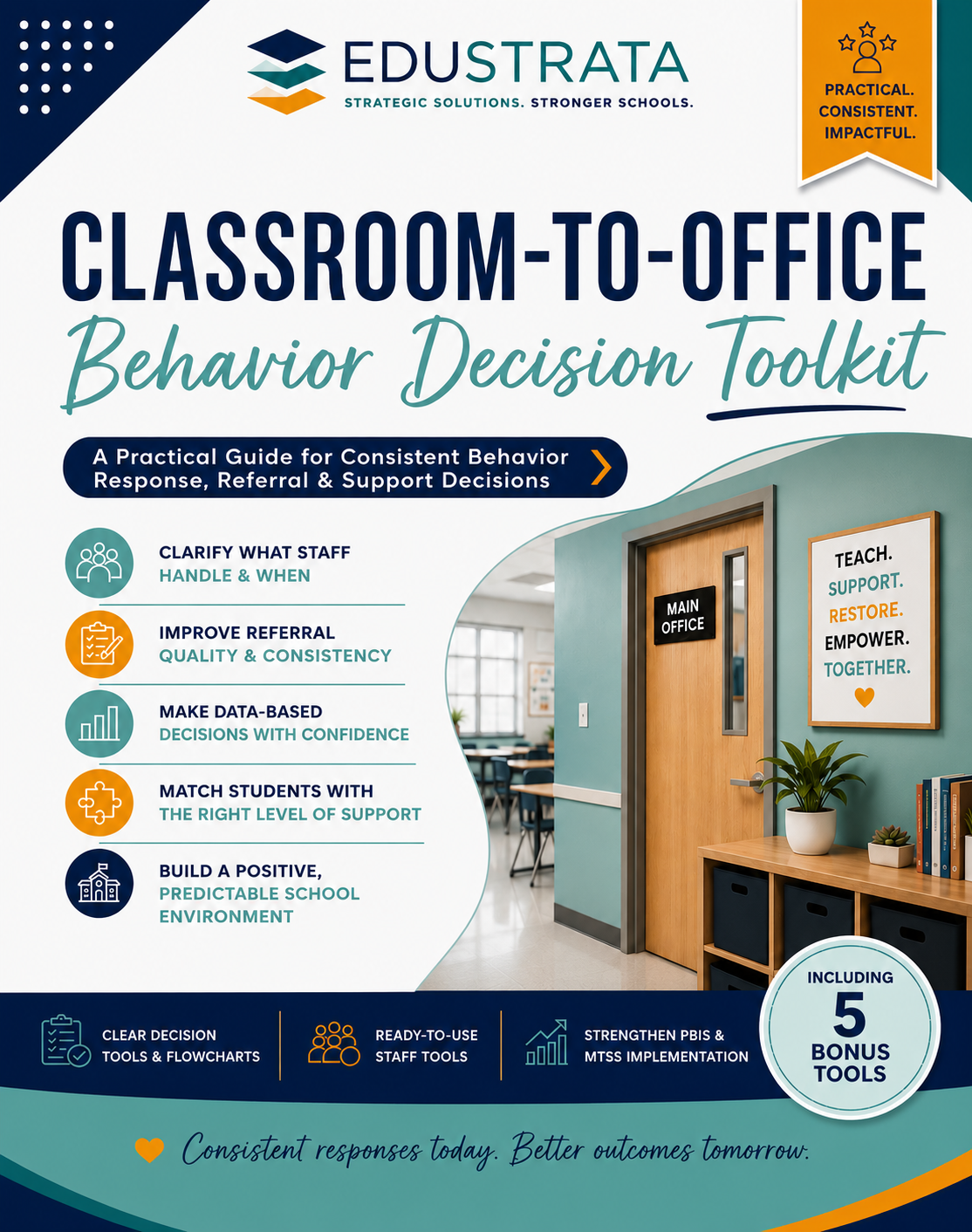
Classroom-to-Office Behavior Decision Toolkit
Create clearer expectations, more consistent referrals, and stronger behavior-response systems across your school.
When staff aren’t sure which behaviors should be handled in the classroom, when an office referral is appropriate, or what should happen after a referral, inconsistency can quickly take over.
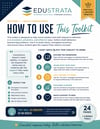
The Classroom-to-Office Behavior Decision Toolkit gives school leaders a practical, ready-to-use framework for creating consistency from the initial classroom response through referral, administrator response, reentry, and consideration for additional support.
What’s Included
Build Consistency
- Behavior Response Framework
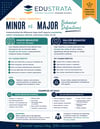
- Classroom-Managed vs. Office-Managed Behavior Matrix
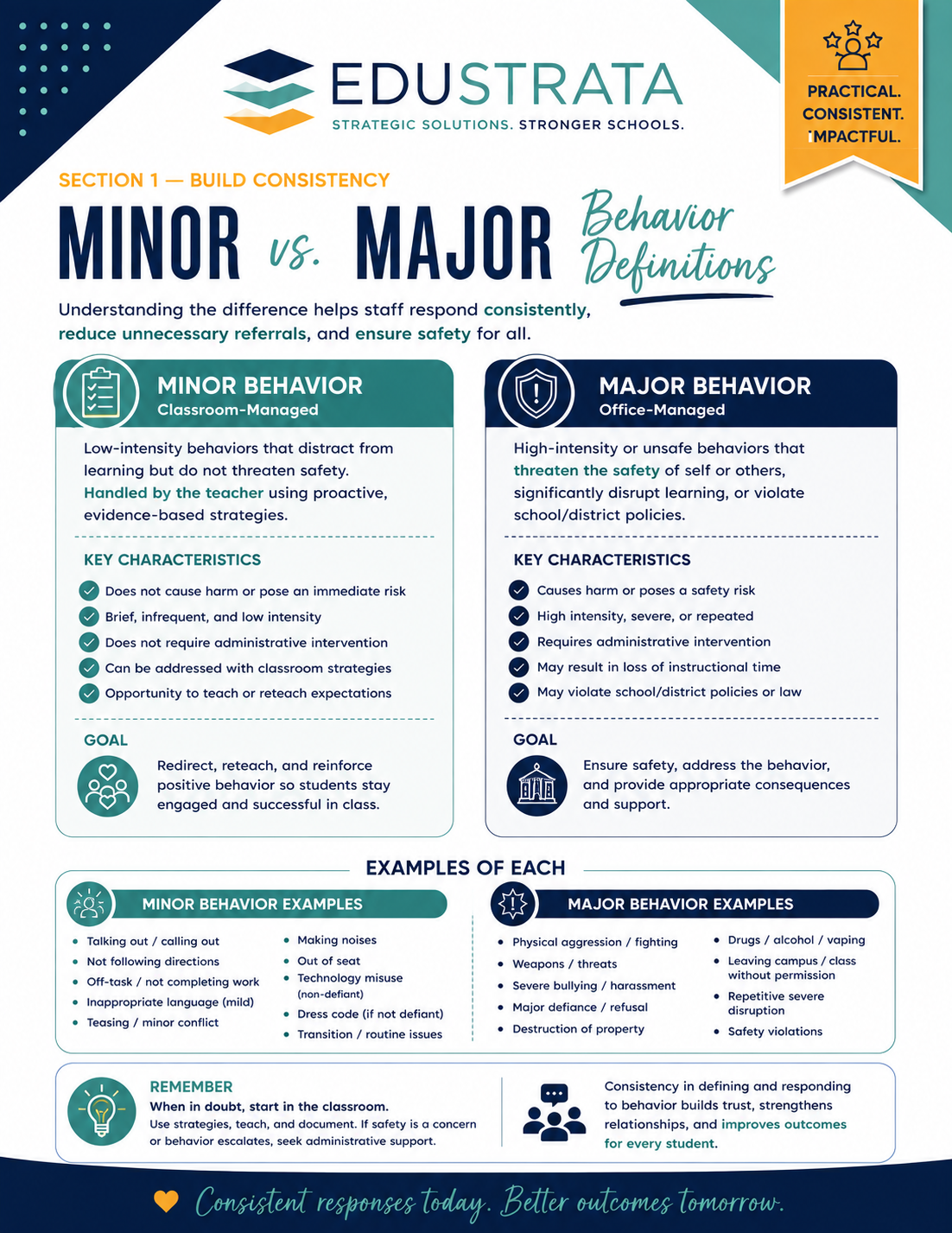
- Minor vs. Major Behavior Definitions
- Behavior Response Decision Tree
Before the Referral
- Before You Refer: 5 Things to Check
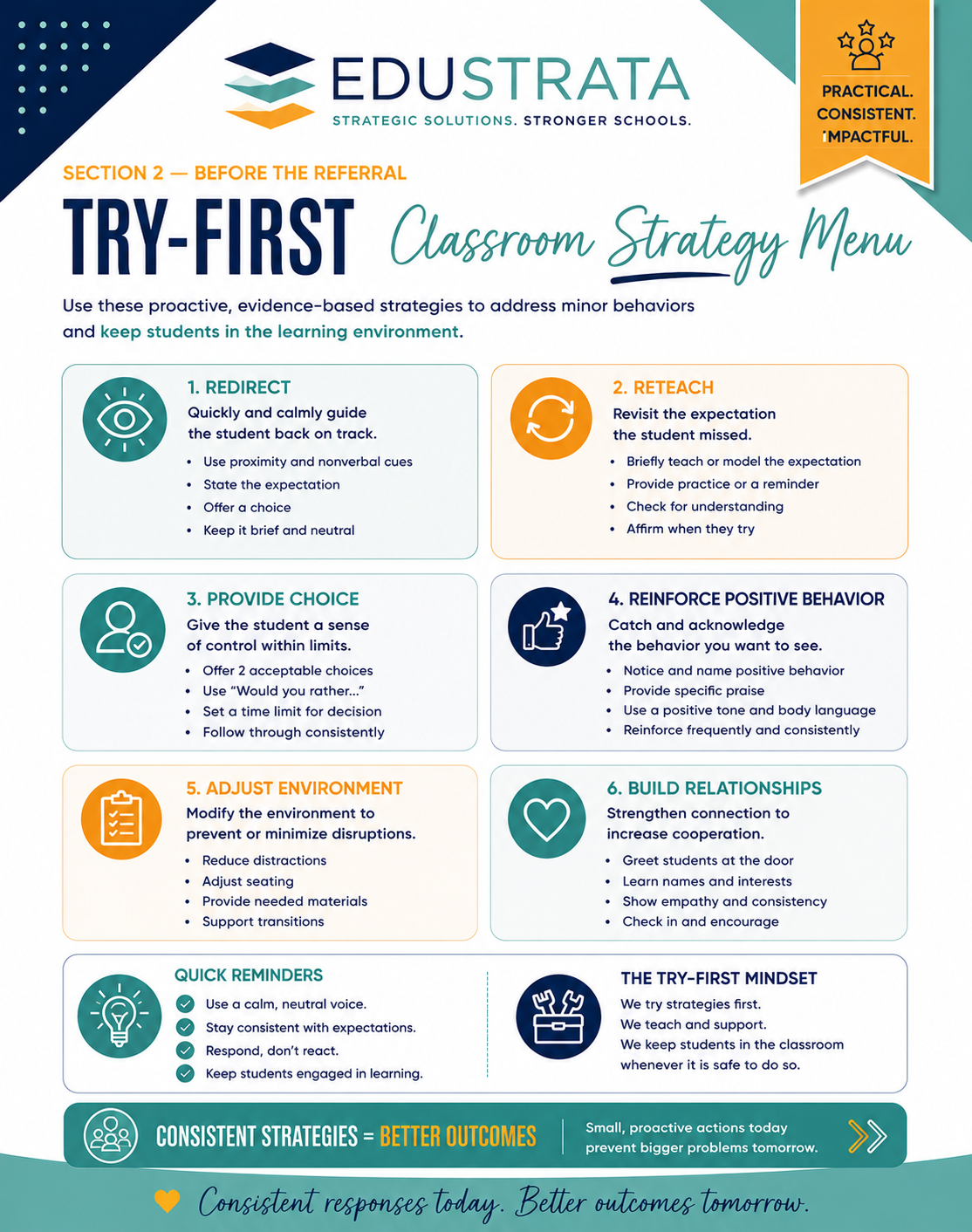
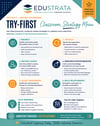
- Try-First Classroom Strategy Menu
- Redirection & Reteaching Quick Guide
- Responding to Repeated Minor Behavior
- When the Same Strategy Isn’t Working
- Intervention Fidelity Check
Making the Referral
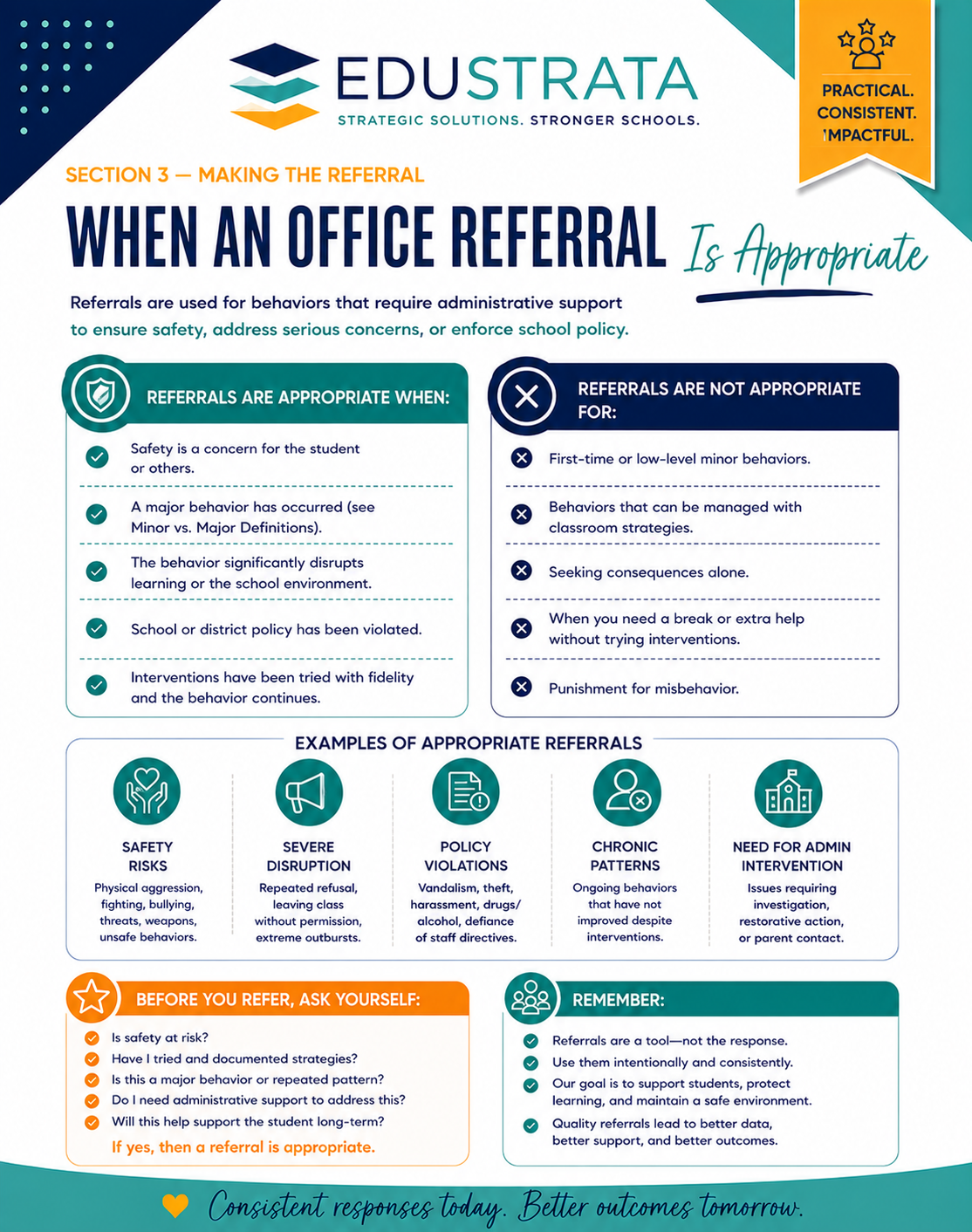
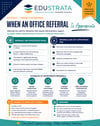
- When an Office Referral Is Appropriate
- What Makes a Referral Actionable?
- Weak vs. Useful Documentation
- Referral Documentation Quick Guide
- Immediate/Safety Concern Response
What Happens Next?
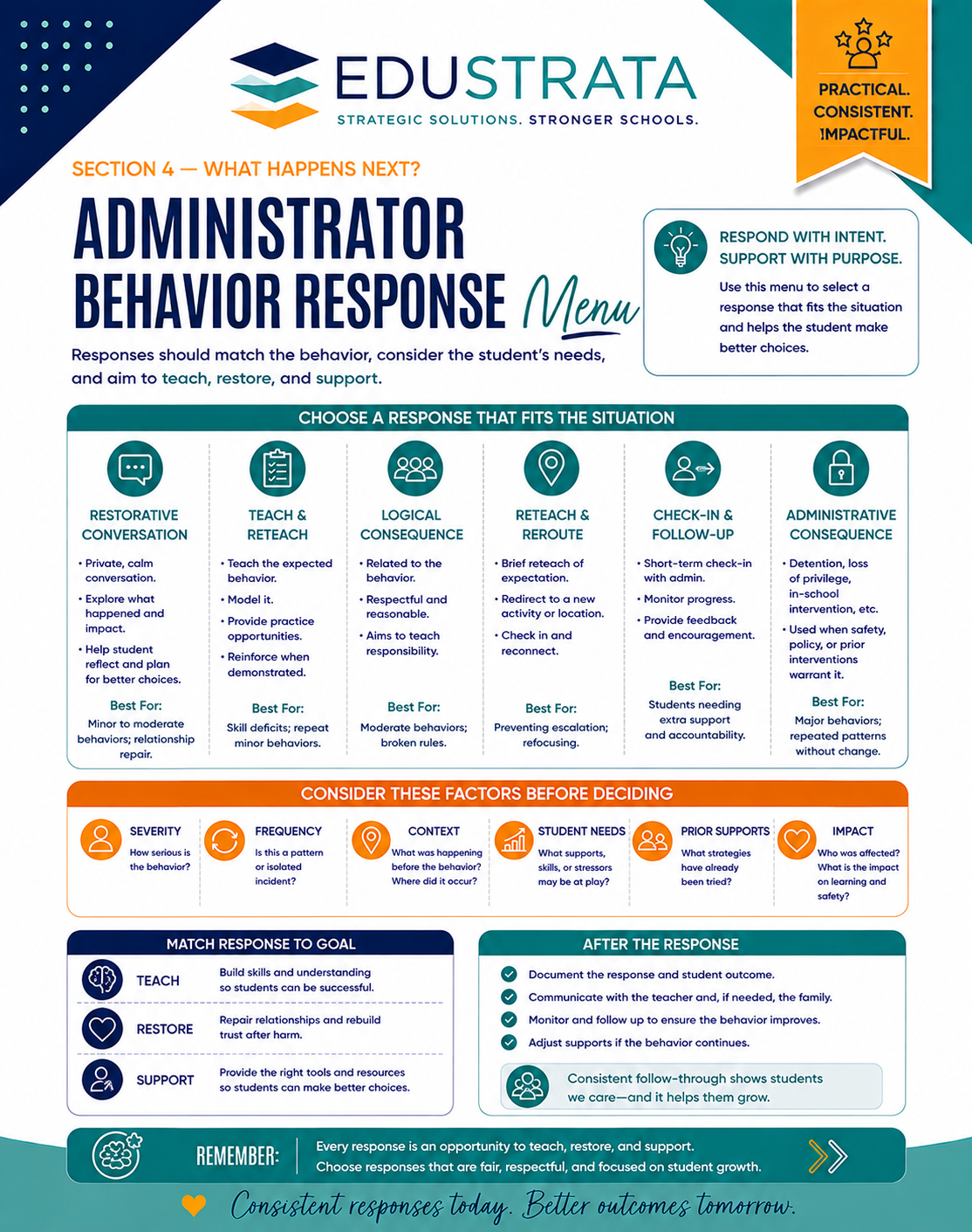
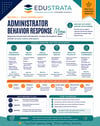
- Administrator Behavior Response Menu
- Logical & Restorative Response Guide
- Family Communication Decision Guide
- Return-to-Class/Reentry Guide
When Behavior Becomes a Pattern
- Repeated Behavior → Tier 2 Consideration Decision Tree
- Tier 2/Tier 3 & Problem-Solving Indicators
- Staff Rollout + 10-Minute Implementation Plan
PLUS 5 Printable Bonus Tools
✓ Classroom vs. Office Managed Staff Poster
✓ “Before You Send Them to the Office…” Teacher Cheat Sheet
✓ Behavior Response Flowchart
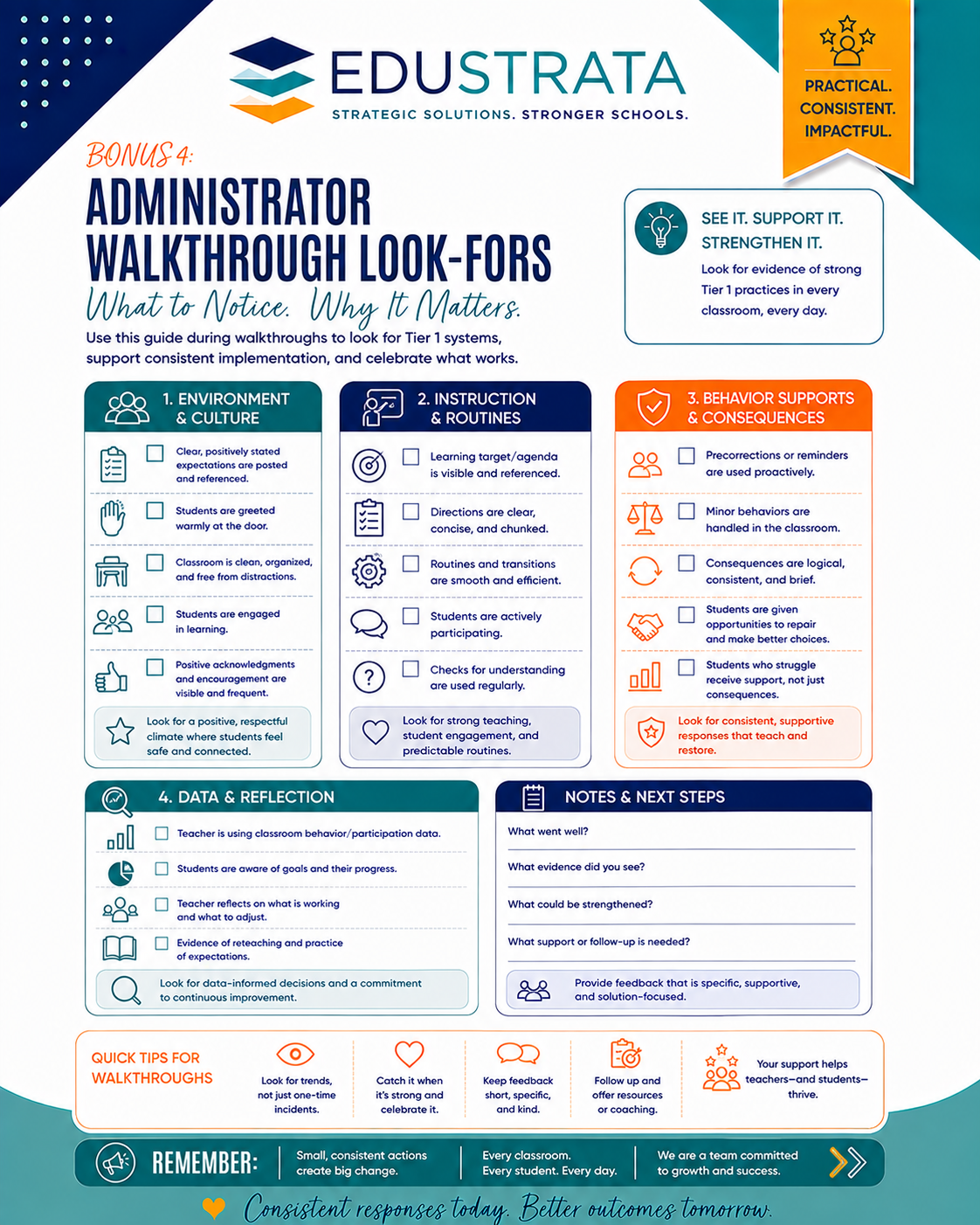
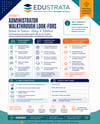
✓ Administrator Walkthrough Look-Fors
✓ Customizable School Decision Matrix
Designed For
Principals • Assistant Principals • MTSS/PBIS Teams • Behavior Teams • School Counselors • Interventionists • Teacher Leaders
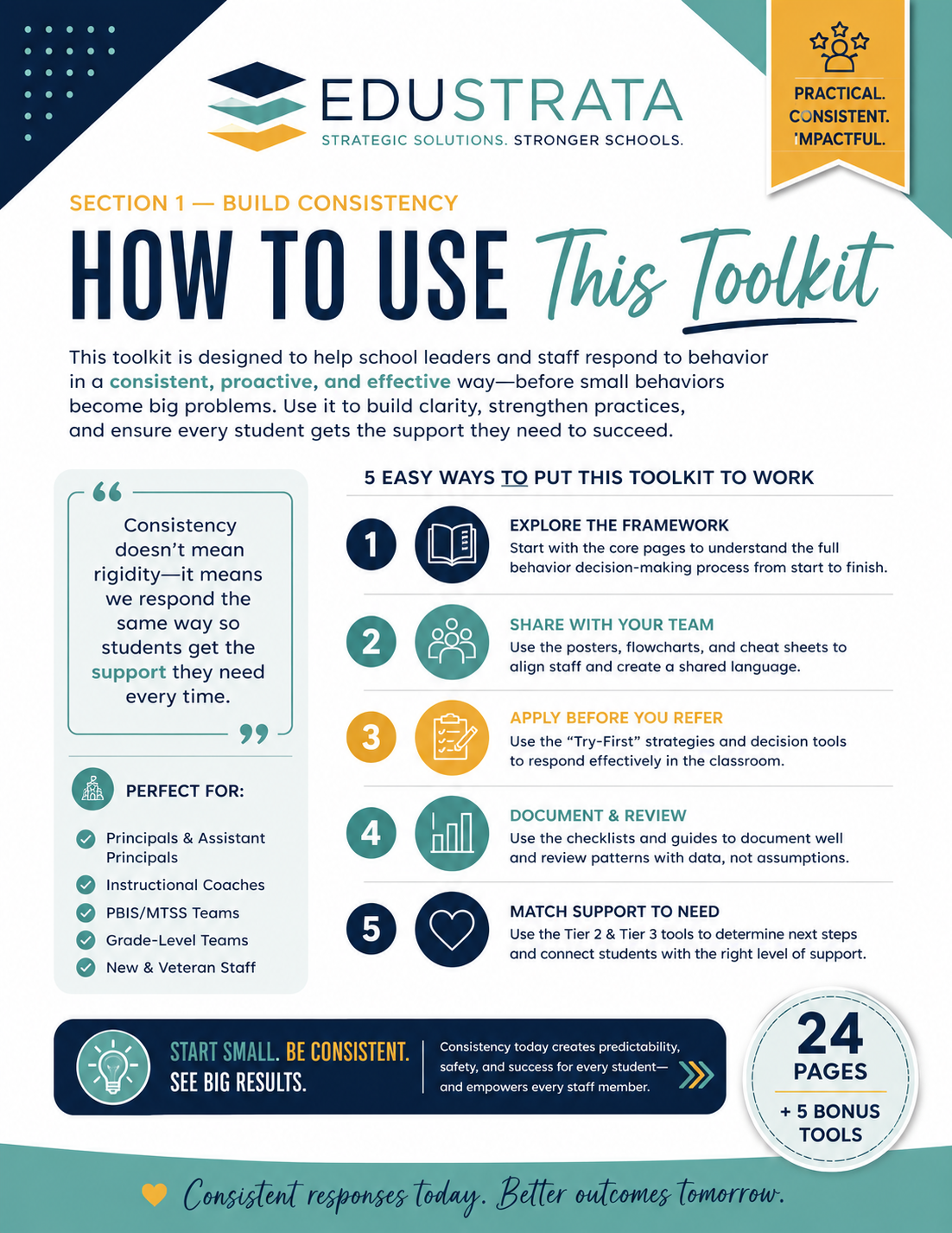
Use the toolkit to support staff training, beginning-of-year expectations, faculty meetings, behavior-team problem solving, referral-system resets, and ongoing implementation.
This isn’t about creating more referrals.
It’s about helping staff know:
What do I handle? What should I try? When should I refer? What happens next? When might a student need additional support?
Same language. Same expectations. More consistent responses.
Digital Resource | Ready to Download & Implement