

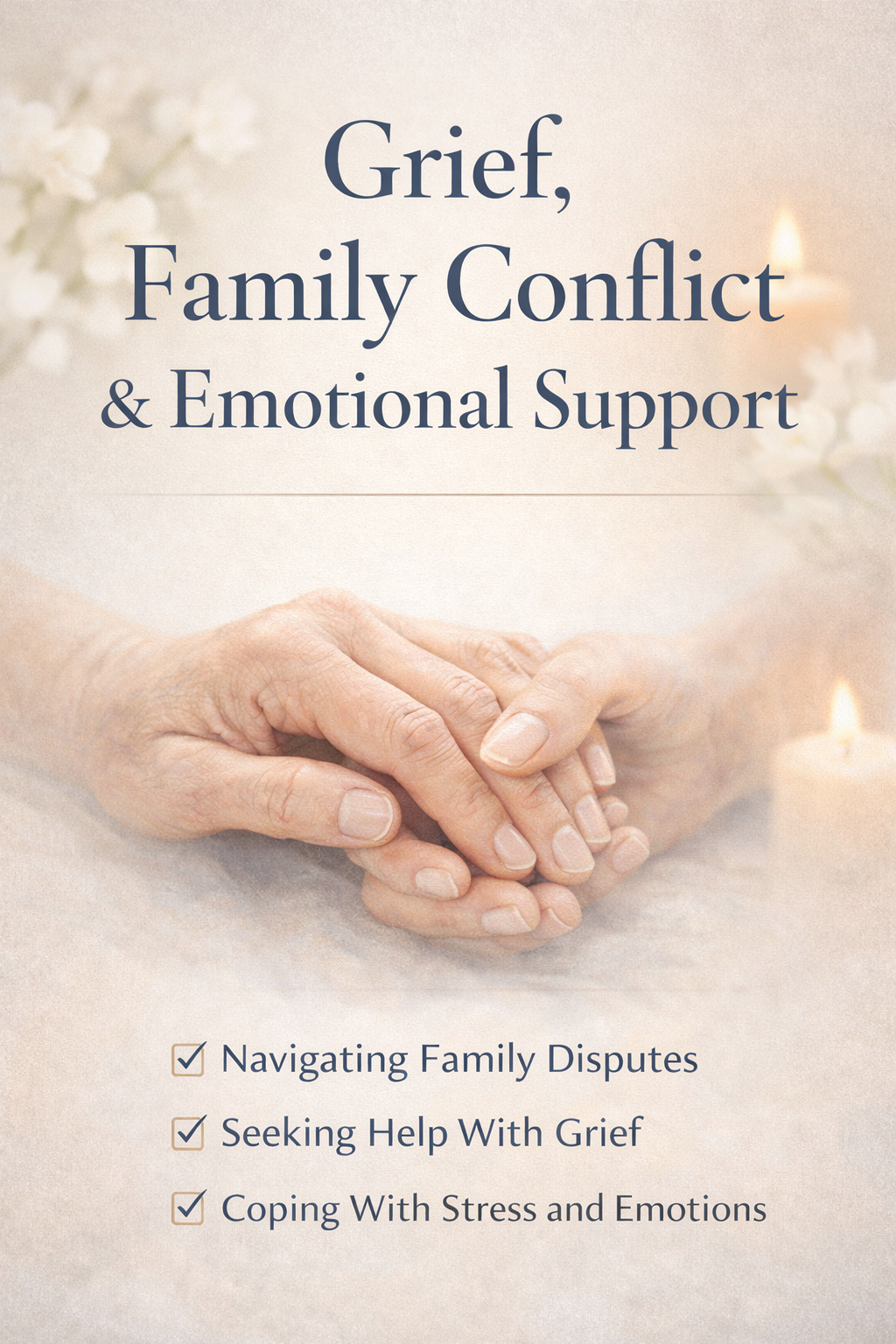




Grief, Family Conflict & Emotional Support — Practical Guidance for Difficult Dynamics After a Loss (PDF)
You’ll receive an instant digital download (PDF) you can print or use on your device. No pressure, no deadlines — just steady support when you need it.
Grief, Family Conflict & Emotional Support
Grief can intensify old tensions, create new misunderstandings, and make even simple conversations feel overwhelming. This guide offers clear, steady support for navigating family conflict after a loss — without pressure, judgment, or emotional overload. With practical scripts, boundary tools, and step‑by‑step guidance, it helps you communicate more clearly, protect your energy, and move through difficult moments with confidence and compassion.
Who This Guide Is For
• Anyone grieving while dealing with family conflict
• Adult children navigating disagreements after a loss
• Partners, siblings, and blended families facing emotional strain
• Anyone preparing ahead to reduce future conflict
What You’ll Learn
• Why grief often intensifies family conflict
• How to set boundaries during emotionally charged moments
• Ways to communicate clearly when others are overwhelmed or reactive
• How to protect your mental and emotional energy
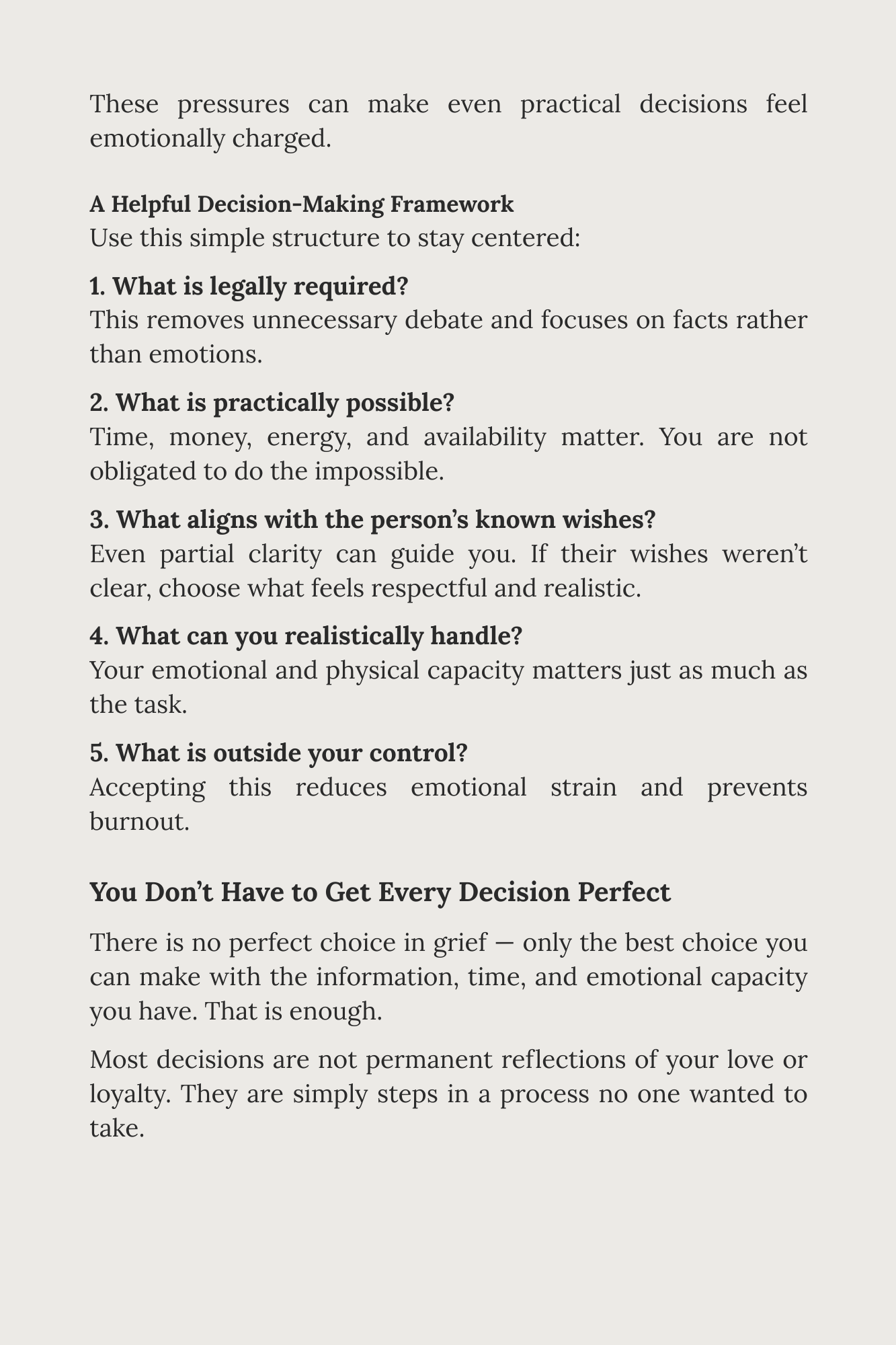
• Strategies for navigating decisions when family members disagree
• What to do when conflict becomes too heavy to manage alone
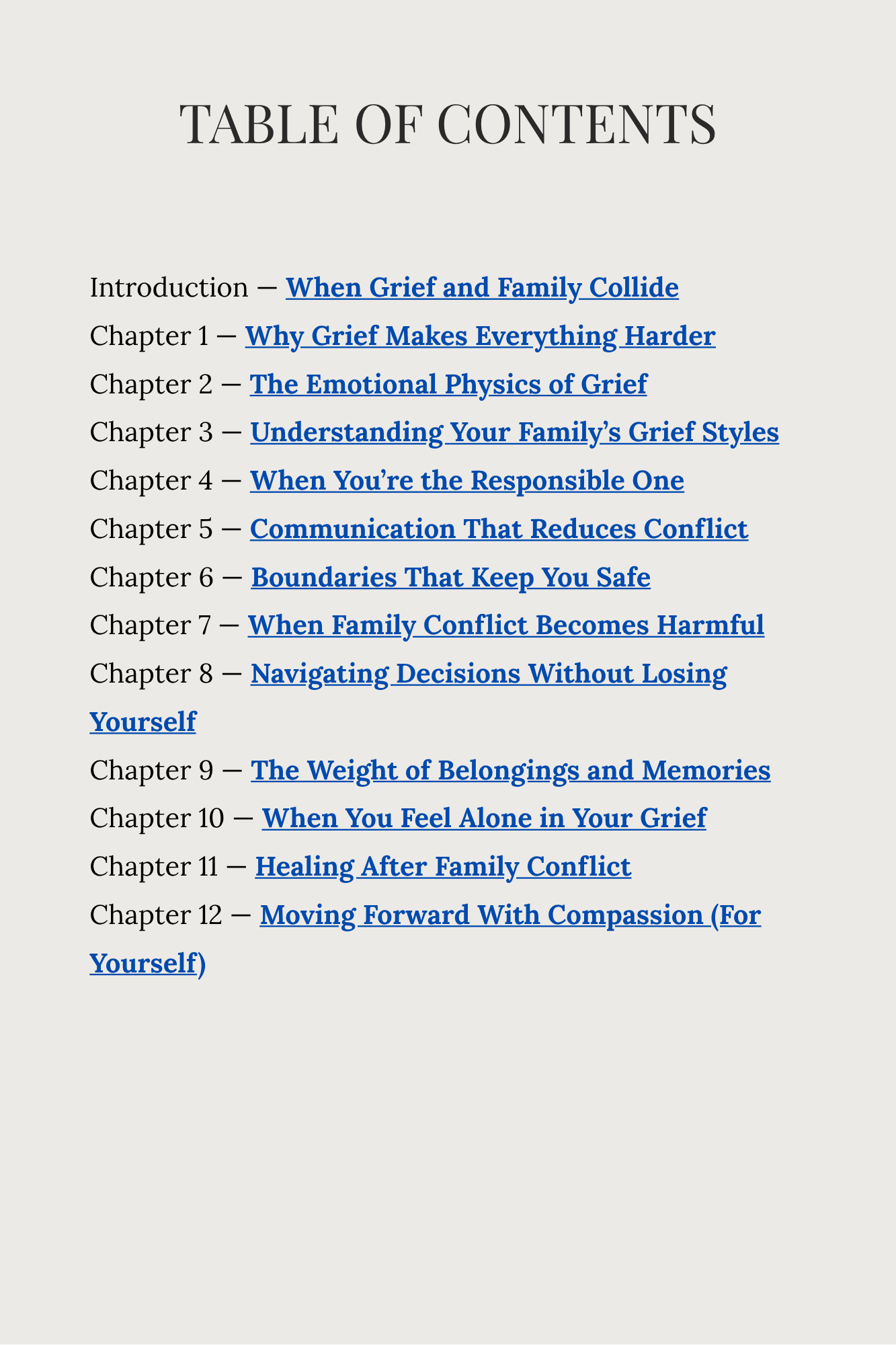
What’s Inside
• Why Grief Triggers Conflict — simple explanations that make sense of reactions
• Common Family Dynamics — patterns that often appear after a loss
• Boundary‑Setting Tools — calm, clear ways to protect your energy
• Communication Scripts — for tense conversations, disagreements, and emotional moments
• Decision‑Making Frameworks — how to move forward when family members disagree
• Managing Expectations — what you can (and can’t) control
• When to Step Back — signs a situation is too heavy to manage alone
• Support for Children & Partners — gentle guidance for the whole family
• Reflection Prompts — space to process emotions and clarify needs
FAQ
Is this guide therapy?
No. It offers practical communication tools and emotional support, but it’s not a substitute for professional care.
Is this only for families with major conflict?
No. It’s helpful for any level of tension — from mild misunderstandings to more complex dynamics.
Can I use this if I’m supporting someone else who is grieving?
Yes. Many people use it to support partners, parents, or friends.
Is this religious?
No. It’s written in a secular, inclusive tone.
Do I need to print it?
No. You can print it or use it digitally on any device.
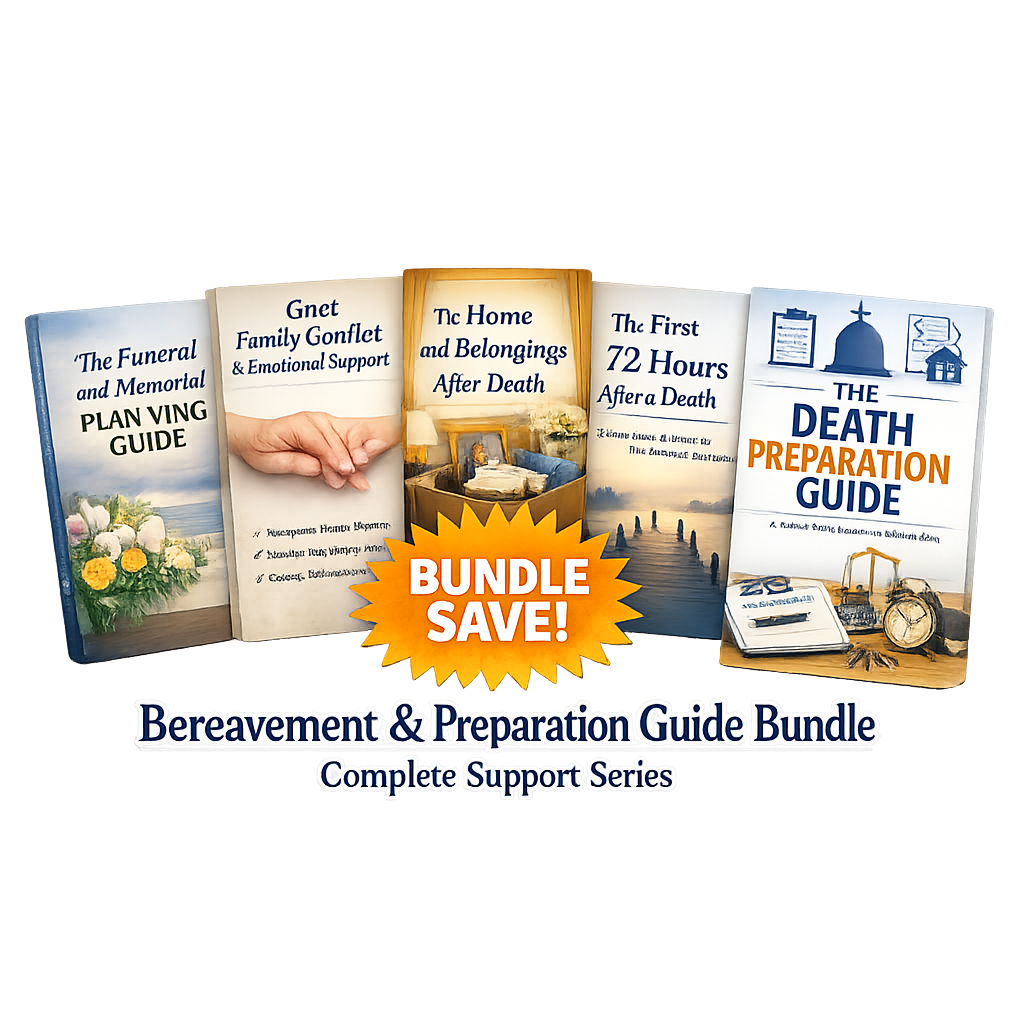
If you’re also navigating practical tasks or early decisions after a loss, the other guides in the Practical Grief Support Series offer the same calm, step‑by‑step approach. You’re welcome to explore them if it feels supportive.