
Stop Staring at the Blank Page!
Discover your natural Writer Mindset Type and use seven creative doorways to figure out what happens next in your novel!
The Real Problem with Getting Stuck
Most people think staring at a blank page only happens when you're starting to write a new book. But if you're working on one yourself, you know that you face the blank page every time you have to write a new scene or chapter. And that means there are multiple times when you can get stuck over the course of 85,000 words or more! You know where your story is right now (HERE), and you might even know where you want to end up (THERE), but if you're stuck, you may have no idea how to build the bridge to get there.

What If You Had Seven Ways to Find Your Next Move?
We all have natural ways of thinking and solving problems. Some writers see possibilities everywhere. Others like to work things out logically, and still others need to talk through an idea before they can see where it's going.
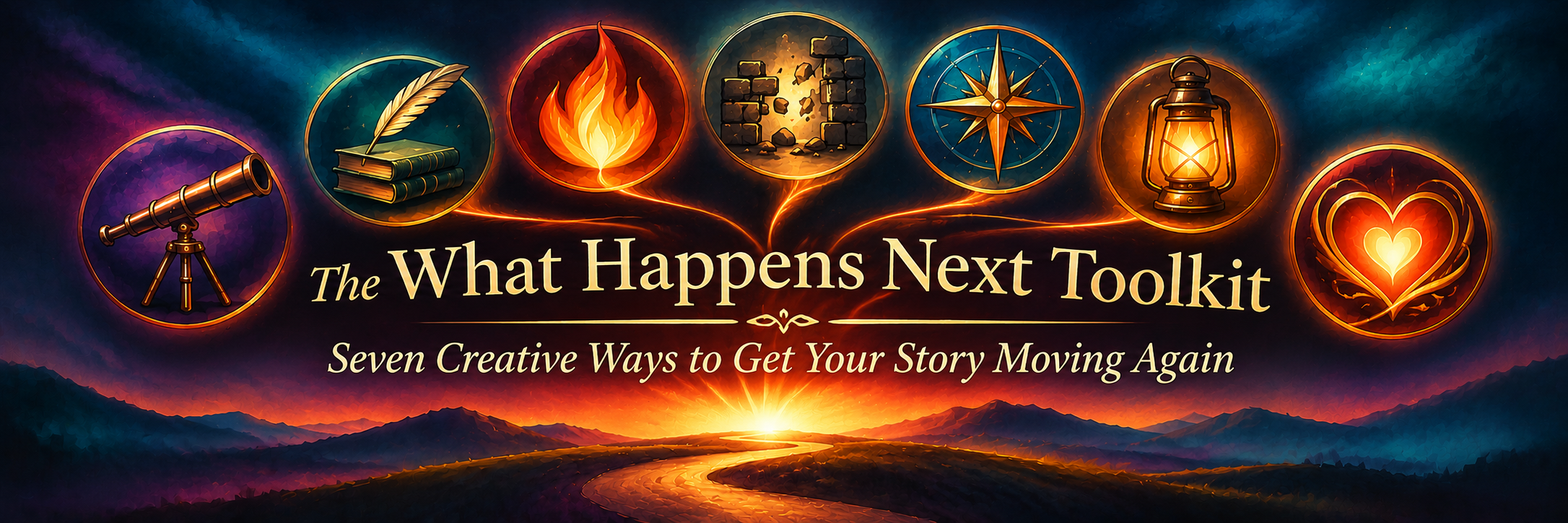
I've identified seven different Writer Mindset Types, each with its own creative strengths. And here's what I've discovered: You don't have to rely on your own mindset to solve every writing problem. Sometimes another approach will help you see something you've been missing.
I call this Borrow a Brain. Instead of sitting there waiting for the perfect idea, you can try a different way of looking at your story. And if that doesn't help, you've got six other approaches to explore.
That's what The What Happens Next? Toolkit is designed to help you do.

How It Works
The toolkit takes you through three simple steps.
Step 1: Discover Your Writer Mindset
Start with the Writer Mindset Quiz to identify your natural creative approach. You'll learn about your strengths and some of the things that can get in your way. You may even discover that you're a combination of more than one type. Knowing how you naturally think gives you a good place to start.
Step 2: See All Seven Mindsets in Action
Watch the recorded masterclass, where I'll take one fictional story problem and show you how seven different Writer Mindsets approach it. Each one has a unique way of discovering what happens next that you can put to use right away.
Step 3: Try It on Your Own Story
Using the guided worksheet, identify where your story stands and explore what could happen next. You can start with your own Writer Mindset or borrow one of the others. The printable cards and cheat sheet make it easy to choose an approach whenever you need one. And once you've used these tools, they're yours to return to whenever another scene leaves you scratching your head.
What's Inside the Toolkit?
-

The Quiz & Results
Take the 21-question quiz to discover your Writer Mindset Type. The accompanying results guide explains all seven types, including their strengths, common struggles, and practical suggestions for working with your natural creative tendencies.
-

The 7 Mindset Masterclass
A 14-minute recorded workshop demonstrating how each Writer Mindset approaches the same fictional story problem. You'll see concrete examples of how different ways of thinking can uncover new directions for a story. You'll also receive the presentation slides so you can revisit the examples whenever you need them.
-

Try-It Worksheet
This five-page worksheet helps you apply all seven approaches to your own manuscript. Start with where your story is now, consider where it may be going, and use the exercises to explore what could happen between those points.
-

The Seven Mindset Cards
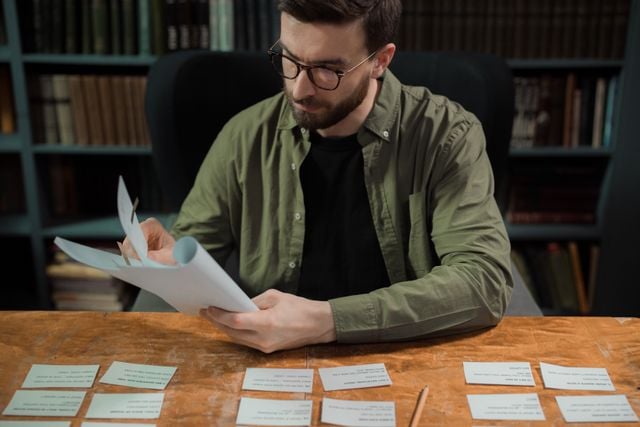
Seven illustrated reference cards you can print and keep near your writing space. Each card gives you a different creative approach, with questions to help you explore your next story move. Pull one out whenever you get stuck, or try a mindset you wouldn't normally use.
-
Cheat Sheet
This quick-reference guide matches common story problems with the mindset approaches most likely to help. It's designed to get you moving without having to work through the entire system every time.

Who Is This Toolkit For?
This toolkit is for fiction writers who have a story underway but sometimes struggle to figure out where it should go next.
You might recognize yourself here:
- You've written a scene you really like, but you have no idea what should happen after it.
- You know a major event is coming, but you can't figure out how to get your characters there.
- You're somewhere in the middle of your novel, and the story has started to lose momentum.
- You keep coming up with possibilities, but none of them feels quite right.
- Your next scene seems too predictable, and you want to explore something more interesting.
Whether you're a plotter or a pantser, you can use these approaches while outlining, during your first draft, or even when you're revising a scene that isn't working.

Who Is This Toolkit NOT For?
I want to be clear about what this toolkit does.
– It won't outline your entire novel for you, and it isn't a complete course on story structure. (If you'd like something to help with your entire story's structure, check out Map to Storyland on the home page here.)
– It also won't tell you exactly what should happen next in your particular book. That's a creative decision only you can make.
– What it will do is give you practical ways to explore your possibilities, work through story problems, and find a next move that makes sense for the story you're trying to tell.
– If you're looking for a full plotting system, this probably isn't what you need. But if you want help figuring out what to write next when your story stops moving, you're in the right place.
Why This Approach Is Different
You've probably heard plenty of writing advice about what to do when you're stuck: Brainstorm more ideas. Make an outline. Raise the stakes. Follow your characters. Those suggestions can all be helpful. The problem is that no single approach works equally well for every writer or every story problem.
After years of working with writers, one thing I've discovered is that we all approach storytelling differently. So I developed the seven Writer Mindset Types to help writers capitalize on their natural creative strengths without letting their weaknesses (which we all have) hold them back.
Now, with this toolkit, we're putting those 7 types to practical use. You start by understanding your own natural approach. Then you learn how to borrow from the other six.
The same story problem can have seven different solutions—you get to choose which is best for your story. And because we're using the same fictional example throughout the workshop, you can actually see those differences in action.
Over time, you may discover that certain mindsets are especially helpful for certain kinds of story problems. The idea is to give yourself more options when your usual way of thinking leaves you stuck.
Why keep banging your head against a wall when you really want to tell this story? The key is just shaking your own creativity loose, and this system can help you do that.
FAQs
-
No. The toolkit includes the Writer Mindset Quiz and Results Guide, so you'll discover your type in the first lesson.
-
Many writers have a blend of creative tendencies. You can start with whichever approach feels most natural, then explore the others.
-
Absolutely. You don't need to know your entire plot or even where your story is heading. Some of the approaches help you explore possibilities when you don't have a destination in mind. Others help you work backward when you already know where you're going. Use whichever one fits the way you're working.
-
Just because you have an outline doesn't mean you won't get stuck! Sometimes plotters discover new things as they write, and that can throw them off. If you're struggling to connect two events or figure out what needs to happen before a major turning point, this system will help you break through. It works in the outlining stage or in the writing stage.
-
No. This is a focused toolkit for one particular problem: figuring out what happens next in your story. You'll learn seven approaches you can use whenever you need to find your next move. If you'd like more help on story structure, check out "Map to Storyland" on the main shopping page.
-
The recorded masterclass is about 14 minutes long. You'll also have the Writer Mindset Quiz and downloadable exercises. How much time you spend using those tools is up to you. You can explore all seven approaches or jump straight to the one you think will help.
-
You can skip that step and go straight to the workshop, or you can take it again! Some writers find that their creative approach changes with time.
-
Of course! The cards, cheat sheet, and worksheet are designed to be used whenever you're working through a story problem. You can come back to them with different scenes, manuscripts, and genres—whenever you need help finding your way forward.
-
The workshop was originally presented live inside my Writer's Brain Studio community. I've adapted the recording to include the core teaching while removing the portions involving Studio members to respect their privacy. The presentation slides are included for reference.