
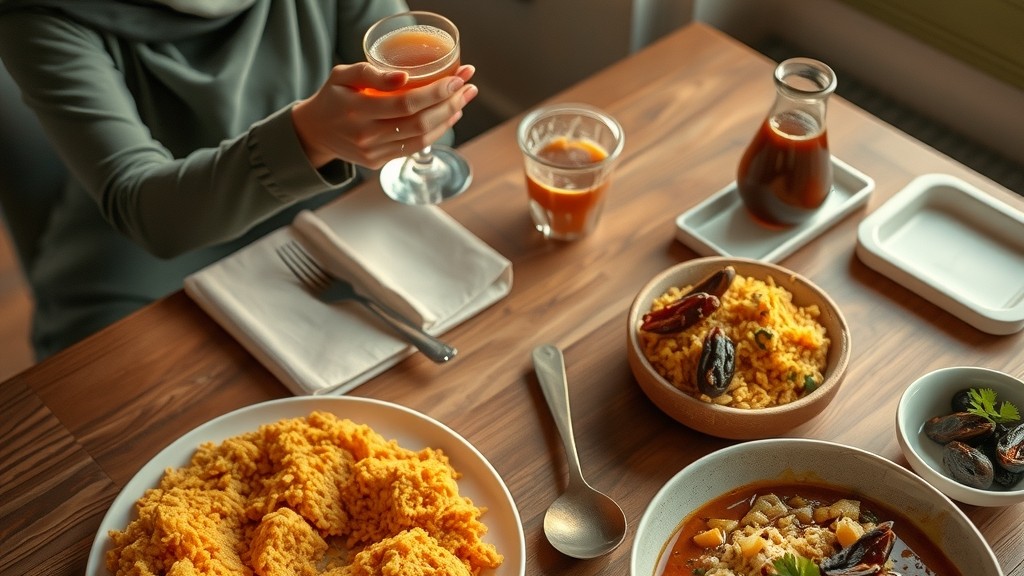
Iftar from the Coast
I grew up eating iftar food from the coast. Mahamri that smelled of cardamom. Fish in a thick coconut sauce. Ukwaju juice, cold and sour, after a long day.
When my friends moved to London, Toronto, Dubai and Minneapolis, they all told me the same thing. They missed these dishes. But the recipes they found online used ingredients their local shops do not sell. And nobody had time to work out a whole week of cooking.
So I made this book. It does the planning for you.
WHAT IS INSIDE
15 recipes, all with the same simple layout:
- A short story about where the dish comes from
- A time and servings strip, so you know if it is a Quick, Medium or Slow dish
- Ingredients in grams and cups
- A "Far from home" column that tells you what to use if you cannot find the original ingredient
- Numbered steps with things to look for, like colour, sound and how hot the oil is
- A suhoor make-ahead tip, where the dish can be prepared early
- An allergen line
The recipes:
- Starters and fried bites: bajia with a tamarind-chilli chutney, viazi karai, sambusa
- Mains: pilau ya nyama, samaki wa kupaka, kuku wa kupaka, mishkaki
- Sides: mbaazi za nazi, wali wa nazi, kachumbari
- Breads and something sweet: mahamri, chapati laini, vitumbua
- Drinks for opening the fast: ukwaju juice, chai ya tangawizi na iliki
Also in the book:
- Start Here pages with a short welcome, how to read a recipe page, and a plain-words glossary of the Swahili terms (pilau, kupaka, mbaazi, ukwaju, mahamri, kachumbari, karai, wali)
- A pantry and swaps guide as a table. It covers coconut milk, tamarind, pilau masala, pigeon peas, fish, besan, rice and where to shop abroad. For each one I say how the taste changes if you swap.
- A short, calm Ramadan kitchen setup: five things worth buying once
- A seven-day iftar menu plan, with the slower dishes on the weekend and the quick ones on weekdays
- A Sunday prep hour list, three plates for when you only have 30 minutes, and tips for cooking for one or two
- A second week as a swap grid, so the 15 recipes can last a month without a repeat
- A one-page shopping list to print, grouped by aisle, with tick boxes and quantities for 4 people
- An allergen table for all 15 recipes, storing and reheating notes, and a troubleshooting page for the common problems: mahamri too dense, bajia soggy, sauce split, rice sticky, fish dry
The dates in the menu plan are left blank, because Ramadan moves every year. You can use the book in any year.
WHO IT IS FOR
This is for you if you are a Muslim woman or young adult living away from the coast, or away from home in general. Maybe you work or study all day. You want food that tastes like home, but you do not have hours, and you do not have a shop that sells everything.
It is also for you if you have never cooked this food before but love to eat it. The glossary and the swaps are written for readers who are not East African.
HOW IT WORKS
Start with the pantry and swaps pages. Then look at the weekly menu and print the shopping list. Stock your spices and tins once, before Ramadan begins, and your weekly shop is mostly fresh food.
Pick the quick dishes for work days and the slower ones for the weekend. Where a dish can be made at suhoor time, the recipe tells you how.
The photos are of the real dishes I cooked. I cooked every recipe in this book at home, including the swaps.
AN HONEST NOTE
Swaps change the taste a little. I say so in each recipe, so you know what to expect. This is also food from one coastal tradition, as I know it. Other cooks do it differently, and that is fine.
WHAT YOU GET
One PDF, around 45 to 55 pages, made to read on a phone or tablet or to print. A4 and US Letter friendly. The menu plan and shopping list are on their own pages, set up to print.
Cook what you can, and make it your own.