
Mother & Father Wounds
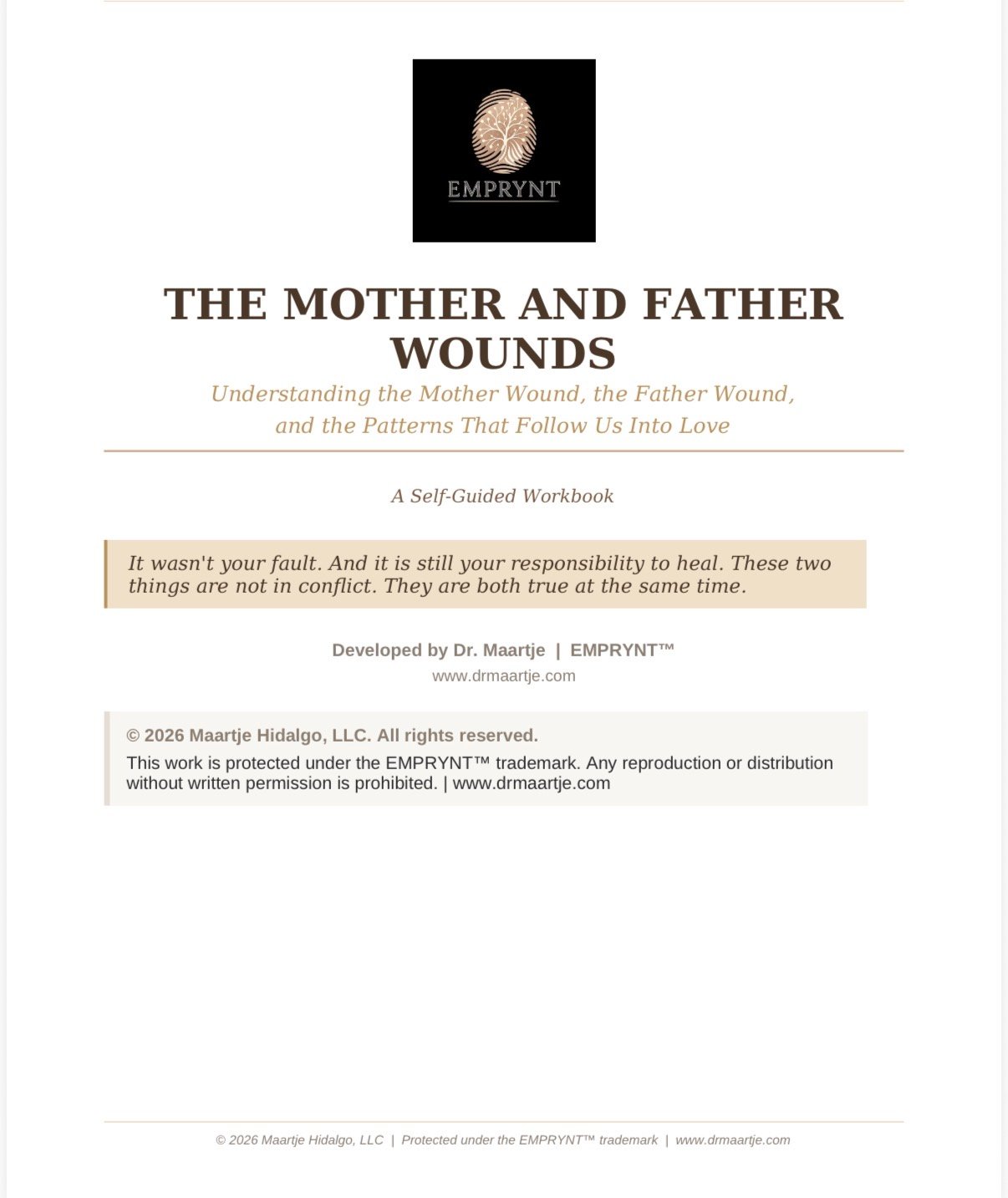
It wasn't your fault, and it is your responsibility
Healing with purpose
The way you love. The way you fight. The way you leave — or stay too long. The standards you hold yourself to that never quite get met. The emptiness that shows up, even in good relationships. The voice in your head that sounds nothing like you. None of this came from nowhere. It's an imprint from two core figures. And the map they gave you — whether they meant to or not — is still the map you're using. This isn't blame, this is to show you why. This is written for men and women.
This workbook is about that map.
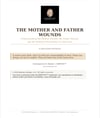
The Mother and Father Wounds is a clinically-grounded, self-guided workbook that takes you through the neuropsychological and psychological roots of your identity and relationship patterns — where they formed, why they persist, and what it actually takes to change them.
Not surface-level self-help. Not a checklist of red flags. A real framework — drawing on schema-focused therapy, Jungian psychology, attachment neuroscience, and cognitive psychology — written in language a human being can actually feel.
What this workbook covers
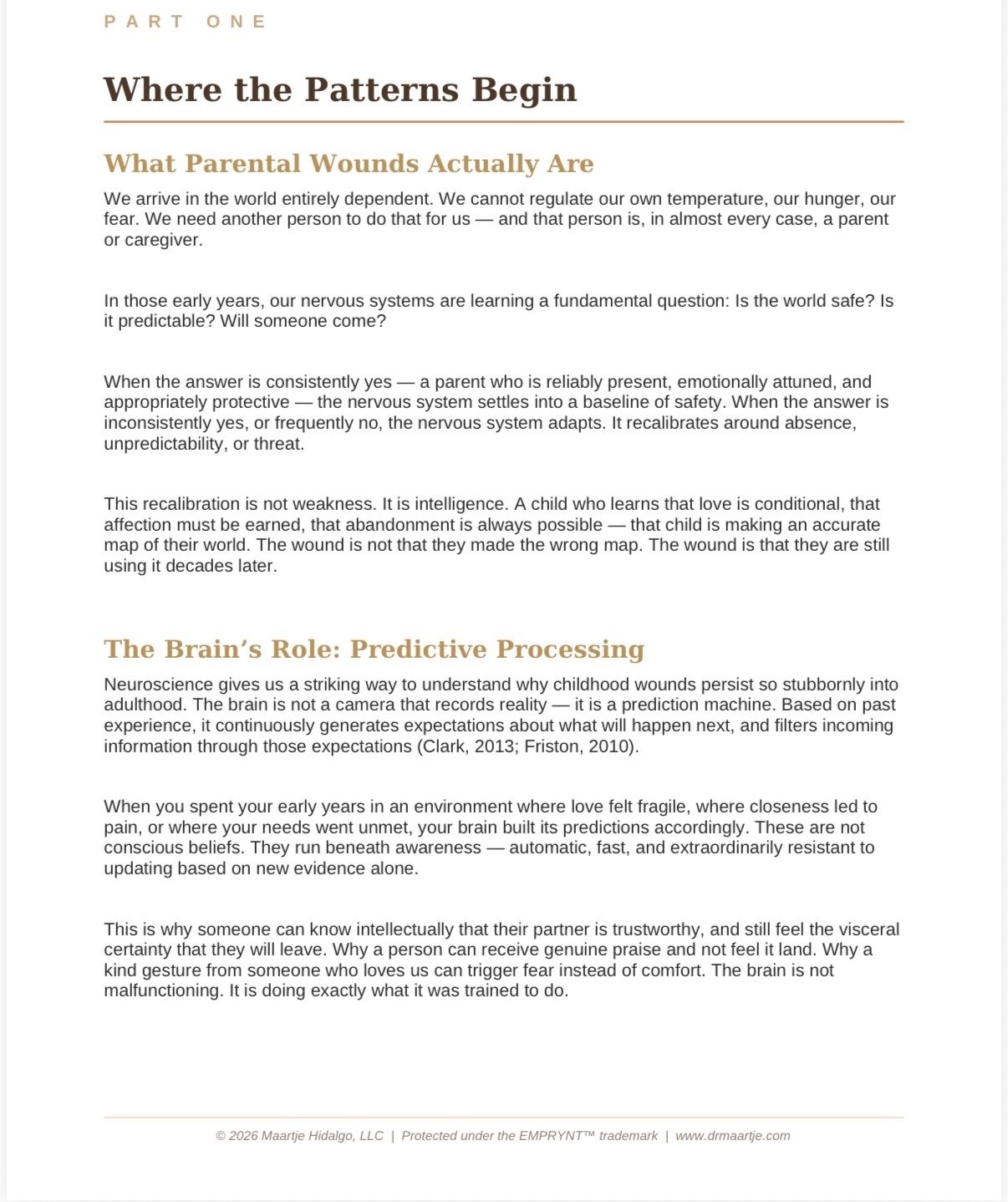
Part 1 — Where the Patterns Begin Your brain is not a camera. It is a prediction machine. Early experiences with caregivers don't just leave memories — they build the templates through which you filter every relationship that follows. This section explains the neuroscience and the psychology of how that happens.
Part 2 — The Mother Wound The mother is the first mirror. In her eyes, you first glimpsed who you might be. This section explores what the mother wound looks like across its many forms — not just neglect or abuse, but also the subtler absences. Separate sections for daughters and sons.
Part 3 — The Father Wound The father is the first protector from the external world — and when that transmission is missing or distorted, the wound lives in identity, confidence, and permission to exist fully. Separate sections for daughters and sons.
Part 4 — When Both Wounds Are Present When neither early attachment is reliable, the child has nowhere to return to. This section holds space for that particular kind of aloneness — and the two broad adaptations it produces.
Part 5 — Schemas: The Brain's Autopilot Six key schemas or patterns linked to parental wounds — each described with its core belief, its triggers, and the patterns it drives. How the brain makes them self-confirming. How coping modes keep them in place.
Part 6 — What We Idealize The need that went most unmet in childhood doesn't disappear. It becomes the ideal most desperately sought in adulthood — usually utopian, perfect, unconditional. And no real person can be that. This section maps the longing back to its source.
Part 7 — What Love Is, and Isn't When wounds go unexamined, what we call love is sometimes something else entirely. This section distinguishes healing love from re-wounding love — not as a hierarchy, but as a map.
Part 8 — Patterns in Self, Relationships & Identity The inner critic. Emotion regulation strategies built for a child, not an adult. Identity constructed around what earned approval rather than what was actually true. This section brings the wound into daily life.
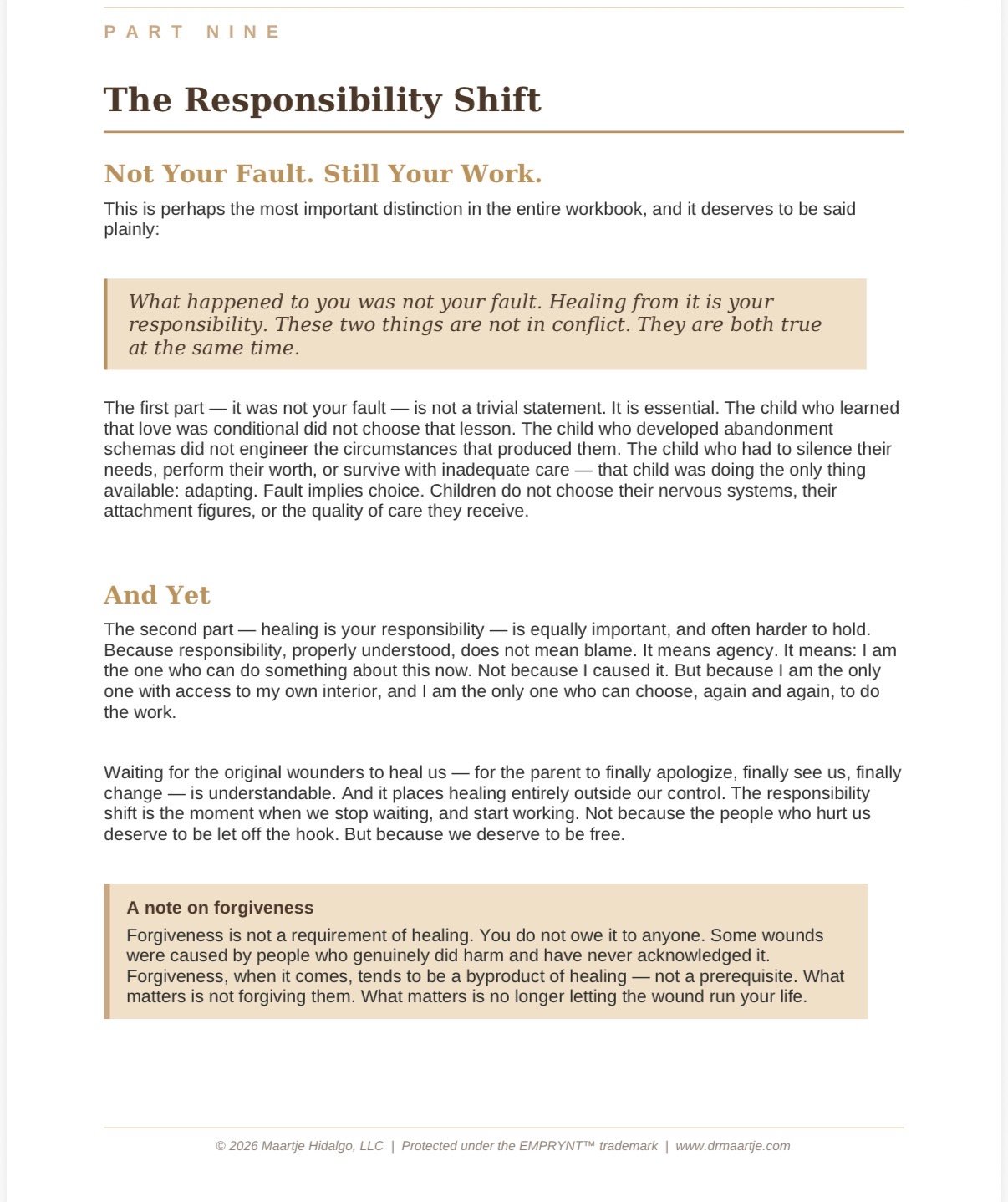
Part 9 — The Responsibility Shift It was not your fault. Healing is your responsibility. These two things are not in conflict. This section is about what it means to take agency over your own healing without collapsing into self-blame.
Part 10 — Integration and Repair Reparenting. Inner child work. The non-linear, uneven, real work of building a life no longer organized around the wound.
About Dr. Maartje
I built this workbook because I kept having the same conversation in my coaching practice. Intelligent, self-aware people who could name their patterns precisely — and still couldn't stop repeating them.
The missing piece was almost always the same: they understood their behavior. They didn't understand the architecture beneath it. Where the pattern actually lived. What it was originally for. Why the brain kept running it even when every conscious part of them wanted to stop.
That's what this workbook is for. Not analysis for its own sake. Understanding in service of change.
© 2026 Maartje Hidalgo, LLC | Protected under the EMPRYNT™ trademark