










The Diagnostic Nobody Ran: What Educators Built for Their Students That the System Never Built for Them
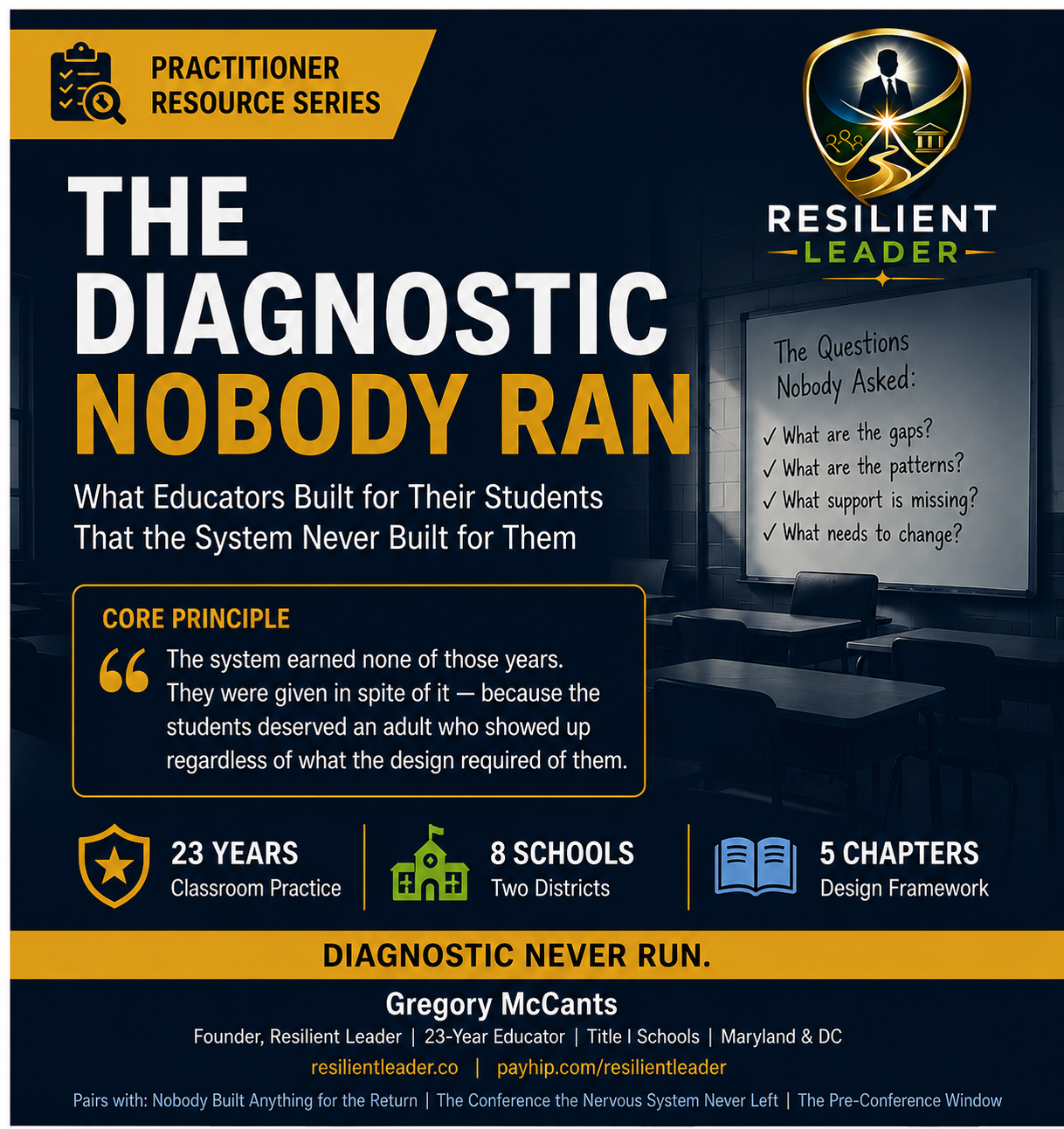
The system didn't earn a single one of those years. Those decades were given anyway, in spite of the design, simply because the kids sitting in those rooms deserved an adult who showed up regardless of how broken the institutional framework felt.
This entire guide grew out of a moment at 10:00 PM on a random Tuesday night. I was looking at a unit assessment where 73% of a class section had scored below a 50%. Instead of just dumping those failing scores into the gradebook and moving on, I sat down and graded every single sheet by hand. I mapped out the errors question-by-question. I isolated notation traps, measurement blind spots, and reversed equations. That targeted reteach sequence didn’t treat the bad data as a student intelligence deficit; it treated it as an instructional design failure. And that's when the real realization hit me: the school system has never once run a diagnostic like this for its teachers.
Across 23 years, eight separate schools, and a dozen teaching and administrative roles, I’ve watched school systems extract high-stakes compliance metrics endlessly . They give you observation rubrics, annual climate checklists, and exit surveys . But the institution just logs the bad score, posts the job opening, and treats systemic teacher burnout like an individual character flaw instead of running an item analysis on the flawed environments producing it. The evaluation framework has plenty of ratings. It just completely lacks an actual diagnostic.
This text is the item analysis protocol the system skipped. It shifts schools away from human extraction (running on the uncompensated overextension of your most dedicated educators) and provides the process infrastructure needed to protect and retain talent before they hit the breaking point.
Who This Is For
- School Principals, Assistant Principals, and Deans who want to stop treating teacher attrition as an inevitable cost of doing business and start fixing root-cause design flaws.
- Instructional Coaches & Culture Directors looking for a concrete, data-driven approach to map out adult structural error patterns across a building.
- Veteran Educators who are completely exhausted by rigid observation rubrics that fail to measure the massive cognitive and emotional load required to keep a classroom running.
What’s Inside
- 5-Chapter Design Framework: An in-depth operational map breaking down the critical difference between an institutional metric and a real systemic diagnosis.
- The Adult System Error Pattern Equivalents Matrix: A structural translation guide revealing how classic student mistakes mirror systemic administrative blind spots—like forcing teachers to execute complex restorative philosophies without providing concrete, copy-and-paste script language to use under pressure.
- The Institutional Item Analysis Checklist: A quick-reference reference sheet designed to help leadership answer hard diagnostic questions about error mapping, knowledge capture, and organizational design responses.
- Field-Tested Research Data: Contextual reference points tracking national teacher burnout metrics, out-of-pocket classroom supply expenses, and the steep financial toll districts pay to replace lost staff.
What It Pairs With
To close the loop between individual classroom performance and building-wide system architecture, this book links directly with:
- The Item Analysis Practitioner's Guide: The exact, step-by-step student data methodology that inspired the practitioner mirror argument at the core of this text.
- The Conference the Nervous System Never Left: For building functional biological recovery and debrief systems to support staff handling high-activation environments.
- The Pre-Conference Window: For locking down behavioral evidence records and structural protocols before high-stakes family and disciplinary meetings occur.