

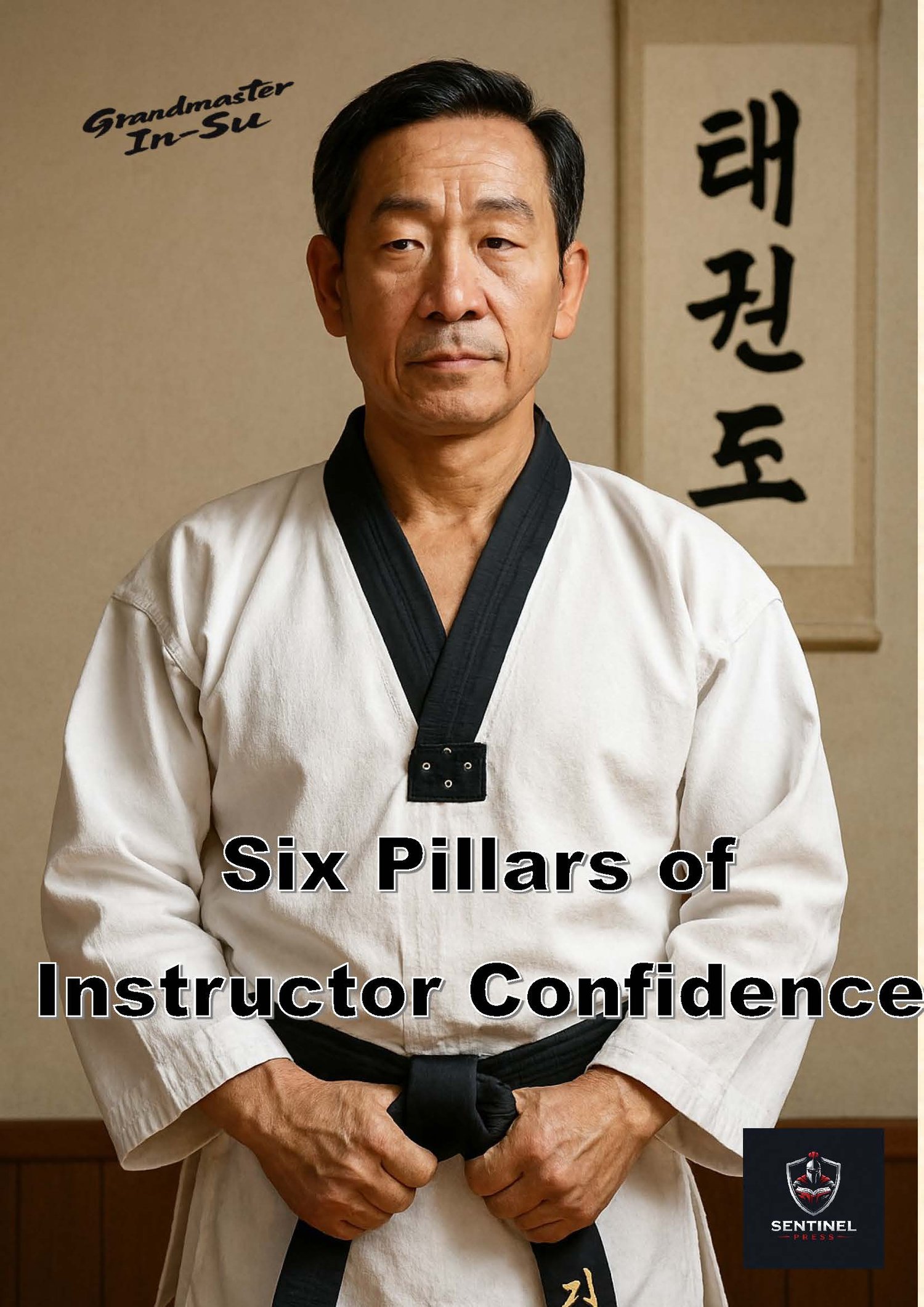
The Six Pillars of Instructor Confidence
The Six Pillars of Instructor Confidence
Confidence isn’t a personality trait—it’s a by‑product of preparation. When you know your material, plan your session, anticipate questions, and organise your equipment, you walk onto the mats with authority.
Students feel it.
Parents notice it.
Your teaching improves because of it.
Preparation is not extra work—it is the foundation of every successful class.
Here is a fully expanded, four‑page version of your section Set the Tone from the Start—written in the same authoritative, scenario‑driven style as the rest of your instructor manual. It reads like a complete chapter, with depth, clarity, and practical examples that match your standards for professional martial arts teaching content.
Set the Tone from the Start
The first minute of your class is where leadership is established. Students decide—often subconsciously—whether you’re in control, whether they can trust you, and whether this session will be focused or chaotic. A confident start creates a confident class. A hesitant start creates uncertainty, distraction, and discipline problems later.
Your opening moments communicate far more than your words. Your posture, your tone, your pace, and your presence all signal what kind of instructor you are. When you begin with clarity and authority, students settle quickly, listen more attentively, and follow instructions with less resistance.
A strong start is not about being strict—it’s about being intentional.
Greet Students Warmly
A confident smile, eye contact, and a clear greeting create immediate rapport. Students respond better when they feel acknowledged, and this is especially important with children, who take emotional cues from your tone and body language.
A warm greeting does three things:
• It shows students you’re present and engaged
• It builds trust before the class even begins
• It sets a positive emotional baseline for the session
Examples of Effective Greetings
• “Good afternoon, team—great to see you ready to train.”
• “Welcome in, everyone. Line up in your usual spots.”
• “Hi, champions. Let’s get focused and start strong today.”
Why This Matters
Students—especially younger ones—mirror your energy. If you greet them with enthusiasm and confidence, they rise to that level. If you greet them with stress, distraction, or low energy, they follow that instead.
Scenario Example: Greeting a Nervous Beginner
A new student walks in, unsure and hesitant. A prepared instructor steps forward, smiles, and says:
• “Welcome! I’m glad you’re here. I’ll guide you through everything today.”
That single moment can determine whether the student feels safe enough to try.