
PCCN CARDIAC AND SHOCK MANAGEMENT EXAM 2026 WITH 100% ACCURATE ANSWERS
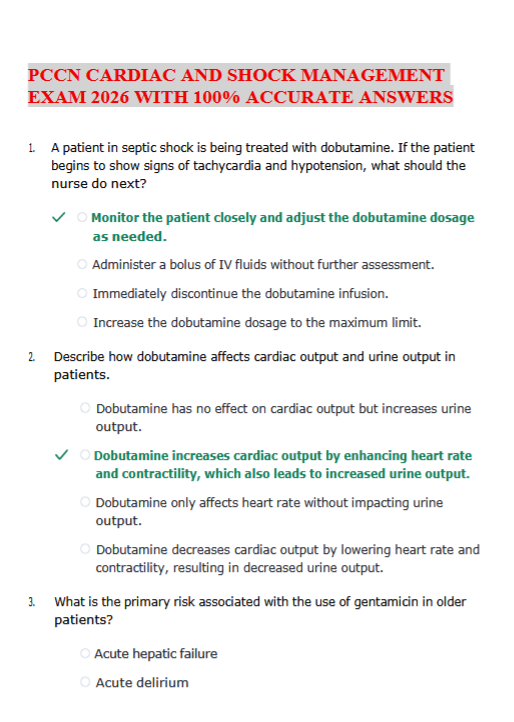
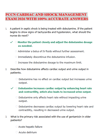
A patient in septic shock is being treated with dobutamine. If the patient
begins to show signs of tachycardia and hypotension, what should the
nurse do next?
Monitor the patient closely and adjust the dobutamine dosage
as needed.
Administer a bolus of IV fluids without further assessment.
Immediately discontinue the dobutamine infusion.
Increase the dobutamine dosage to the maximum limit.
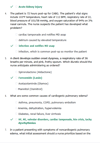
2. Describe how dobutamine affects cardiac output and urine output in
patients.
Dobutamine has no effect on cardiac output but increases urine
output.
Dobutamine increases cardiac output by enhancing heart rate
and contractility, which also leads to increased urine output.
Dobutamine only affects heart rate without impacting urine
output.
Dobutamine decreases cardiac output by lowering heart rate and
contractility, resulting in decreased urine output.
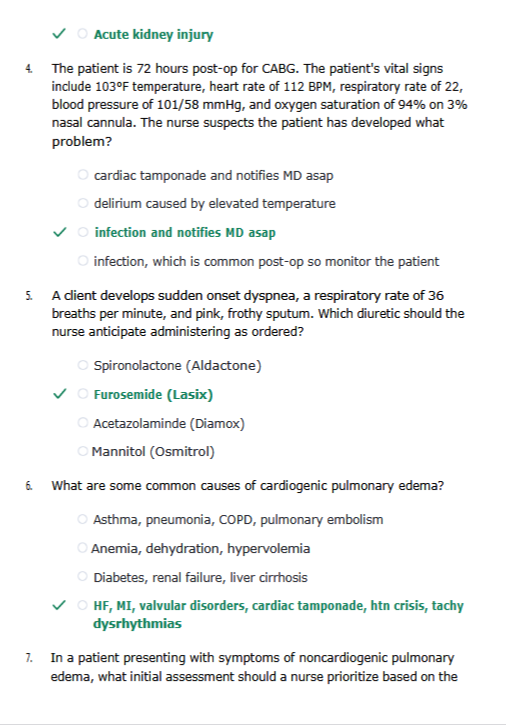
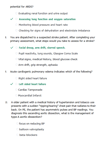
3. What is the primary risk associated with the use of gentamicin in older
patients?
Acute hepatic failure
Acute delirium
Sepsis
Acute kidney injury
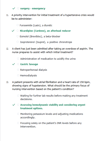
4. The patient is 72 hours post-op for CABG. The patient's vital signs
include 103°F temperature, heart rate of 112 BPM, respiratory rate of 22,
blood pressure of 101/58 mmHg, and oxygen saturation of 94% on 3%
nasal cannula. The nurse suspects the patient has developed what
problem?
cardiac tamponade and notifies MD asap
delirium caused by elevated temperature
infection and notifies MD asap
infection, which is common post-op so monitor the patient
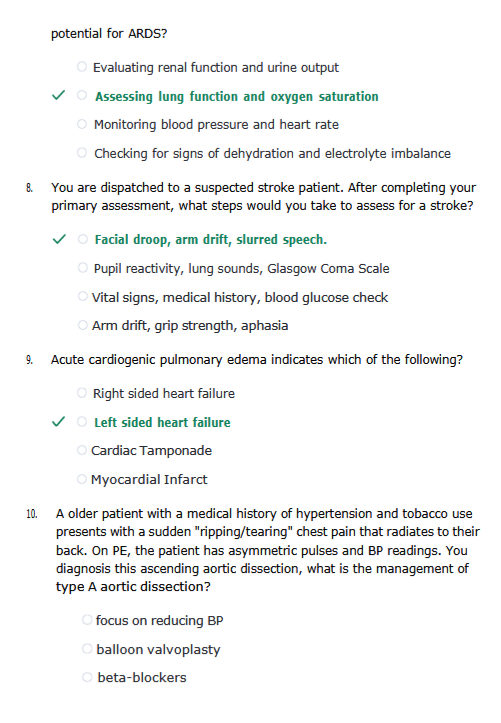
5. A client develops sudden onset dyspnea, a respiratory rate of 36
breaths per minute, and pink, frothy sputum. Which diuretic should the
nurse anticipate administering as ordered