

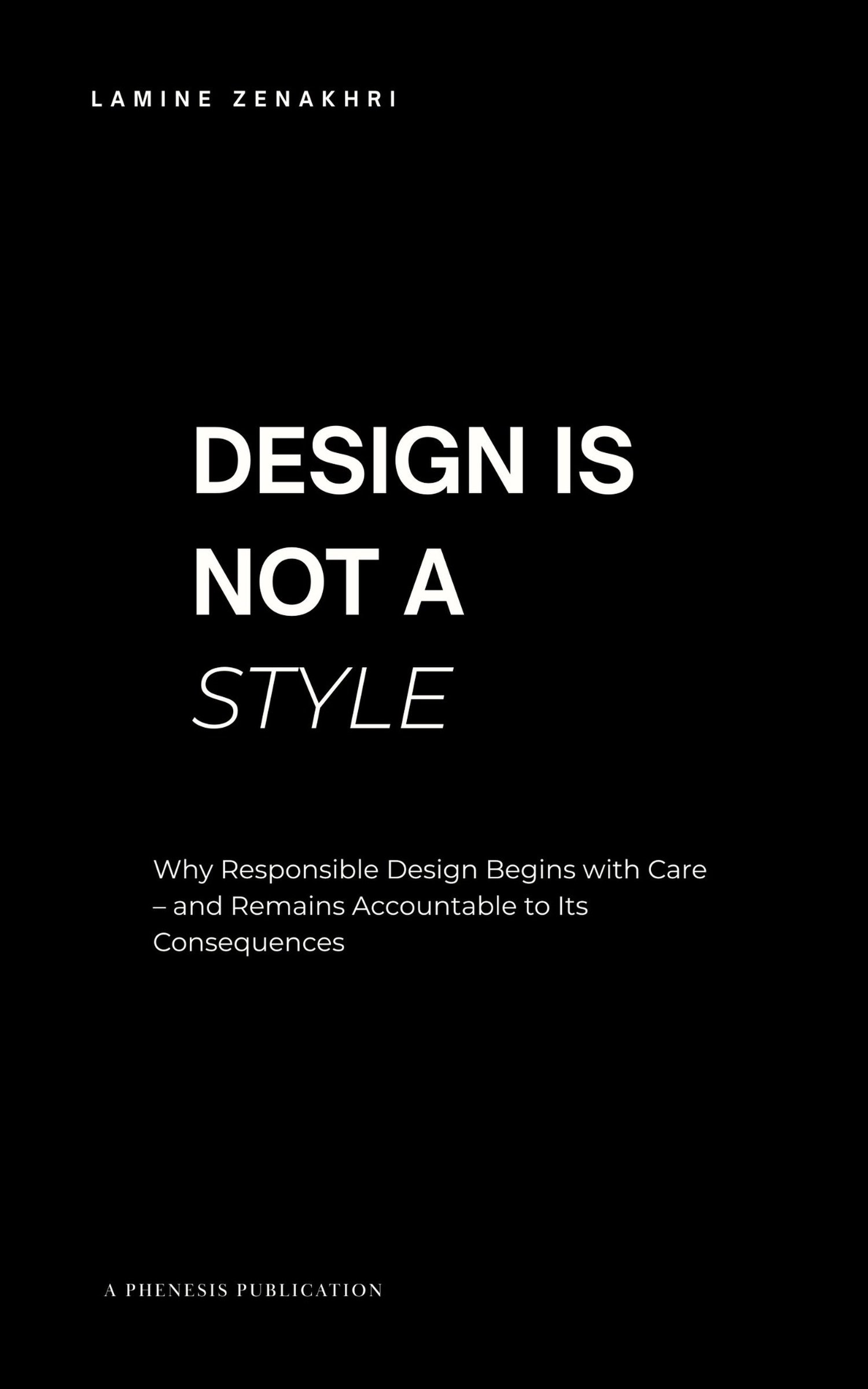
Design Is Not a Style: Why Responsible Design Begins with Care – and Remains Accountable to Its Consequences
A design can look resolved before its most important questions have been answered.
The plan is coordinated. The rendering is persuasive. The materials belong together, and the client recognises the project they hoped to commission. Yet visual resolution does not prove that a space will support the people who use it, withstand operational demands or remain credible over time.
Style labels are useful. They provide references, communicate identity and help a design conversation begin. But a label cannot decide what a project owes to its occupants, which purpose should govern when needs conflict, who will carry the burden of maintenance or whether an approved decision remains defensible once its consequences become real.
Design Is Not a Style examines what must guide professional judgment when appearance, preference, compliance and approval alone are insufficient.
It argues that responsible design is structured care made spatial - and sustained through consequence. Moving from style and taste to embodiment, social space, material time, collaboration and accountability, the book asks how design decisions can remain coherent without pretending that the designer controls everything that follows.
Written for advanced interior designers and design thinkers, it explores:
- Why style names a result but cannot supply the reasoning behind it
- How preference differs from defensible judgment
- Why care requires attention, competence and responsiveness
- How purpose, constraints and consequences must be judged together
- What drawings and renderings can prove - and what must be tested through occupation
- How maintenance, repair, digital systems and distributed authorship reshape responsibility
This is not another style guide or universal design method. It is an argument for looking beyond what a project resembles and asking what its decisions make possible, difficult, visible, hidden and dependent upon someone else’s labour.
When the style has been named, the image approved and the specification coordinated, what in the design are we still prepared to answer for?