
Scrap-Reduction-Due-to-Machine-Malfunction-A-Complete-Playbook - Level 2
On Sale
ZAR0.00
Scrap Reduction Due to Machine Malfunction: Level 2 Playbook
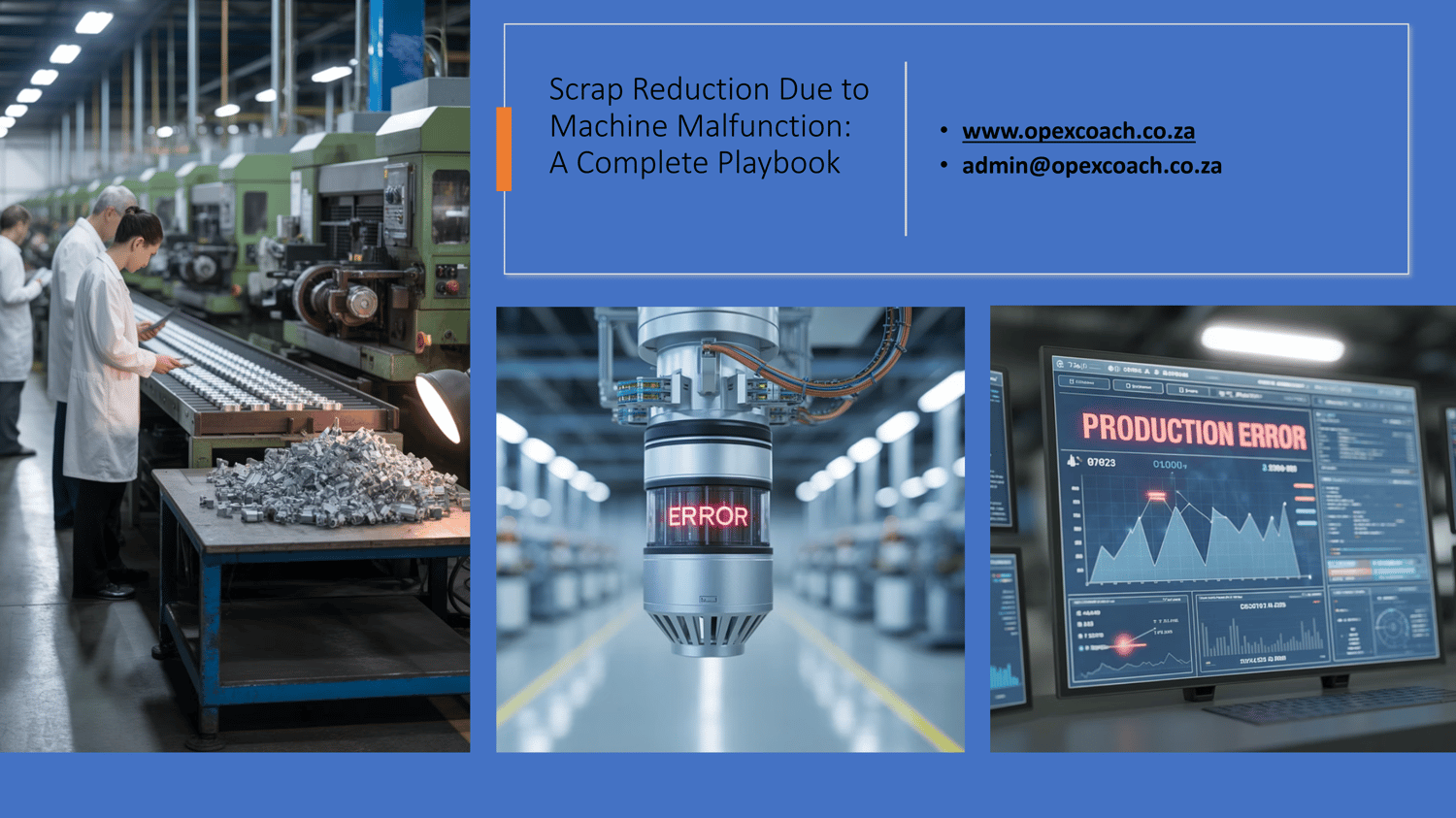
Machine-related scrap is one of the most preventable and costly forms of waste in manufacturing, often accounting for 15–30% of total scrap and costing medium-sized facilities $27,000–$42,000 per month. This advanced playbook provides manufacturers with a structured, data-driven roadmap to minimize machine-induced defects and transform reactive scrap management into proactive prevention.
Key Benefits:
- Reduce scrap rates by up to 91%
- Cut maintenance and emergency repair costs by 37%
- Improve First Pass Yield from 64% to 99%
- Extend machine and tooling life by 14–45%
- Enhance production uptime and reduce delivery delays
What You’ll Learn:
- Root Cause Analysis & Data Insights
- Identify scrap drivers from misaligned tooling, blade wear, sensor failures, and software faults.
- Use IoT, vibration analysis, thermal imaging, and predictive analytics to detect failures before they create defects.
- Preventive & Predictive Maintenance
- Implement structured maintenance schedules and real-time monitoring.
- Use machine learning models to forecast failures 15–72 hours ahead.
- Operator Training & Standard Work
- Hands-on training, standardized procedures, visual work instructions, and 5S practices to reduce setup errors by 37–42%.
- Rapid Response Protocols
- Cross-functional teams with emergency toolkits, standardized escalation, and documented interventions to minimize downtime.
- Continuous Improvement & Performance Tracking
- Weekly data reviews, KPI dashboards (OEE, MTBF, MTTR), and structured problem-solving (DMAIC, 8D) to sustain improvements.
ROI & Impact:
- Average cost reduction: 40%
- Quality improvement: 35% increase in First Pass Yield
- Resource conservation: 20% reduction in material waste and energy use
This playbook equips manufacturers to implement a holistic, measurable approach to scrap reduction, turning machine maintenance and monitoring into a competitive advantage, with ROI typically realized within 6–8 months.