
STEVEN KYTE's SHORT STORIES
STEVEN KYTE'S SHORT STORIES
How My Writing Began
I have been writing down ideas for stories since I was a teenager. In those early days, most of them were little more than notes and rough outlines scribbled into notebooks, although I occasionally developed them into something more substantial. I even wrote and produced my own audio plays at home, using my father's Revox reel-to-reel tape recorder and persuading friends and family to provide the voices. It was tremendous fun, but none of these early efforts ever reached a wider audience. They remained private experiments until 2006, when I retired and moved to Thailand.
With considerably more time on my hands, I decided to take my writing more seriously and began developing a novel called Flesh Fusion. I have always had a keen interest in quantum physics and the extraordinary possibilities it suggests, and several of my early stories drew inspiration from this fascinating subject. By 2016, after years of writing, rewriting and refining, I had finally brought Flesh Fusion to a standard I considered ready for publication. That was when the writing bug really took hold. I returned to the notebooks I had accumulated over the years and began turning many of those long-forgotten ideas into novels. Other stories came from entirely unexpected places, particularly my dreams. On several occasions I have woken with what seemed like an entire story already formed in my mind, complete with characters, situations and even an ending. The extraordinary thing is how quickly these ideas can disappear. Unless I reach for a notebook almost immediately, the whole thing can evaporate within minutes, leaving me with little more than the frustrating knowledge that I had dreamt something wonderful.
Over the past three years, my output has increased considerably, largely thanks to the arrival of artificial intelligence. Writing a novel involves far more than simply telling a story. There is an enormous amount of work involved in checking spelling, grammar, continuity, chronology, plausibility and the countless small details that can make or break a believable narrative. These were the tasks that previously slowed me down and help explain why Flesh Fusion took so many years to complete. Without a publisher or professional editorial team behind me, I had to undertake every stage of the process myself.
Artificial intelligence has changed that, although perhaps not in the way some people imagine. AI does not dream up my stories or decide what happens to my characters. That remains entirely my responsibility. I develop the ideas, create the characters, construct the plots and write the stories. I then use AI as an editorial assistant, helping me refine the language, identify inconsistencies and catch errors that might otherwise escape my attention. Even after that, I go through the manuscript again, sometimes repeatedly, rewriting passages, adjusting dialogue and making certain that the finished work reflects my own style, imagination and personality.
For me, artificial intelligence has not replaced the creative process. It has simply made the less enjoyable parts of writing considerably easier, allowing me to spend more time doing what I have loved since I was a teenager: inventing stories and bringing them to life.
I have always preferred short stories to lengthy novels. Over the years, I have read countless books, including some seven-hundred-page extravaganzas in which the story could comfortably have been told in half the space. Too often, I find myself wading through unnecessary descriptions, repetitive dialogue and passages that seem to exist simply to increase the page count. Having read so many novels throughout my life, I have developed a fairly reliable instinct for recognising what can safely be skipped without losing anything of importance.
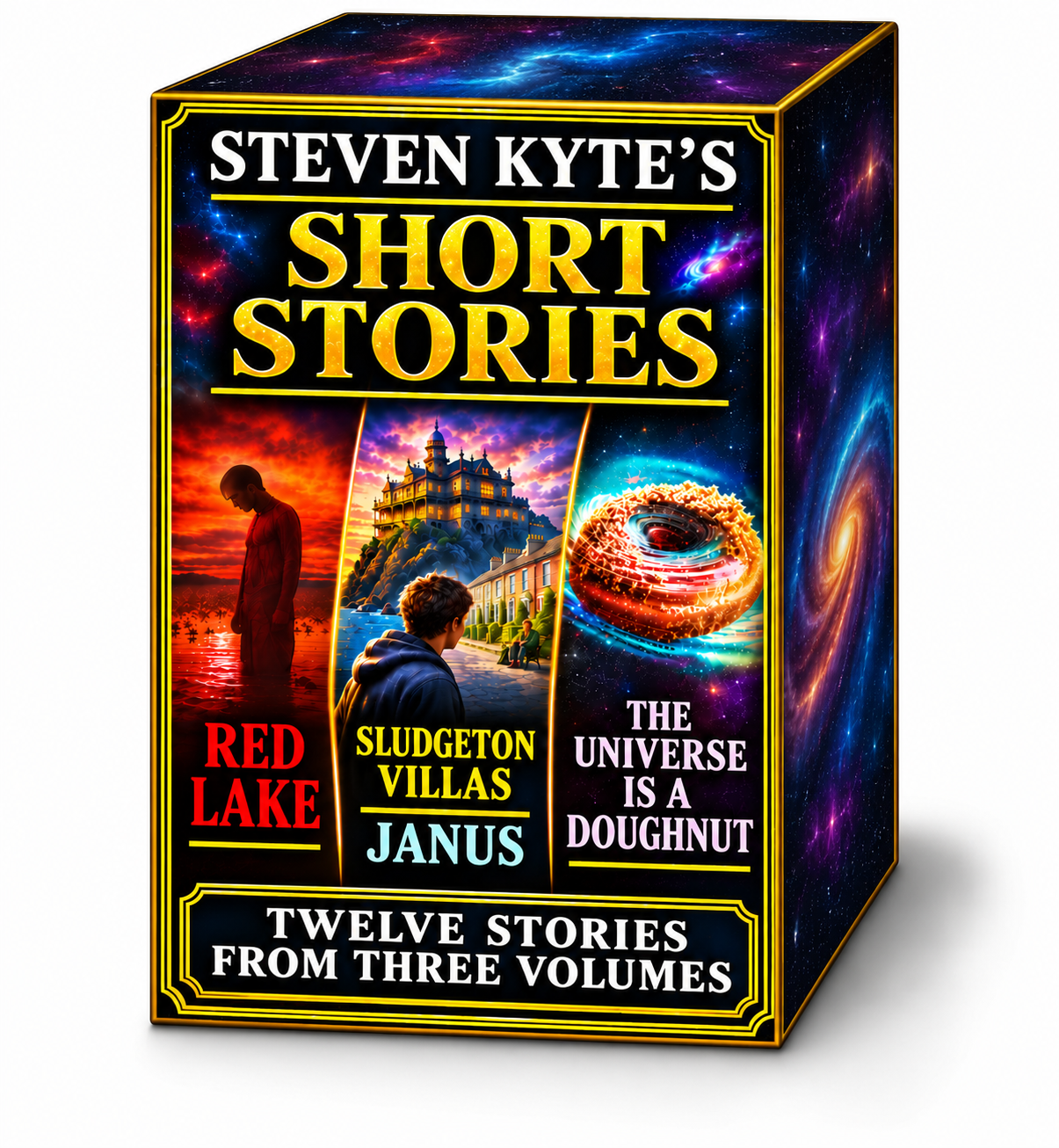
My own approach is rather different. I believe a good story should engage the reader from the beginning, maintain their interest and know when to end. Every paragraph should earn its place. The twelve stories in this collection have therefore been carefully honed, with the unnecessary padding stripped away, leaving the characters, imagination, intrigue and essential ingredients of a satisfying tale.
Some of these stories are particular favourites of mine, and I am rather proud of them. They cover a variety of subjects, moods and ideas, but all share one ambition: to entertain without wasting the reader's time.
I hope you enjoy reading this collection as much as I enjoyed creating it.