

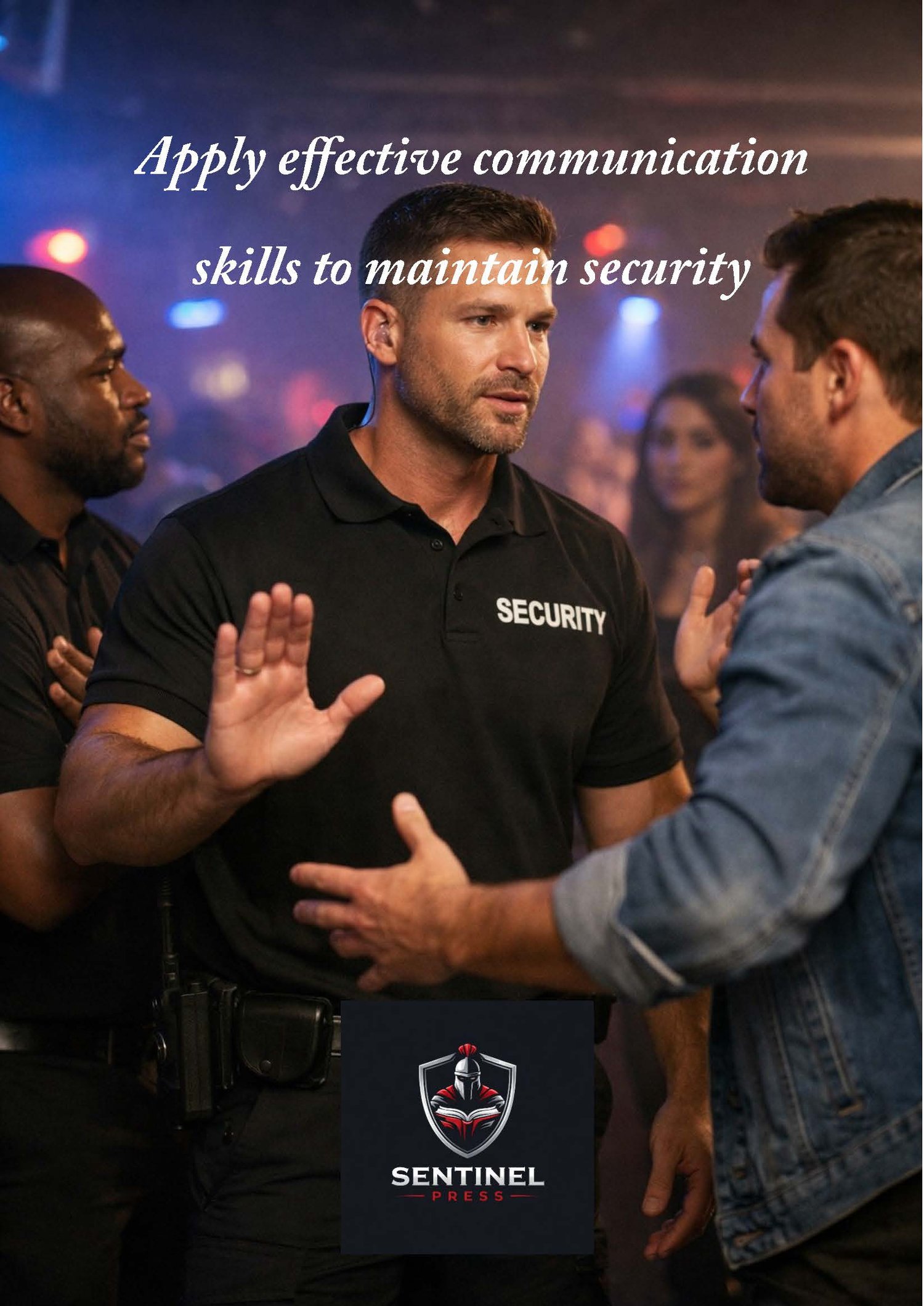
Apply effective communication skills to maintain security
Apply effective communication skills to maintain security
Written by an Australian Author.
This book provides a comprehensive foundation in the communication skills essential for maintaining safety and professionalism within modern security environments. It explores how security personnel gather, interpret, and convey information using oral, written, and non‑verbal methods, ensuring they operate confidently and in accordance with workplace expectations, legal requirements, and industry standards.
A core focus of the unit is the ability to source and understand information from a variety of workplace documents, including standard operating procedures, organizational policies, and English‑language signage. Learners develop the capability to interpret these materials accurately so they can comply with legal rights and responsibilities while supporting effective risk management and incident response.
The unit also builds strong interpersonal communication skills. Participants learn to observe and listen attentively, interpret non‑verbal cues, and engage with members of the public, colleagues, and clients in a professional manner. Emphasis is placed on requesting behavior modification without escalating tension—using culturally aware, non‑aggressive communication techniques that promote cooperation and support conflict resolution.
Operational communication tools are another key component. Learners practice using telephones and two‑way radio systems to report hazards, request assistance, and relay time‑critical information. They also develop competence in maintaining accurate written records through notebooks and digital information systems, ensuring incident details are captured, stored, and retrievable in line with organizational and legal requirements.
Designed for individuals working under general supervision as part of a security team, this book equips learners with the practical communication abilities required across diverse security settings. In jurisdictions where security operations are regulated, successful completion of this book may contribute to licensing requirements, supporting professional entry into the security industry.