

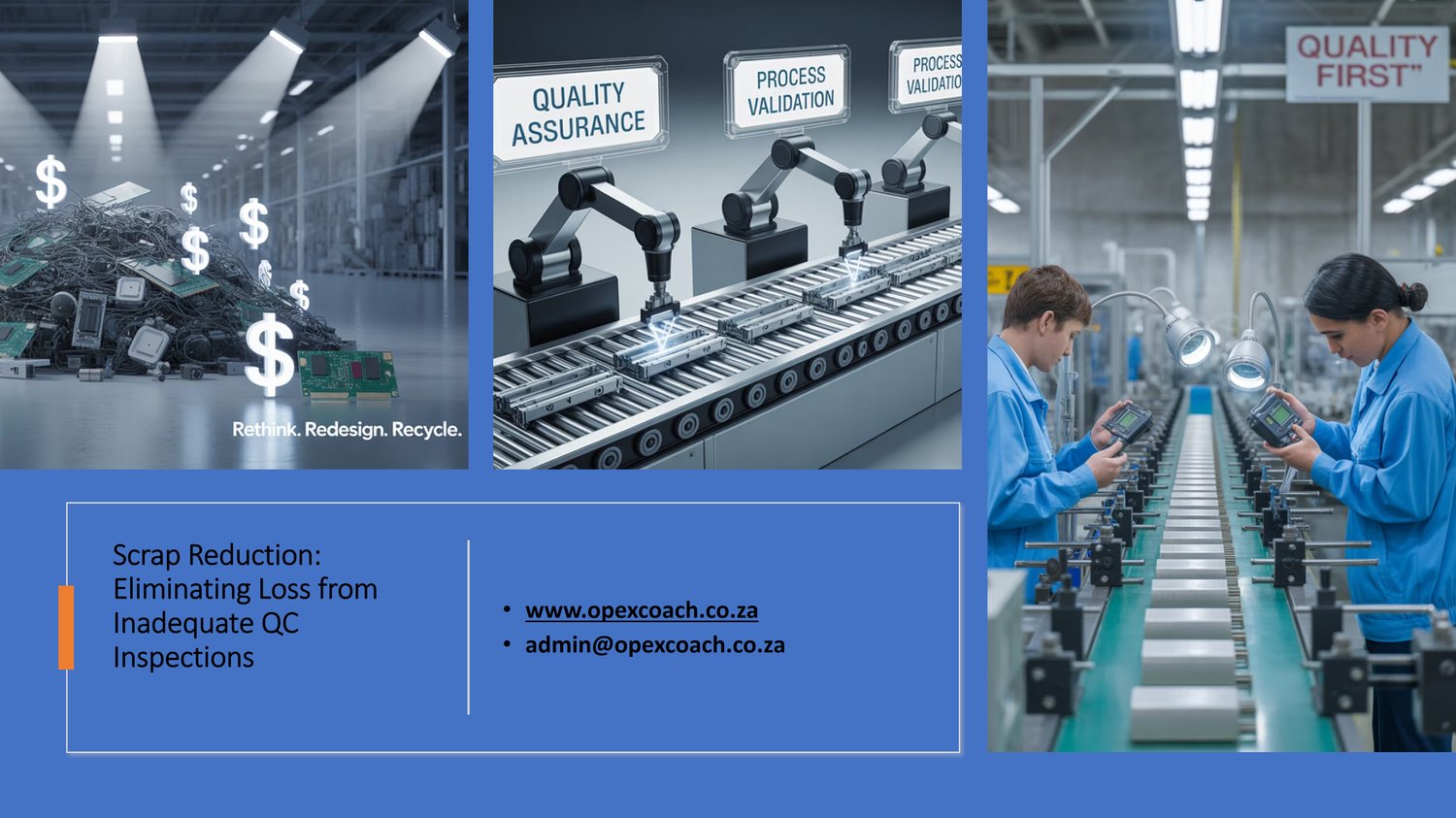
Scrap-Reduction-Eliminating-Loss-from-Inadequate-QC-Inspections - Level 2
Scrap Reduction Playbook: Eliminating Loss from Inadequate QC Inspections (Level 2)
Inadequate quality control (QC) inspections are one of the most overlooked yet costly drivers of scrap in manufacturing. Missed defects, infrequent checks, and poor documentation allow problems to slip downstream—multiplying costs, delaying throughput, and eroding customer trust.
This playbook equips manufacturers with a step-by-step system to identify, measure, and eliminate scrap caused by weak QC practices.
Why It Matters:
- Scrap costs typical manufacturers 7–12% of production costs, with precision industries losing up to 18%.
- Each scrapped part carries raw material, labor, machine time, and disposal costs—often totaling $500–$5,000 per unit.
- Beyond costs, scrap cuts OEE by 5–8 points, adds 15–30% to lead times, and damages customer relationships.
Key Insights:
✅ Robust QC systems can cut scrap rates 30–50% in 90 days.
✅ Closing inspection gaps boosts capacity by 15–22% without new equipment.
✅ Proper inspector training raises detection accuracy from 81% to 97%.
✅ Digital traceability and SPC analytics reduce warranty claims by 41%.
What You’ll Learn:
- How to baseline scrap losses and map current inspection coverage.
- Critical control points where defects must be caught (incoming, in-process, final).
- Standardized inspection methods, sampling plans, and digital checklists.
- Training and certification programs to elevate inspector performance.
- Advanced tools (CMMs, vision systems, SPC software) to achieve 99.8% defect detection.
- How to integrate real-time feedback, CAPA systems, and supplier quality controls.
The Result:
Manufacturers implementing this system consistently achieve 6–12% extra production volume, 27% faster lead times, and contract renewal gains of 23% thanks to stronger quality reputation.