

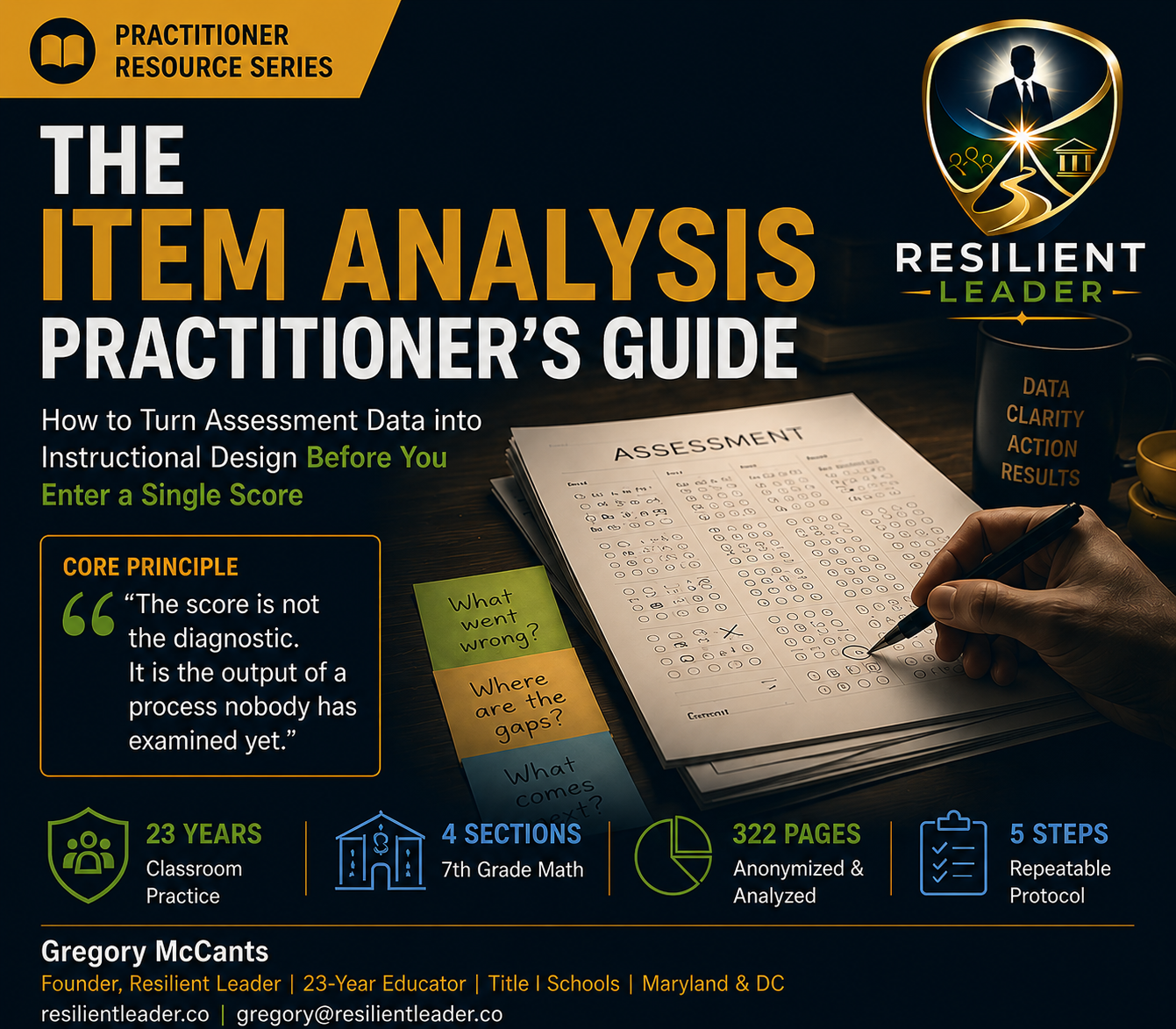








The Item Analysis Practitioner’s Guide: How to Turn Assessment Data into Instructional Design Before You Enter a Single Score
The score is not the diagnostic. It is the output of a process nobody has examined yet.
Imagine two middle school math classrooms. Both sit down for the exact same unit assessment, and both finish with the exact same class average: 62 percent.
In the first classroom, the teacher enters the grades, logs the 62 percent mark, and schedules a general review week before the next exam. It feels responsible, but it is an instructional design failure. Students who already mastered the concepts sit through lectures they don’t need. Meanwhile, students breaking down over a simple protractor procedure get a high-level conceptual lecture that never addresses their mechanical gap. The teacher exhausts themselves, yet the next assessment yields the exact same mistakes because the intervention was built for an abstract average, not for real patterns.
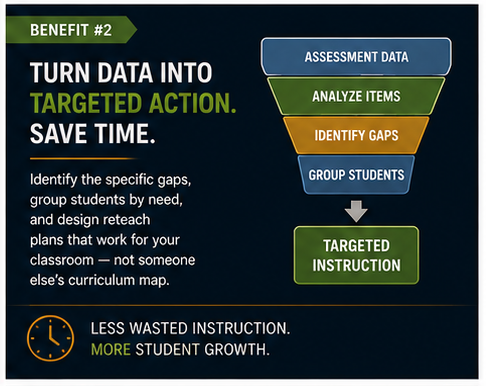
In the second classroom, the teacher runs an item analysis before entering a single grade into the system. They discover that the 62 percent average is actually masking three distinct, highly concentrated error patterns: a language/notation gap hitting the majority of the class, a protocol misread locked in 40 percent of the students, and a formula setup calculation issue in another 30 percent . Instead of a wasteful, generalized review week, the teacher deploys three hyper-targeted mini-sessions. Same data point. Completely different instructional execution.
The curriculum calendar demands that you hurry up and finish the unit, while the system values data points over genuine understanding. When you don't use a strict diagnostic protocol, pacing pressure forces you to re-teach the entire unit from scratch.
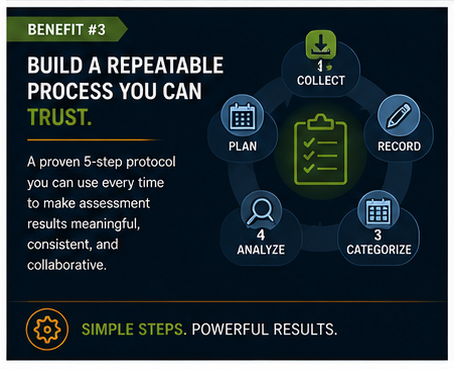
Written by a 23-year Title I math teacher and assistant principal, this book delivers a disciplined, repeatable 5-step protocol that converts raw grading into targeted tactical design. The first run takes two hours; by the tenth cycle, it takes forty-five minutes. Stop recording failures and start fixing the exact mechanisms that broke down.
Who This Is For
- Classroom Math Teachers (especially Secondary/Middle School) who are tired of watching error patterns constantly recycle on assessments and want a concrete data workflow.
- Instructional Coaches & Math Department Chairs looking for a shared, objective framework to drive collaborative planning sessions without defaulting to vague talk.
- School Administrators & Deans looking to understand why structural learning gaps produce downstream behavioral disruptions when pacing guides override student comprehension.
What You Get
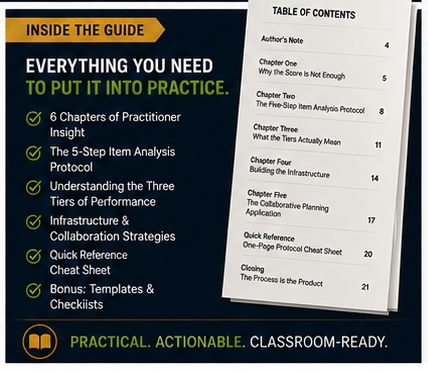
- The 5-Step Item Analysis Protocol: A repeatable data-processing blueprint mapping out Grade Execution, Statistical Breakdown Construction, Error Identification, Student Tiering, and Reteach Sequence Design.
- The Five-Tab Gradebook Architecture: A structural blueprint to organize your sheets into actionable, color-coded intervention arrays (Class Gradebook, Item Analysis, Student Success Summary, Instructional Groups, and Class Narrative).
- The Critical Tier Warning Guide: A tactical diagnostic breakdown revealing why grouping struggling students by score range fails, and how to execute individual diagnostic discovery conversations instead.
- The Student Work Analysis Framework: A four-pillar collaborative system (Identify Trends, Calibrate Grading, Gap Analysis, Inform Instruction) designed to anchor department meetings to concrete evidence.
- The "Chart the Error" Technique: A step-by-step collaborative planning activity using anonymized student work to build common language and expose instructional design misalignments across teaching teams.
- One-Page Protocol Cheat Sheet & Common Error Reference Matrix: A plug-and-play workspace companion specifying timeline flags alongside exact definitions for Language Gaps, Procedure Gaps, Setup Gaps, Concept Gaps, and Distractor Patterns.
What It Pairs With
To completely bridge the gap between classroom data tracking and building-wide administrative infrastructure, this text pairs directly with:
- The Diagnostic Nobody Ran: For applying this exact student-facing item analysis logic to the broader structural design flaws and teacher retention errors manufactured by the school district.
- The Conference the Nervous System Never Left: For managing the intensive instructional and cognitive load required to hold high-stakes behavioral and learning environments.
- The Pre-Conference Window: For utilizing pattern-based data tracking to secure your evidence architecture before high-stakes parent and administrative meetings occur.