
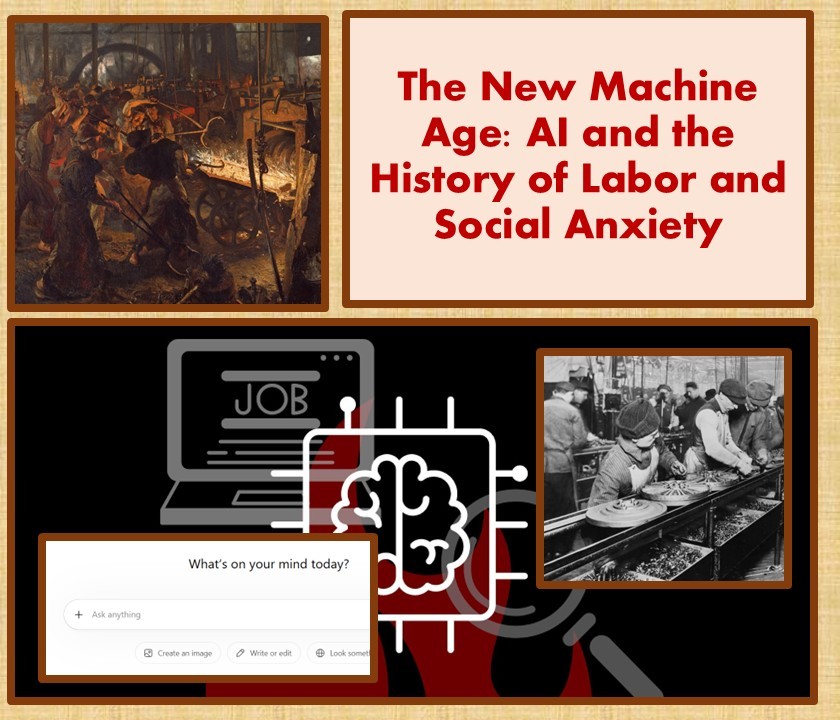
The New Machine Age — AI and the History of Labor and Social Anxiety
For generations, periods of extraordinary technological change have inspired both excitement and unease. New machines have promised prosperity, efficiency, and higher standards of living, but they have also raised profound questions: What happens to workers whose skills become obsolete? Will technology broadly enrich society or concentrate wealth and power in the hands of a few? Can governments and institutions adapt quickly enough to manage disruption? Today, with the rise of artificial intelligence, these questions have returned with striking force. This four-lecture course places today’s AI revolution within a broad historical framework. We will explore earlier periods of technological upheaval, from the Industrial Revolution to electricity, assembly lines, computers, and the digital age. We will also examine the inventors, thinkers, and business leaders who shaped these transformations, including James Watt, Henry Ford, John Maynard Keynes, and contemporary innovators helping drive AI development. Special attention will be given to the public policy questions emerging around artificial intelligence, including debates over job displacement, workplace surveillance, intellectual property, privacy, misinformation, education, and the ethics of autonomous systems. Along the way, we will confront a larger question that has echoed throughout history: are new technologies tools that liberate humanity from old burdens, or forces that create new inequalities and anxieties? This course connects historical perspective with one of the most consequential developments of our age.