








Built for a Different Room: What Educators Need to Know Before Teaching Resilience to Kids the System Was Never Built For
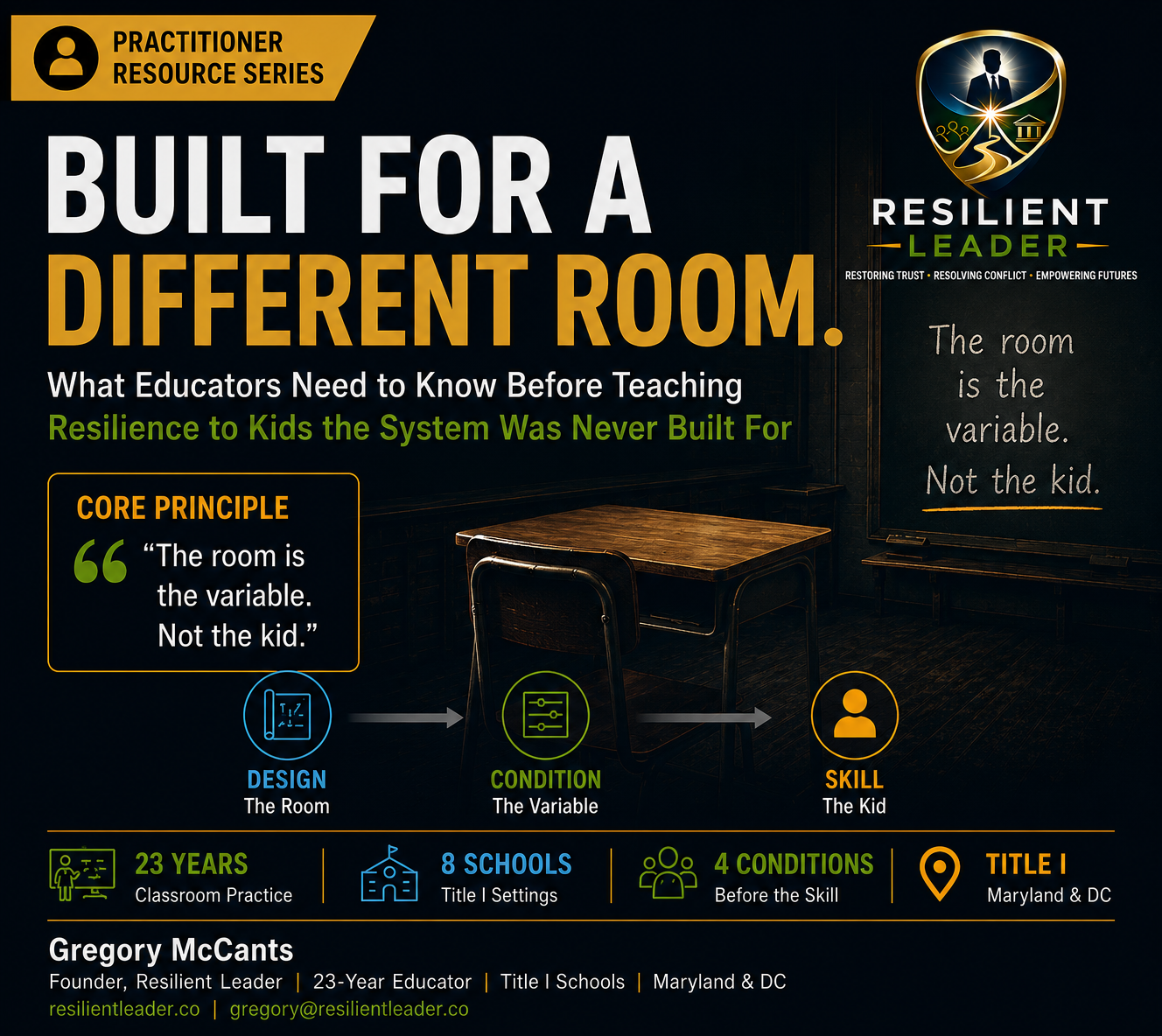
The room is the variable. Not the kid.
Most modern professional development on emotional resilience shares the exact same flaw: it treats the child as the item that needs to be corrected, regulated, or modified. We drop intervention frameworks onto teachers and demand coping skills from students, all while leaving the actual classroom environment as a neutral, unexamined container.
It does not work. True resilience does not come from a character trait; it comes directly from environmental conditions.
When a student comes from a high-poverty, high-stress community where hyper-escalation protects your safety, where softness carries an immediate consequence, and where "crashing out" is the single most logical option available, they are not failing a character test. They are responding with perfect accuracy to an environment that taught them how to survive. The street code is not a collection of bad behaviors; it is an organized survival architecture.
The data confirms the scope of this baseline failure: nearly 10 million children in the United States live below the federal poverty line, and 45% of all youth under 18 have experienced at least one adverse childhood experience (ACE). Standard middle-class resilience frameworks assume an intact baseline of emotional regulation and predictable tomorrows that these children were simply never given.
Written by a 23-year Title I teacher, dean, and assistant principal, this book is not about fixing kids. It is a practitioner's manual detailing how to build a room steady and predictable enough to make trust a rational calculation for the student. Stop demanding emotional skills from students sitting inside broken environments, and start designing the operational conditions that allow those skills to take root.
Who This Is For
- Classroom Teachers inside high-poverty, under-resourced schools who are running on fumes and need concrete classroom architecture rather than generic compliance checklists.
- Deans and Assistant Principals managing high referral counts who want to understand the diagnostic communication behind extreme student outbursts.
- Instructional Coaches looking for structural levers, like entry design and access scaffolds, to build predictable building cultures that safely support both youth and staff.
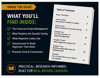
What You Get
- 6-Chapter Operational Framework: A cumulative practitioner guide detailing why current resilience models fail and how to engineer structural classroom predictability.
- The Survival Code Analysis: An eye-opening diagnostic look at how students accurately map inconsistent adult designs across different rooms in a single building.
- The "Floor Manager" Blueprint: Strategies to establish structural entry routines and protocols that allow students to self-regulate and actively assist in classroom management.
- Guided Notes as Access Design: A specific instructional methodology to build scaffolds that engage dysregulated or exhausted students at their direct entry point without lowering performance standards.
- The Invisible Load Assessment: Raw data and analytical models tracking the true, uncompensated biological cost of teacher exhaustion inside Title I environments.
What It Pairs With
To construct an absolute, unified process architecture across your entire instructional day, this book pairs natively with:
- The Pre-Conference Window: For building a bulletproof, factual documentation architecture before walking into high-intensity family or discipline meetings .
- The Conference the Nervous System Never Left: For designing the necessary post-crisis biological debrief loops and emotional recovery structures for staff.
- The Item Analysis Practitioner's Guide: For converting raw assessment failure rates into highly targeted, pattern-based instructional reteach sequences.