
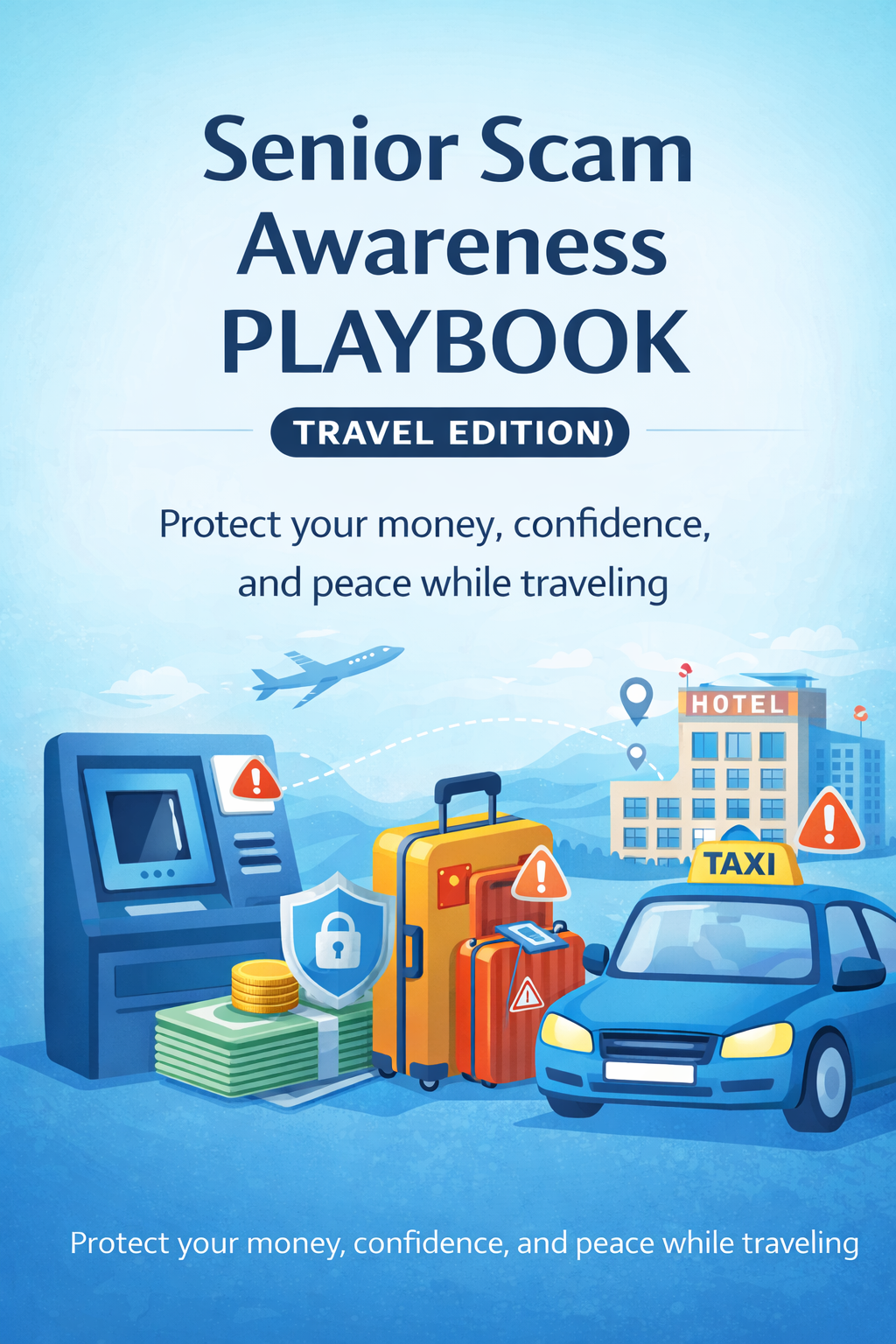
Senior Scam Awareness Playbook (Travel Edition)
Senior Scam Awareness Playbook (Travel Edition)
How to protect your money, confidence, and peace while traveling
First, this matters
Most travel scams don’t work because people are careless.
They work because scammers are trained.
They listen.
They rush.
They create confusion.
This guide exists so you can travel alert, calm, and prepared — not fearful.
How scammers spot seniors
Scammers don’t look for age alone.
They listen for:
- Polite hesitation
- Over-explaining
- Apologies
- Confusion about prices or directions
They notice when someone:
- Pauses too long
- Looks flustered
- Asks the “wrong” question
This is not your fault.
It’s pattern recognition.
The most common travel scams targeting seniors
1. The “Helpful Stranger” scam
Someone offers help:
- With luggage
- With tickets
- With directions
- With a machine that “isn’t working”
While helping, they:
- Take your bag
- Switch cards
- Watch your PIN
- Distract you while someone else acts
Rule:
If help wasn’t requested, politely decline.
You can say:
“No thank you. I’m all set.”
2. Taxi & ride scams
Common signs:
- “Meter is broken”
- “Cash only”
- Long, unnecessary routes
- Sudden price changes
Protect yourself:
- Ask the price before entering
- Use official taxis or apps
- Sit in the back
- Keep bags with you
If something feels off:
“Please stop here.”
3. ATM & card scams
Scammers target:
- Outdoor ATMs
- Distracted travelers
- People counting cash
Do this instead:
- Use ATMs inside banks or hotels
- Shield your PIN
- Put cash away before moving
Never let someone “help” you at an ATM.
4. Hotel & lodging scams
Watch for:
- Fake front desk calls
- Requests for card numbers
- “Verification” messages
Hotels do not ask for card details by phone.
Say:
“I’ll come to the desk in person.”
5. Overpricing & pressure sales
You may hear:
- “Today only”
- “Last chance”
- “Everyone pays this”
Pressure is a red flag.
You are allowed to walk away.
What NOT to say
Scammers listen for clues.
Avoid saying:
- “I’m traveling alone”
- “I don’t travel much”
- “I’m not sure how this works”
You don’t owe explanations.
What TO say (short and calm)
Use simple phrases:
- “No thank you.”
- “I’m not interested.”
- “I’ll handle this myself.”
Repeat once.
Then disengage.
If something already happened
Do not panic.
Steps:
- Get to a safe place
- Cancel cards if needed
- Report to hotel staff or authorities
- Document what happened
Shame helps scammers — not you.
One important truth
Being cautious is not being rude.
Protecting yourself is not being difficult.
You are allowed to:
- Move slowly
- Ask questions
- Say no
- Walk away
That is wisdom.
Why this guide exists
Travel should make your world bigger — not smaller.
This playbook is here so you:
- Keep your money
- Keep your confidence
- Keep your peace
Every trip. Every time.
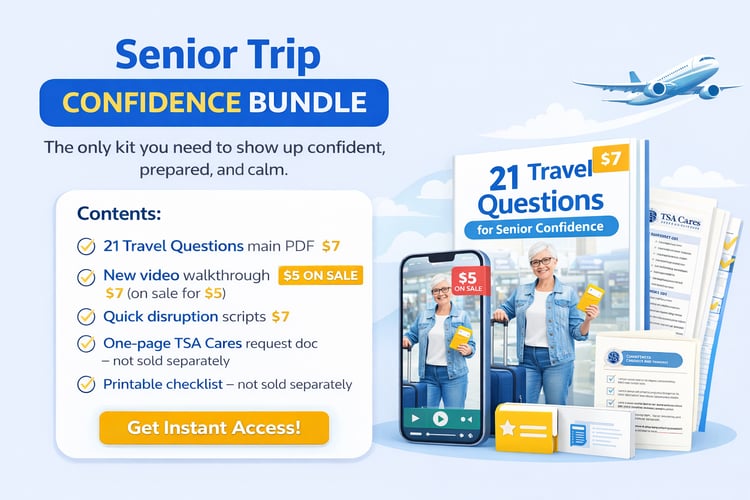
Part of the Senior Travel Protection Bundle
Because you shouldn’t have to learn this the hard way.