Your Cart
Loading
Only -1 left
3 reviews

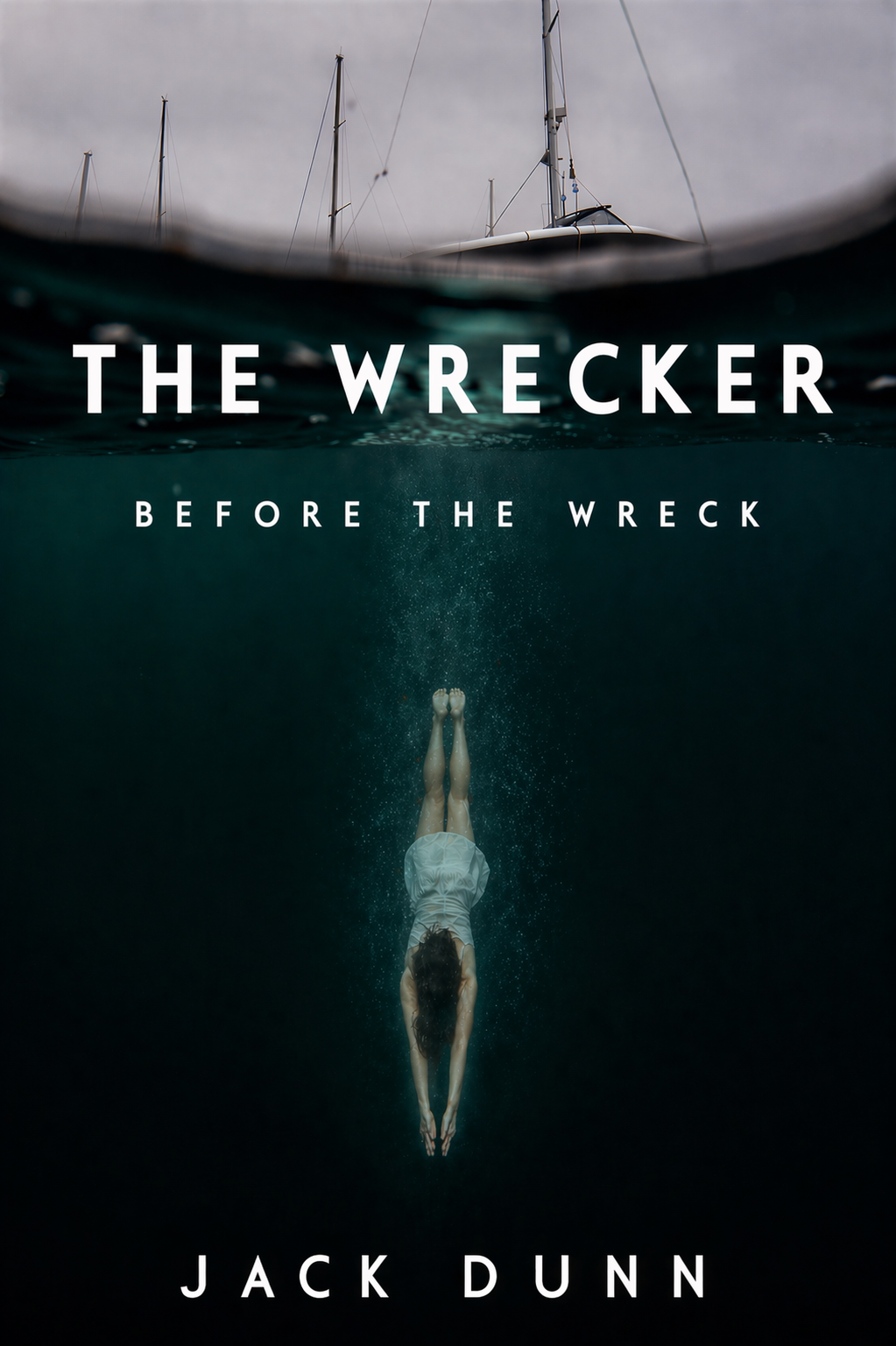
The Wrecker: Before the Wreck

On Sale
$9.99
$9.99
Added to cart
3 reviews

Before the regatta. Before the reef. Before the reckoning.


THE WRECKER: BEFORE THE WRECK collects twenty prequel short stories set in the years before the novel. Each story follows a different character — some familiar, some new — as they navigate the waters of Eden's Cove before the storm hit.


Chris Burger arrives with a broken boat and a buried past.

Daisy loses everything and finds herself on a stage.

Lukas flees the Karoo with a dead man on his conscience.

Andre learns the difference between "careful" and "stop."

Eva starts a notebook that will become a ledger.

Jason keeps a different notebook. His is darker.


The reef at low tide reveals everything.


These stories can be read in any order. Jump to your favourite character. Follow them into the dark. See what Eden's Cove was like when the rot was still beneath the surface.


——


20 stories. 18 characters. One town before the wreck.

You will get the following files:
  • EPUB (254KB)
  • MOBI (533KB)
  • PDF (1MB)

Customer Reviews

Sort

Elise Martin

Verified Buyer

2 months ago

The prequel collection done right: essential backstory for some characters, unnecessary for others, but always written with care.

Jack Dunn's prequel collection arrives with an unusual degree of formal confidence. Where companion volumes of this kind too often read as extended footnotes — useful context dressed up as narrative — Before the Wreck announces its ambitions in the opening line of its first story: “Dawn came in like a bruise.” This is fiction that intends to stand on its own.
The twenty stories are set in Eden's Cove, a South African coastal town shaped by old money, quiet corruption, and moral fatigue of people who have been complicit for so long that they have stopped noticing. Dunn renders it with the precision of someone who knows what a place smells like at six in the morning versus at midnight, and trusts the reader to feel the difference.
The prose is the collection's most consistent achievement. Dunn writes in short, declarative units that accumulate weight rather than announce it — a style that suits both the landscape and the characters, most of whom have learned to keep things inside. The violence in "The Reef at Low Tide" is clinical without being cold; the poverty in "The Last Dance" is specific without being sentimental. What is perhaps more impressive is the restraint shown in the emotional scenes — the farewell in "The Last Goodbye" between Chris Burger and Lena is a study in what is held back rather than what is said, and it lands harder for it.
The collection is not flawless. The stylistic register — controlled, spare, declarative — is so consistent across narrators that distinct character voices can blur. Chris Burger, Daisy, Jean Oosthuizen, and Andre all think in the same carefully measured cadence, which flattens the collection's range somewhat. The uniform tone is a strength in individual stories but a mild constraint across twenty of them.
Still, Before the Wreck is a serious, often beautiful piece of work. As literary crime, it earns its standing.
Reply from creator

Anne Williams

Verified Buyer

2 months ago

The Grammar of Complicity

The prequel collection as a literary form presents particular challenges. Its relationship to the parent text is irreducibly parasitic — it exists in reference to something else — but the best examples use that dependency to create meaning the primary text cannot generate alone: the story that can only be told backwards, the character who only makes sense when you understand what came before. Before the Wreck pursues these possibilities with considerable craft, though not always with complete success.

Dunn structures the collection around what might be called a grammar of complicity. Eden's Cove is a town where corruption is systemic but personalised — not abstract institutional rot, but choices made by specific people at specific moments. "The Handshake" makes this explicit: Steve Vermaak's acceptance of a backroom deal is rendered without authorial judgment, allowing the reader to inhabit a man choosing to be corrupted. "The Blame" performs a similar operation in a non-criminal register. The recurring insistence on decision — on the moment before the thing, when the thing could still have been something else — is the collection's most sustained preoccupation.

The prose is stylistically assured. Dunn's characteristic sentence structure — short, declarative, building through accumulation — serves the themes well. However, this consistency becomes a formal limitation across twenty stories. When Chris's measured grief and Jean's measured resentment and Daisy's measured survival all occur in the same prose register, the collection narrows the psychological range it might otherwise achieve.

Several stories — "The Handshake," "The Yacht," "The Ledger" — function primarily as context for the broader corruption narrative rather than as fully realised independent pieces. They establish the machinery of Eden's Cove's power structure effectively but arrive at no satisfying internal resolution.

These reservations notwithstanding, Before the Wreck's best stories — "The Reef at Low Tide," "The Last Goodbye," "The Last Dance," "The Blame," "The Byline" — are genuinely excellent. The collection represents a serious engagement with the possibilities of the form.
Reply from creator

James Miller

Verified Buyer

2 months ago

A Town That Breathes

Before the Wreck is the kind of book that asks for patience and rewards it. Twenty stories, each following a different character in Eden's Cove before the main novel. Some characters appear across multiple stories; others appear once and are gone. The experience is closer to moving through a town than moving through a plot.

The standout characters are among the most memorable in recent South African fiction. Chris Burger, introduced in "The Reef at Low Tide," arrives with cryptocurrency money, a boat in disrepair, and a grief he refuses to name. His introduction to the town's power structure — through a corrupt police captain who sends two fishermen to damage his boat — is handled with a restraint that makes it more compelling than any dramatic confrontation would have been. The revelation in "The Last Goodbye" about why he keeps his sister at a distance is the emotional centre of the collection.

Daisy's story, "The Last Dance," is comparably strong: a young woman made homeless after her father's life savings are lost, who ends up dancing at a club not as defeat but as survival. Dunn avoids every obvious note. No exploitation, no rescue, no redemption arc that arrives too easily.

"The Byline" — about a journalist who builds a corruption story over six weeks and then watches a better-connected colleague receive credit — is quieter but devastating. It captures workplace humiliation recognisable to anyone who has been in a room where merit and opportunity have parted ways.

This is not a light read. It is dense, serious, and unhurried. But it earns that seriousness on almost every page.
Reply from creator