
Benito Cereno
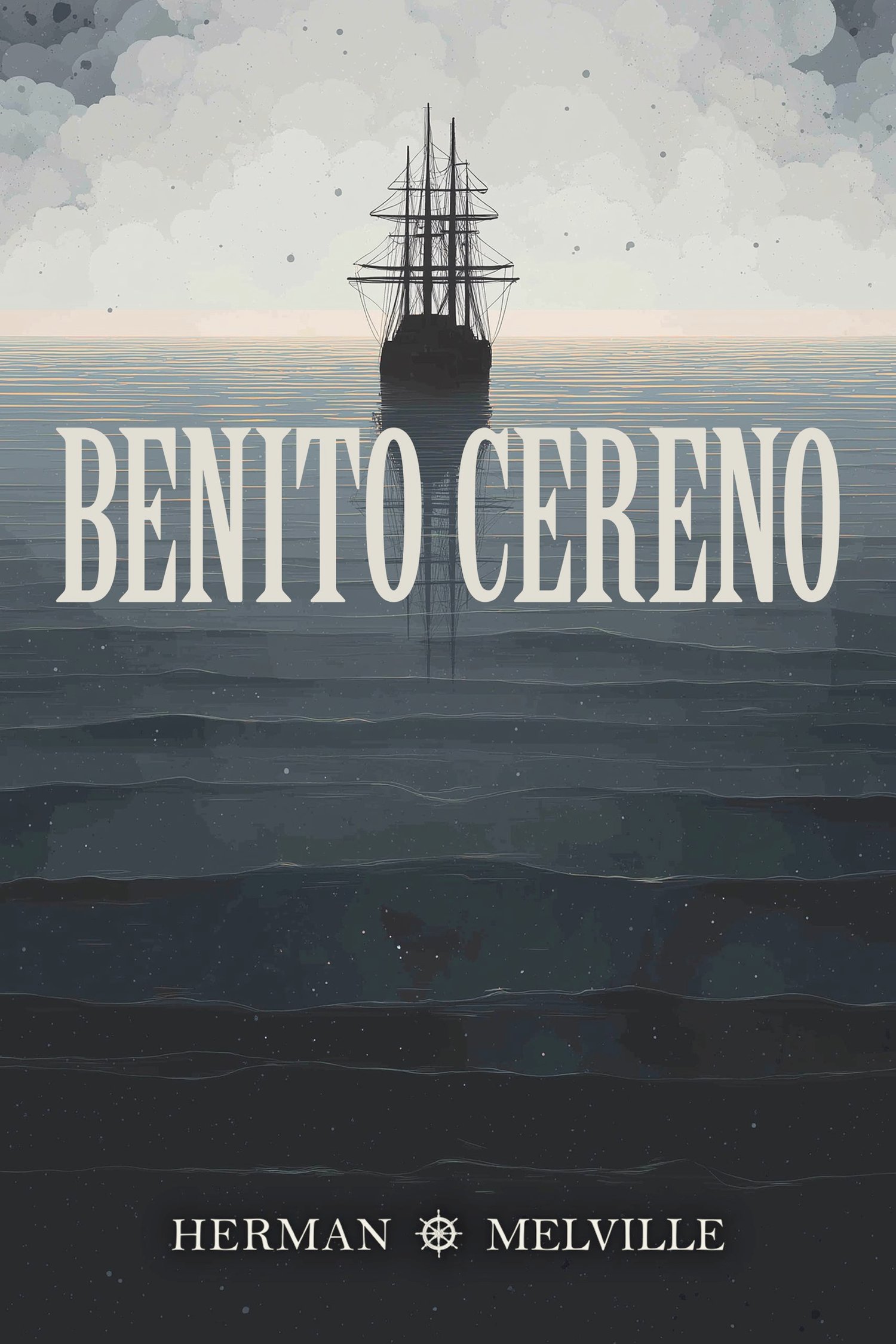
Benito Cereno is Herman Melville’s most haunting tale of deception, power, and the darkness hidden beneath civility. When an American captain, Amasa Delano, boards a Spanish slave ship drifting off the coast of Chile, he believes he’s come upon a vessel in distress. The crew seems weary, the slaves subdued, and the ship’s captain, Don Benito Cereno, frail and nervous. Yet something in the air feels wrong, a tension that grows with every exchange, every glance, until the terrible truth reveals itself in one of literature’s most chilling reversals.
Drawing on a true 1805 mutiny, Melville turns a maritime encounter into a psychological and moral crucible. Through Delano’s naïve eyes, the story unfolds as a study in blindness; the kind born of racial prejudice and the illusion of moral superiority. Melville’s sparse, controlled prose builds unbearable suspense while probing the fragile boundary between master and slave, freedom and subjugation, reason and delusion.
First published in 1855, Benito Cereno remains one of Melville’s most modern works: a parable of ignorance and domination whose ambiguity feels unnervingly timeless. Both a thriller and a philosophical inquiry, it captures the moment when the surface of civilization cracks, and the terror beneath shows its face.
About the author
Herman Melville (1819–1891) was one of America’s most iconic novelists and thinkers, celebrated for his profound explorations of humanity’s relationship with nature and the mysteries of existence. Best known for his magnum opus, Moby-Dick, and his evocative tales such as Bartleby, the Scrivener and Billy Budd, Melville’s works captivate readers with their intricate symbolism, philosophical depth, and vivid depictions of life at sea. His literary legacy endures as a cornerstone of American literature, offering timeless reflections on the human spirit and its place in an ever-changing world.