
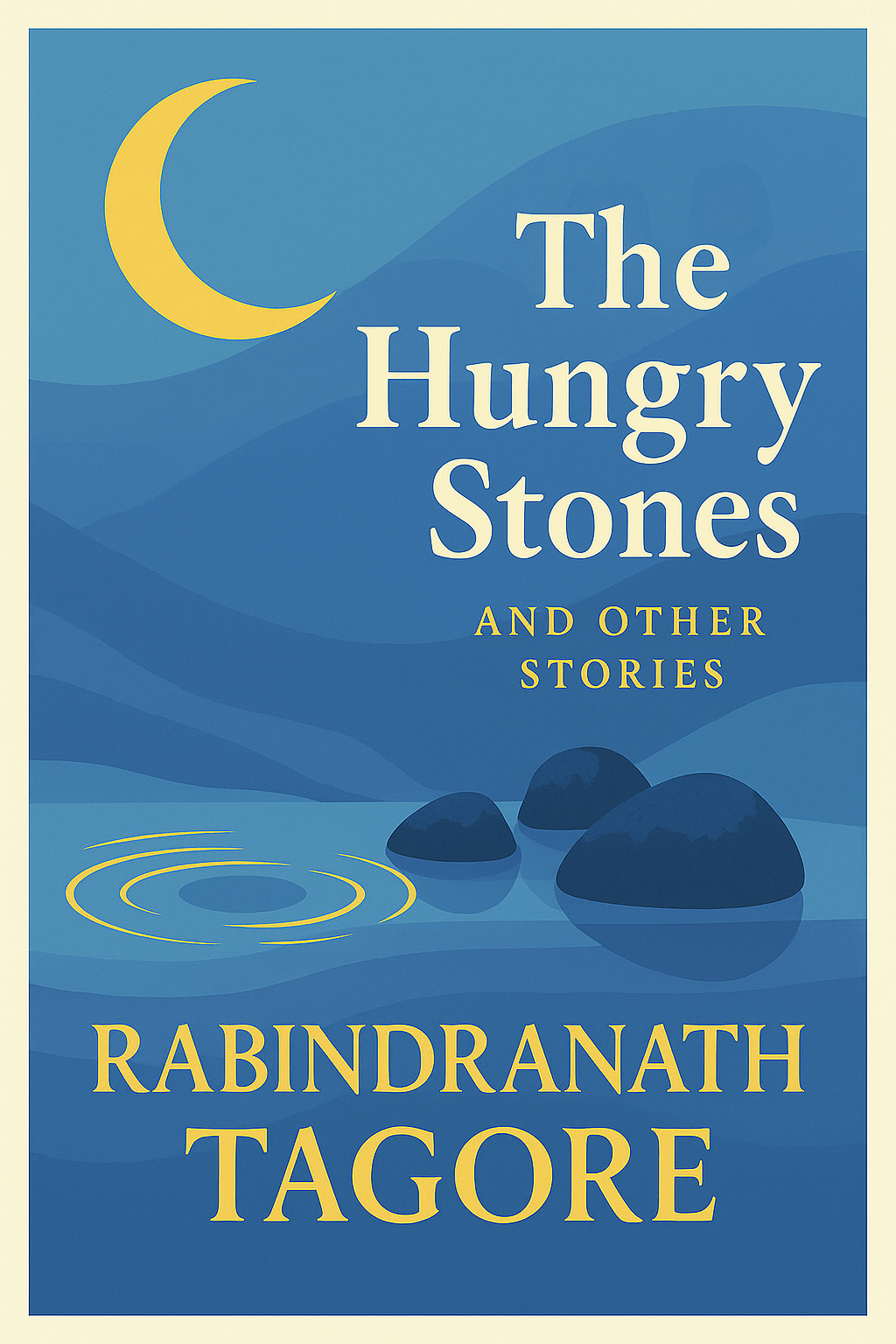
The Hungry Stones and Other Stories
The Hungry Stones and Other Stories is a mesmerizing collection of tales by Rabindranath Tagore that blurs the boundaries between reality and myth, the earthly and the ethereal. From haunted palaces to uncanny encounters, these stories weave together the fantastical and the philosophical, revealing the hidden depths of human desire, fear, and longing. In the titular story, “The Hungry Stones,” a skeptical tax collector becomes ensnared in the whispers of a cursed palace, where the past bleeds into the present with eerie insistence. Other stories, like “The Kingdom of Cards,” unfold as whimsical yet sharp allegories, while “The Parrot’s Training” delivers a biting satire on rigid education. Tagore’s prose shimmers with poetic richness, drawing readers into worlds where the supernatural is not merely spectacle but a mirror to the soul.
Beyond their Gothic allure, these stories are profound meditations on freedom, fate, and the unseen forces that shape our lives. In “The Victory,” a warrior’s arrogance meets divine justice, while “The Babus of Nayanjore” lampoons fading aristocracy with tragicomic precision. Tagore’s characters—whether ghosts, kings, or ordinary villagers—grapple with universal dilemmas: the weight of tradition, the illusion of control, and the restless hunger for meaning. His storytelling, at once delicate and incisive, exposes the fragility of human pretensions against the vast, mysterious currents of existence.
A masterwork of early 20th-century literature, The Hungry Stones and Other Stories showcases Tagore’s unparalleled ability to merge the folkloric with the modern, the mystical with the psychological. These tales linger like half-remembered dreams, inviting readers to question what is real and what lies just beyond perception. For lovers of Borges, Poe, or the Kathasaritsagara, this collection is a haunting journey into the shadows of the mind—where stones whisper, palaces remember, and the human heart is laid bare.
About the author
Rabindranath Tagore (1861–1941) was a Bengali polymath—poet, writer, composer, philosopher, and artist. A Nobel laureate in Literature (1913) for Gitanjali, he reshaped Bengali literature and music. He founded Visva-Bharati University and composed India’s national anthem. His works reflect humanism, nature, and spiritual harmony.