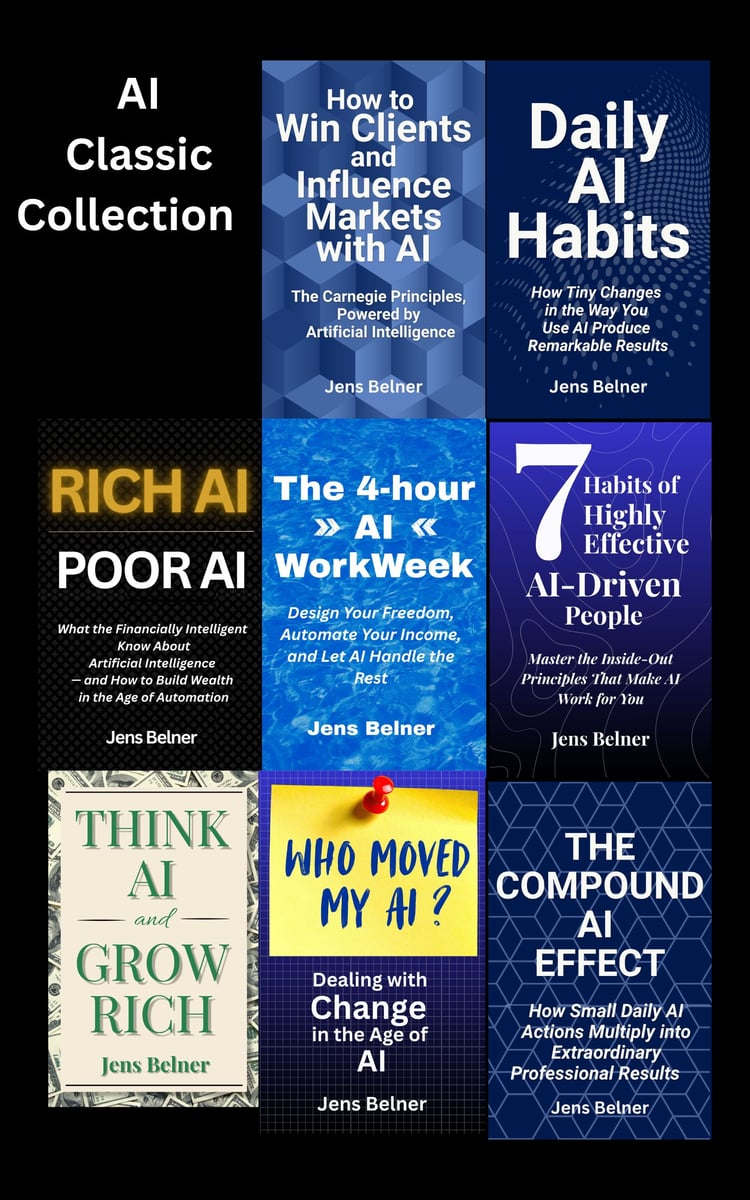

Rich AI, Poor AI
You know how to use AI. But do you know how to own it?
There are two kinds of people in the age of artificial intelligence.
The first uses AI every day — to write faster, research smarter, manage emails, and stay competitive. They are skilled, hardworking, and genuinely grateful for what AI does for their career. But at the end of every month, they are still trading their time for money. Every subscription they pay for is an expense. Every AI tool they master makes their employer more valuable — not them.
The second builds AI. They deploy AI systems that work while they sleep. They create AI-powered products, services, and automations that generate recurring revenue. Every AI tool they master becomes an asset — something that earns, compounds, and scales independently of their hours.
Rich AI, Poor AI is the story of two men — Marcus and David — whose paths with artificial intelligence led to completely different financial destinies. Marcus built AI assets. David collected AI skills. The gap between them grew larger every year.
Through six transformative lessons, this book reveals the financial intelligence that separates AI owners from AI users:
Lesson 1: Build AI assets, not AI subscriptions Lesson 2: AI literacy is the new financial literacy Lesson 3: Mind your own AI business Lesson 4: The AI corporation and tax intelligence Lesson 5: Create AI systems — do not compete for AI jobs Lesson 6: Work to learn AI, not just to earn with it
You will discover how to construct your personal AI Balance Sheet — separating the AI tools that drain your income from the AI systems that build it. You will learn the four side-build archetypes that are generating five- and six-figure recurring revenues right now, using technology anyone can access. And you will take your first concrete step toward owning an AI asset before this book is finished.
AI is not the equaliser everyone promised. Used passively, it accelerates the wealth gap. Used strategically, it is the most powerful income-compounding tool in human history.
The financially intelligent already know this. Now you do too.