
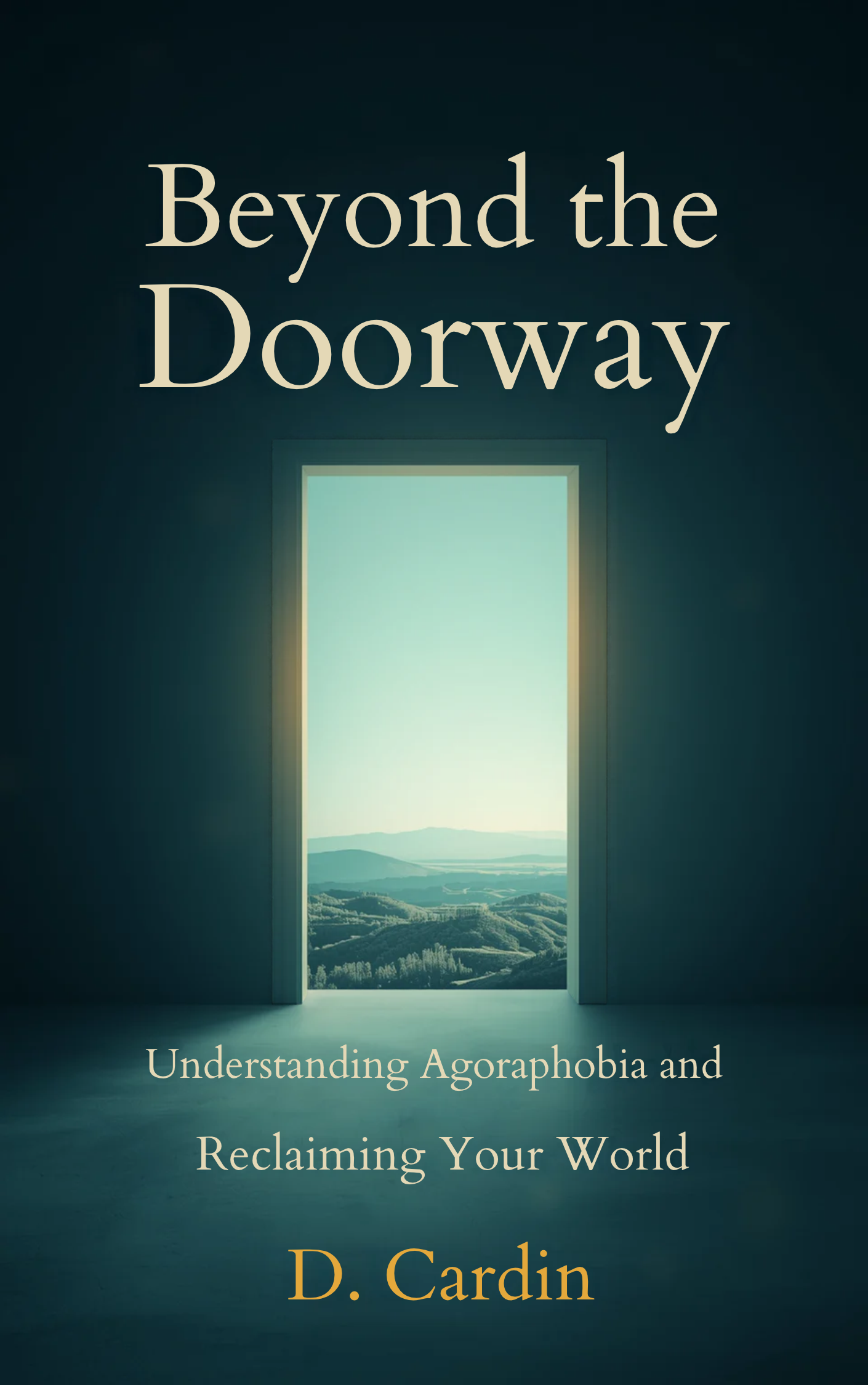
Beyond the Doorway Understanding Agoraphobia and Reclaiming Your World
The front door can become more than a door.
A grocery store can feel impossibly far away. A crowded line can feel like a trap. Driving across a bridge, riding a bus, sitting in a theater, attending an appointment, or simply walking away from home may trigger an intense question:
What if I panic and cannot get out?
Agoraphobia is often misunderstood as simply being afraid to leave the house. In reality, it can involve fear and avoidance of many situations in which escape, help, or a sense of safety seems difficult. It can gradually shrink a person's world, sometimes so quietly that avoidance begins to feel like the only reasonable choice.
Beyond the Doorway is a compassionate guide to understanding that cycle and beginning to change it.
Written for people experiencing agoraphobia as well as partners, parents, relatives, friends, and other supporters, this book explains what agoraphobia is, how anxiety and avoidance reinforce one another, why panic sensations can feel so frightening, and how evidence-based approaches such as cognitive behavioral therapy and gradual exposure can help.
Inside you will learn how to:
- Recognize the agoraphobia cycle.
- Understand panic and physical anxiety symptoms.
- Identify triggers, avoidance patterns, and safety behaviors.
- Challenge catastrophic predictions without demanding unrealistic positive thinking.
- Build a personalized fear and avoidance map.
- Create gradual exposure steps.
- Respond differently to uncomfortable body sensations.
- Recover from difficult days without treating them as failure.
- Communicate your needs to family, friends, schools, workplaces, and health professionals.
- Support someone with agoraphobia without accidentally strengthening avoidance.
- Prepare for appointments and professional treatment.
- Measure progress by freedom rather than by the complete absence of anxiety.
- Build a meaningful life that becomes larger than fear.
This is not a book about forcing yourself to "just get over it."
It is about understanding what fear has been teaching your brain and discovering, gradually and repeatedly, that another lesson can be learned.