Your Cart
Loading
Only -1 left
6 reviews

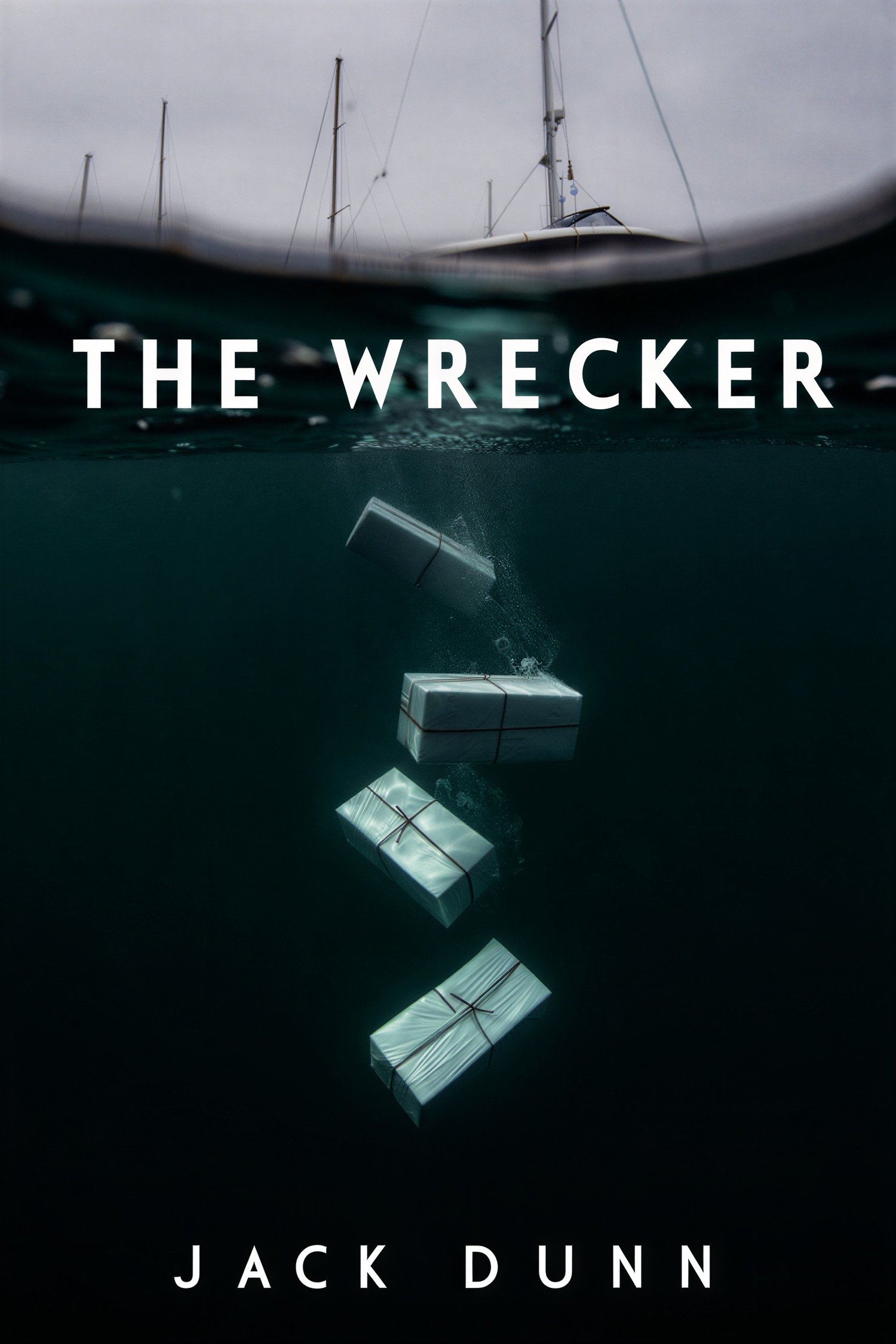
The Wrecker

On Sale
$9.99
$9.99
Added to cart
6 reviews

'THE WRECKER' - A Coastal Crime Thriller Coming March 31

They wrecked the wrong man's summer.


The Aurea runs aground at dawn. A 100-foot yacht, wrecked on Sentinel Point reef. The salvage operation is surgical. The response is scripted. The town of Eden's Cove watches and does not ask questions.

Chris Burger asks questions.


He's twenty-nine. A crypto millionaire who made his fortune before he could legally drink. He owns land, horses, a yacht, a flat on the cliff, and absolutely nothing that can be used against him. The town's old families call him volatile. The women who encounter him call him unforgettable. The police chief calls him a cancer.


When he discovers what the Aurea was really carrying—two tons of pharmaceutical-grade cocaine, a billion rand in inventory, a distribution network using the town's most sacred regatta as cover—he has a choice: walk away, or burn the whole corrupt system to the waterline.

He chooses fire.


But the system has its own weapons. A mayor who controls the law. A police chief who manufactures evidence. A lawyer who turns leverage into an art form. And a broken arm, turned into a martyr's wound, that could put Chris away for years.

They think they've seen chaos before.

They haven't met a wrecker.


The Wrecker is a sun-scorched coastal crime thriller in the tradition of Don Winslow and Deon Meyer—a story of sovereignty versus system, of one man who refuses to be governed, and of the summer when Eden's Cove learned that some predators can't be caged.

You will get the following files:
  • EPUB (266KB)
  • MOBI (623KB)
  • PDF (951KB)

Customer Reviews

Sort

Ronelle Krugel

Verified Buyer

3 months ago

The Wrecker

This book is exceptionally well written. The author has an incredible way of bringing the characters to life, making them feel real and relatable. The descriptions are so vivid that you can clearly picture every place and moment as if you were actually there. While reading, I often felt completely immersed in the story, almost like I was experiencing the events myself. The author’s use of language and rich vocabulary makes the story flow beautifully and keeps you engaged from beginning to end. It’s truly a remarkable piece of storytelling. Ronelle Krugel
Reply from creator

James Miller

Verified Buyer

3 months ago

Drowned in salt and heat. Dunn's coastal setting is as vivid as his plotting

Jack Dunn's The Wrecker opens with one of the cleanest scene-setting gambits in recent South African crime fiction: a luxury yacht deliberately kissing a reef in front of one man who has both the eyes to see what the collision really means and the disposition to do something about it. That man is Chris Burger, and from this first image the novel's engine is running. Dunn has a gift for the controlled reveal — he never rushes to show you the full criminal machinery, preferring instead to let readers assemble it alongside Chris: the staged grounding, the pre-positioned salvage tug, the cordon laid by bent cops, the contracts signed the day before the "accident." It is meticulous plotting, and it holds. The offshore climax during the Diaz Regatta — in which Chris engineers a fake rigging failure while simultaneously boarding the drug-laden Marlin and swapping the syndicate's operational cash for lead weights — is as tightly constructed as anything in the genre. Dunn has clearly done his sailing homework. The nautical choreography during the intercept feels real and is, by any measure, genuinely exciting. If the book has a structural weakness, it is that the third act's convergence of so many threads — Daisy's operation aboard the Marquesa, Eva's public exposure on the yacht club veranda, Sarah's accidental triggering of the fire alarm — occasionally tips into the kind of convenient simultaneity that high-concept thrillers must simply ask readers to accept. But the machinery is well-oiled enough that you accept it gratefully.
Reply from creator

Charnè du Plessis

Verified Buyer

3 months ago

Never confused who was speaking. That's rarer than it should be.

Most crime thrillers give you a protagonist and a few satellites. The Wrecker gives you a cast. Chris Burger is the engine, but Andre, Daisy, Sarah, Ben, Eva, and Lukas all get meaningful arcs. Are they all distinct? Yes. Daisy (tough, pragmatic, survivor) sounds nothing like Sarah (observant, underestimated, quietly brave). Andre (dutiful, crushed by legacy) sounds nothing like Mark (loyal, physical, inarticulate). Compared to, say, Lee Child's Reacher novels (where everyone exists to service the hero), Dunn's ensemble is refreshing. The trade-off is length—more characters mean more pages. But if you value a lived-in world, it's worth it.
Reply from creator

Charles Meyer

Verified Buyer

3 months ago

Chris Burger wins, but should we cheer?

Is Chris Burger a hero? Dunn doesn’t resolve this tension. He lets it sit. That’s brave for a debut. Most thrillers want you to cheer the protagonist. The Wrecker wants you to wonder whether you should. I’m still deciding.
Reply from creator

Anne Williams

Verified Buyer

3 months ago

Closed the book and immediately flipped back to the jewelry box scene

The most psychologically interesting character in The Wrecker is Mia Swart, and the novel is not quite aware of this. Mia's main function in the plot is triangular — she has slept with Chris, she is committed to Mark, she cannot tell one what she has done with the other — and this is largely how the narrative treats her: as a guilt-bearer, a keeper of a secret that could destabilise the male-friendship architecture around her. But what Dunn captures in her chapters, perhaps without fully intending to, is something more precise and uncomfortable: the experience of a woman who has discovered, through a single night outside the script of her expected life, that the script is not quite what she is. The bracelet Chris leaves her ("Keep this. So you remember you're not as sweet as you pretend") is not the novel's most artful line, but it does the work it needs to do. Mia keeps it. She doesn't throw it away in a gesture of repentance or transformation. She hides it in her jewelry box, behind the gifts of the man who loves her, and she lives on top of it. This is an extraordinarily accurate description of the psychic management required of women who exist inside lives that are mostly right but not entirely. The novel frames this as a private moral compromise. It reads, on reflection, as the only sane response to a world that offers women beautiful cages dressed as love.
Reply from creator