

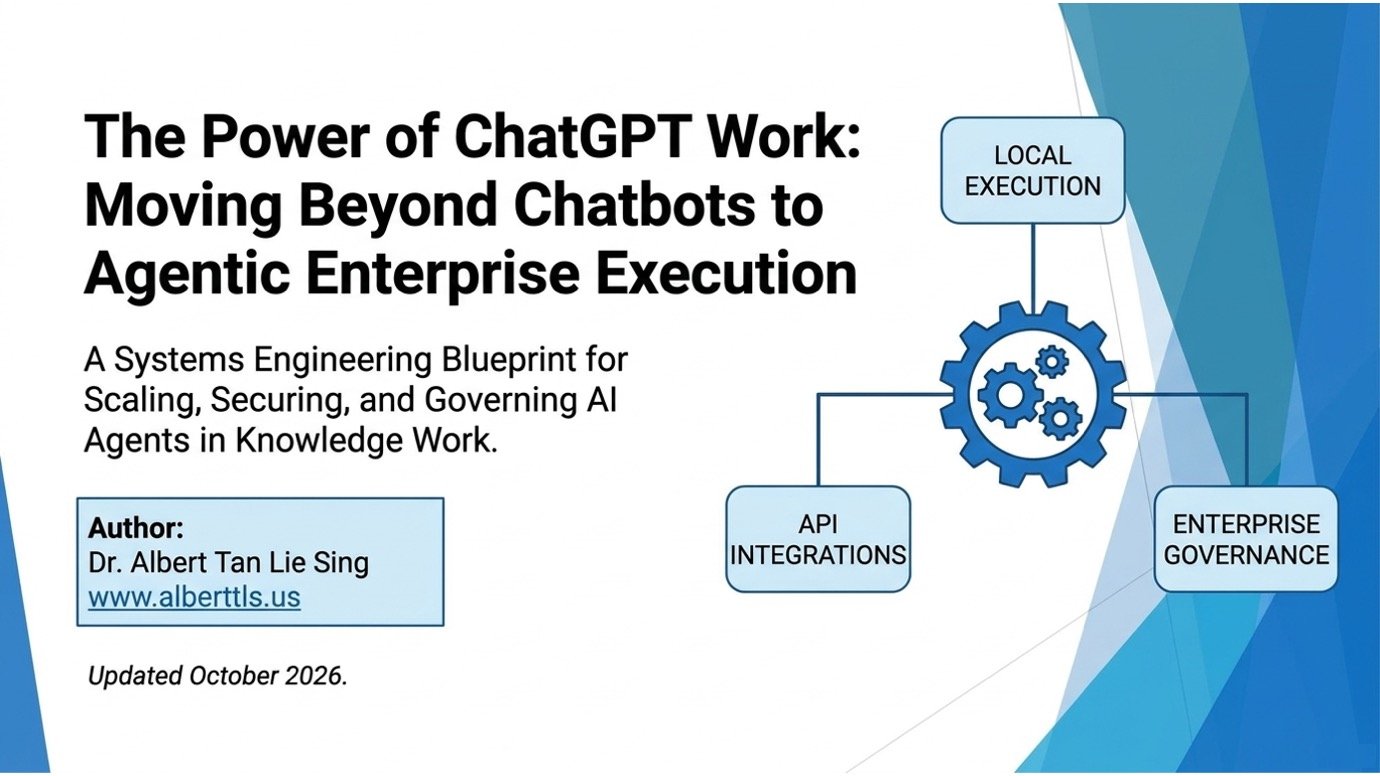

The Power of ChatGPT Work: Moving Beyond Chatbots to Agentic Enterprise Execution
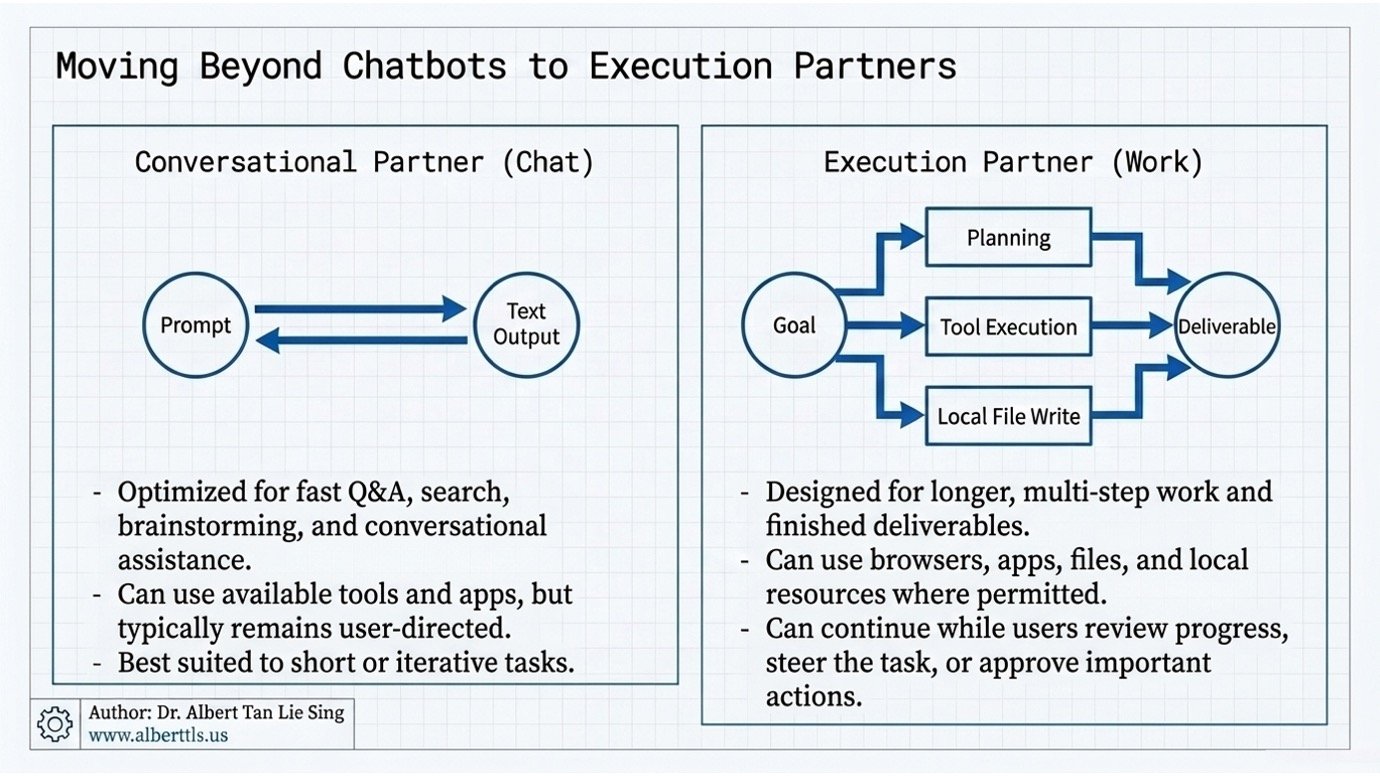
ChatGPT answered questions. ChatGPT Work changes how knowledge work gets executed.
The Power of ChatGPT Work is a concise systems-engineering blueprint for understanding how AI is moving beyond conversational assistance toward structured, agentic execution in professional and enterprise environments.
Rather than focusing on prompting techniques, this publication examines the architecture behind AI-enabled knowledge work: the distinction between Chat and Work, cloud versus desktop execution, Codex project instructions, reusable Skills, plugins and MCP-backed integrations, browser automation, ChatGPT Sites, workspace privacy, API governance, HIPAA/BAA considerations, environmental efficiency, and practical enterprise workflows.
Three reference architectures illustrate how these capabilities can support branded marketing automation, competitor intelligence, and governed enterprise AI processing.
The publication concludes with a practical five-stage roadmap for classifying workflows, choosing the appropriate execution environment, configuring permissions and applications, standardizing reusable capabilities, and adding governance controls.
Written for technology leaders, consultants, researchers, educators, enterprise architects, AI practitioners, and decision-makers, this visual blueprint is designed to help readers think about ChatGPT Work not simply as another chatbot, but as an emerging execution layer for knowledge work.
21 pages | Visual technical blueprint | Version 1.0 | Updated October 2026
What the reader will learn:
Readers will learn how ChatGPT Work differs from conventional conversational AI; how cloud and desktop execution differ; how Codex instructions, Skills, plugins, apps, MCP integrations, Sites, browser automation, identity management, API governance, and compliance controls fit together; and how these components can be organized into practical enterprise workflows.
Copyright © 2026 Albert Tan Lie Sing. All rights reserved.
This publication is an independent educational and analytical work and is not sponsored, endorsed, or published by OpenAI. Product capabilities, pricing, security controls, compliance eligibility, and availability may change after publication. Readers should verify current product and regulatory requirements through official documentation before making operational, legal, security, or compliance decisions.