

When Local Capital Is Limited (And Why Most Deals Stop There)
On Sale
$7.00
$7.00
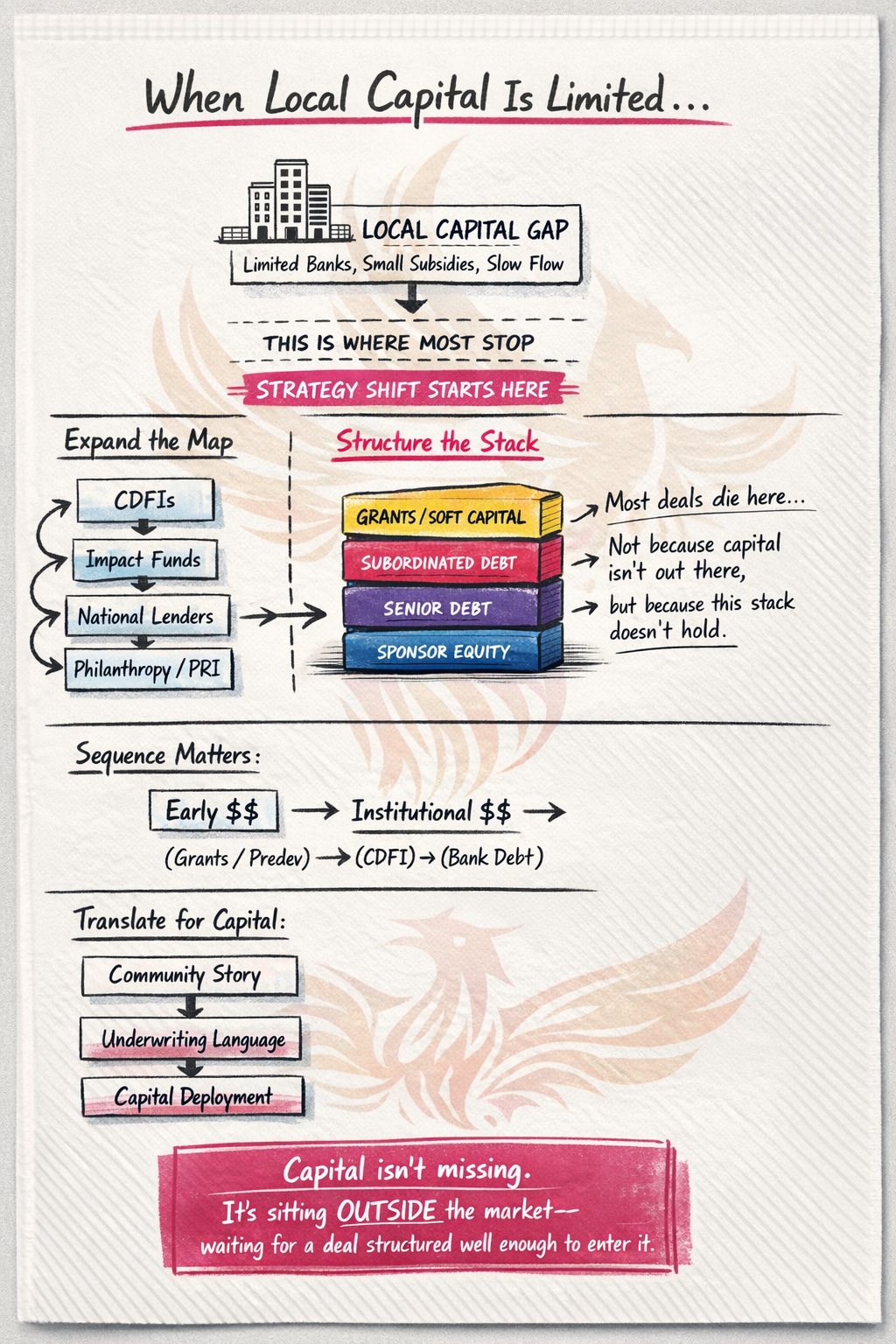
What This Is Showing
- How many developers hit a local capital ceiling and assume the deal is dead
- The difference between stopping at the gap vs. shifting strategy
- How expanding beyond local sources opens access to layered, national, and mission-driven capital
- The structure of a real capital stack: grants → subordinate debt → senior debt → equity
- Why capital isn’t just about finding sources—it’s about structuring them correctly
Why It Matters
- Most deals don’t fail because capital doesn’t exist—they fail because it’s not structured to enter the deal
- Local capital alone is often insufficient for complex or impact-driven projects
- Sequence and structure determine whether institutional capital will engage or walk away
- Translating your deal into underwriting language is what turns interest into deployment
Where Deals Go Wrong
- Stopping the process when local banks or subsidies fall short
- Treating capital sourcing as a list-building exercise instead of a structuring exercise
- Building stacks in the wrong order (trying to secure senior debt too early)
- Failing to secure early-stage or soft capital to de-risk the deal
- Not translating the project from community vision into fundable terms
Use This When…
- You’re stuck after exhausting local capital options and need a new strategy
- You’re structuring a deal that requires layered or non-traditional capital
- You’re explaining to stakeholders why the deal needs more than local financing
- You’re sequencing capital for a project that must move from predevelopment to institutional funding
- You want to shift thinking from “there’s no money” to “this deal isn’t structured yet”