

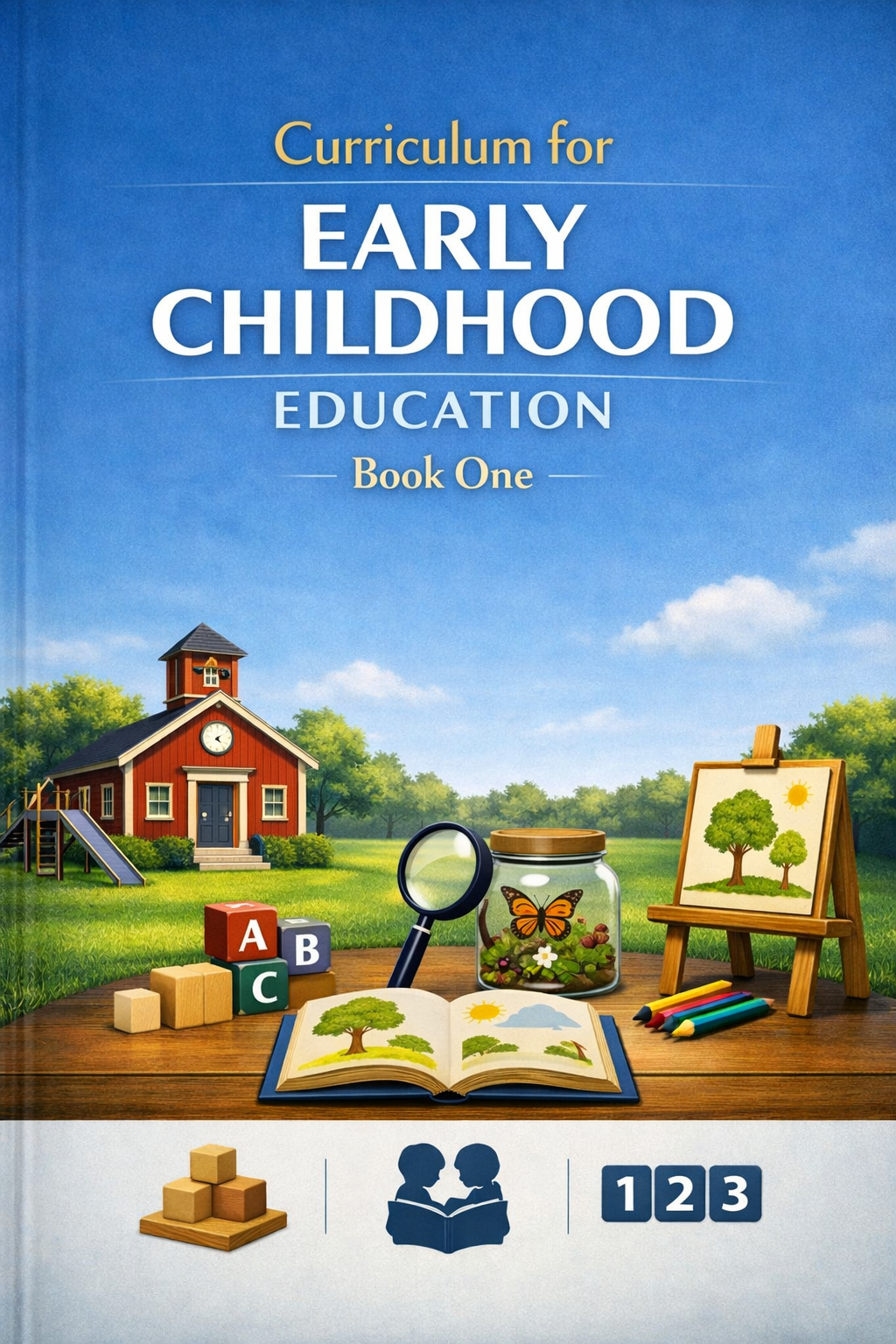
E-Book | Curriculum for Early Childhood Education | Book One
On Sale
$25.90
$25.90
Table of Contents
Section I: Understanding How Children Learn
- Chapter 1: Foundations in Early Childhood Curriculum: Connecting Theory & Practice
- Chapter 2: The Importance of Play and Intentional Teaching
Section II: Developing Curriculum to Support Children's Learning
- Chapter 3: The Cycle of Curriculum Planning
- Chapter 4: Developing Curriculum for a Play Centered Approach
Section III: Setting the Stage for Children's Learning
- Chapter 5: Setting the Stage for Play: Environments
- Chapter 6: Guiding Behavior and Managing the Classroom
Section IV: Planning for Children's Learning
- Introduction to Planning for Preschoolers
- Chapter 7: Social and Emotional Development
- Chapter 8: Language and Literacy
- Chapter 9: Mathematics
- Chapter 10: Science
- Chapter 11: Creative Arts
- Chapter 12: History & Social Science
- Chapter 13: Physical Development
- Chapter 14: Health and Safety
- Introduction to Planning for Other Ages
- Chapter 15: What Curriculum Looks Like for Infants and Toddlers
- Chapter 16: What Curriculum Looks Like for School-Age Children
Section V: Making Children's Learning Visible
- Chapter 17: Documentation and Assessment
About the Book
Welcome to learning about how to effectively plan curriculum for young children. This textbook will address:
- Developing curriculum through the planning cycle
- Theories that inform what we know about how children learn and the best ways for teachers to support learning
- The three components of developmentally appropriate practice
- Importance and value of play and intentional teaching
- Different models of curriculum
- Process of lesson planning (documenting planned experiences for children)
- Physical, temporal, and social environments that set the stage for children’s learning
- Appropriate guidance techniques to support children’s behaviors as the self-regulation abilities mature.
- Planning for preschool-aged children in specific domains including
- Physical development
- Language and literacy
- Math
- Science
- Creative (the visual and performing arts)
- Diversity (social science and history)
- Health and safety
- How curriculum planning for infants and toddlers is different from planning for older children
- Supporting school-aged children’s learning and development in out-of-school time through curriculum planning
- Making children’s learning visible through documentation and assessment
About the Contributors
Authors
Jennifer Paris
Kristin Beeve
Clint Springer