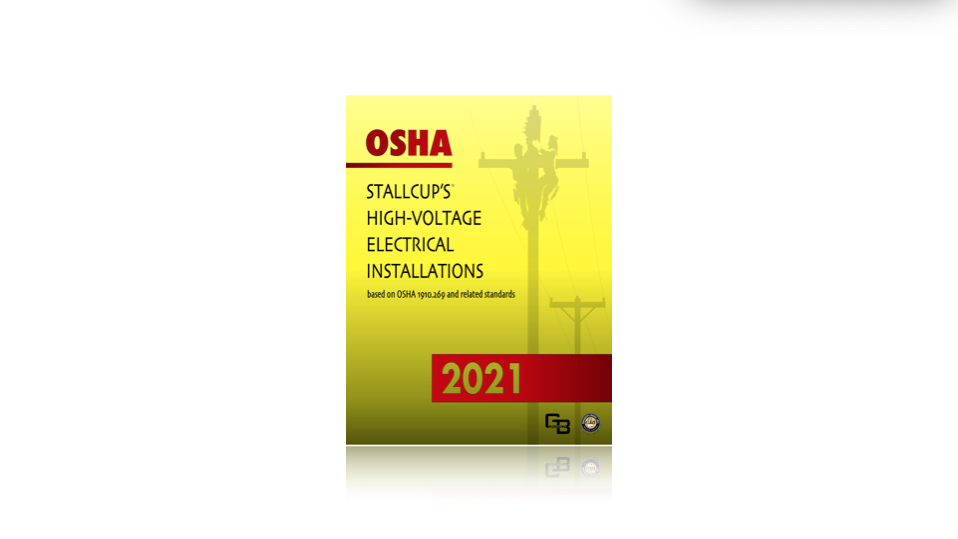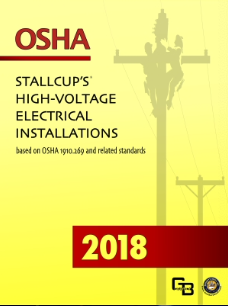
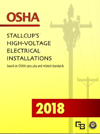
OSHA Stallcup's High-Voltage Electrical Installations - 2018
On Sale
$60.12
$30.06
Use the following coupon code at checkout for 45% off all products. Coupon Code: 22GB45
Number of Pages: 334
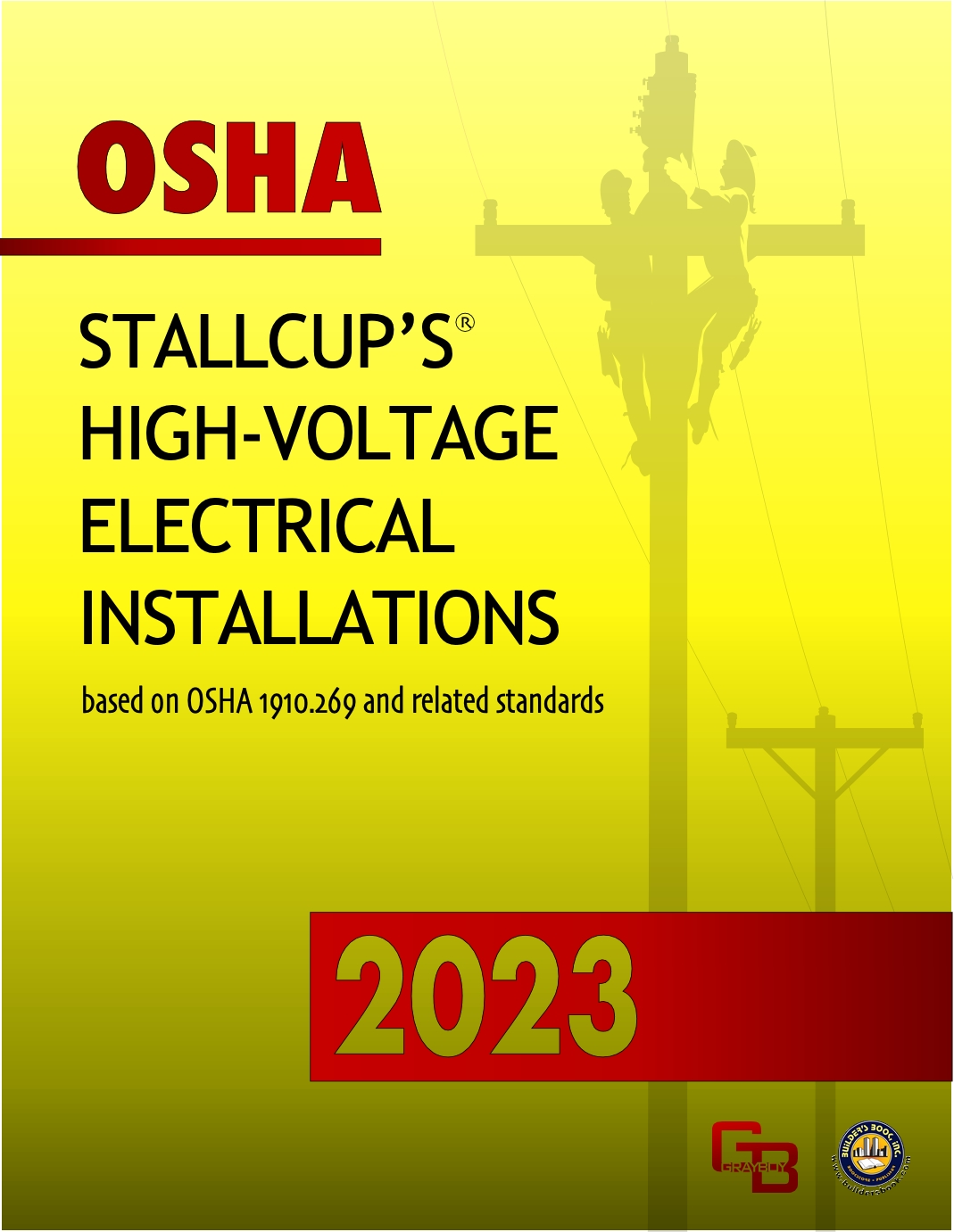
The rules and regulations in Part I of OSHA High-Voltage Electrical Regulations Simplified, addresses the work practices to be used during the operation and maintenance of electric power generation, transmission, and distribution installations.
A comprehensive approach is discussed pertaining to control of the hazards involved for the safety of personnel working near or on such hazards.
To protect personnel from the unique hazards encountered while working on high-voltage systems and associated equipment, the appropriate electrical protective equipment is recommended to ensure such protection.
The rules and regulations outlined (when applied) will significantly reduce the number of fatalities and injuries involving electrical contact, flash burns, and thermal burns as well as other accidents which otherwise would be uncontrolled.
Employer and employees must learn the requirements of Part I which contains Subpart R of OSHA 1910.269. They must implement such rules to provide safety when performing maintenance on high-voltage electrical installations.
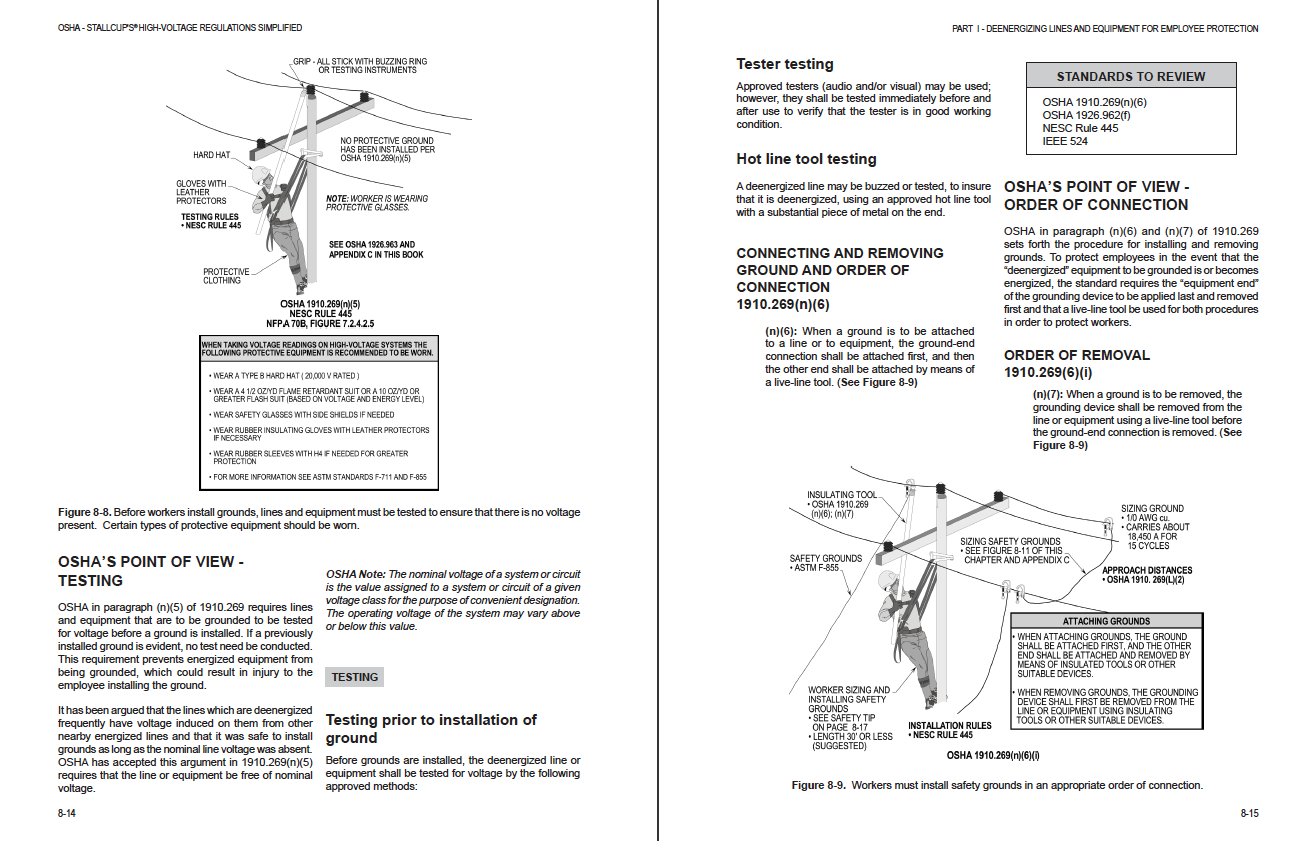
Part II covers the grounding of lines and equipment to protect employees from injury should reenergization of the system occurs. Proper grounding provides protection against induced voltages and static charges on a line. These induced and static voltages can be high enough to endanger workers, either directly from electric shock or indirectly from involuntary reaction.
Grounding is a temporary protective measure which involves connecting the deenergized lines and equipment to earth through conductors. As long as the conductors remain deenergized, this maintains the lines and equipment at the same potential as the ground (earth). However, if voltage is impressed on a lines, the voltage on the grounded line rises to a value dependent upon the impressed voltage, the impedance between its source and the grounding point and the impedance of the grounding conductor, which provides a margin of protection for workers.
The grounding of high-voltage lines and equipment will provide additional safety for workers from electrical shock where such grounds are sized, selected and installed properly.
Table of Contents
Part One
MAINTENANCE WORK PRACTICES IN ACCORDANCE WITH OSHA
Chapter 1
ELECTRIC POWER GENERATION, TRANSMISSION, AND DISTRIBUTION
Chapter 2
MEDICAL SERVICES AND FIRST-AID
Chapter 3
HAZARDOUS ENERGY CONTROL (LOCKOUT/TAGOUT) PROCEDURES
Chapter 4
ENCLOSED SPACES
Chapter 5
PERSONAL PROTECTIVE EQUIPMENT
Chapter 6
HAND AND PORTABLE POWER TOOLS
Chapter 7
MATERIAL HANDLING AND STORAGE
Chapter 8
DEENERGIZING LINES AND EQUIPMENT FOR EMPLOYEE PROTECTION
Chapter 9
TESTING AND TEST FACILITIES
Chapter 10
MECHANICAL EQUIPMENT
Chapter 11
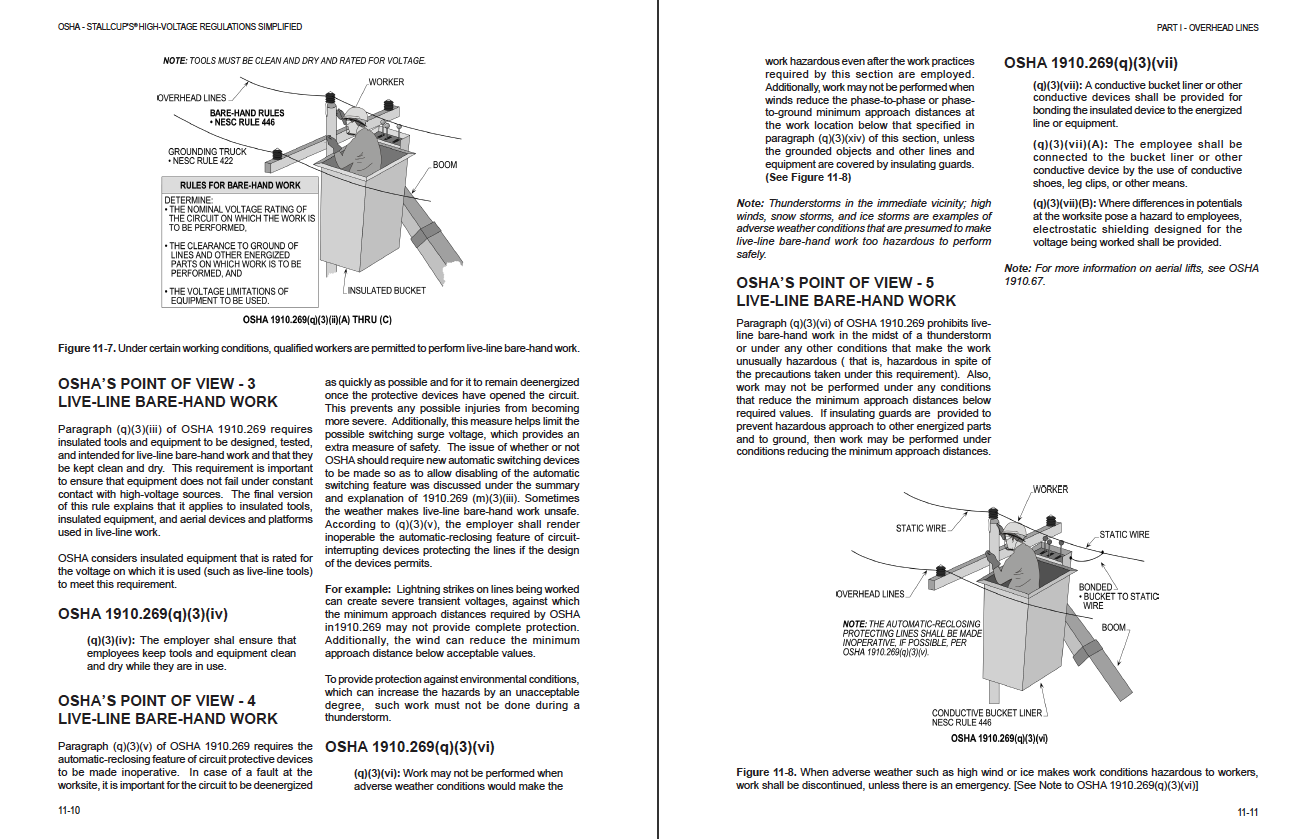
OVERHEAD LINES
Chapter 12
LINE-CLEARANCE TREE-TRIMMING OPERATIONS
Chapter 13
COMMUNICATION FACILITIES
Chapter 14
UNDERGROUND ELECTRICALINSTALLATIONS
Chapter 15
SUBSTATIONS
Chapter 16
POWER GENERATION
Chapter 17
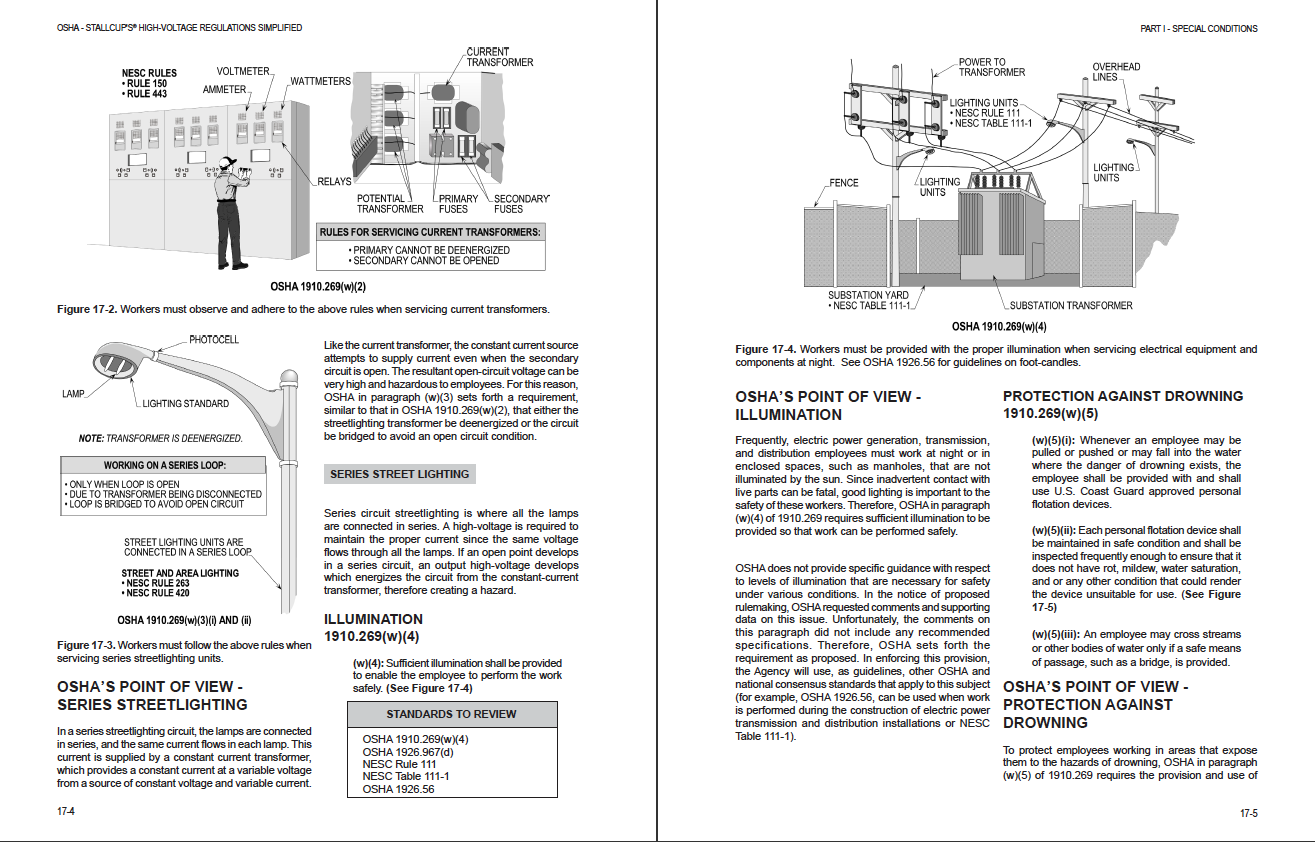
SPECIAL CONDITIONS
Chapter 18
DEFINITIONS
Part Two
GROUNDING FOR SAFETY
Chapter 19
GROUDING GENERATORS
Chapter 20
CONNECTING AND GROUNDING TRANSFORMERS
Chapter 21
GROUNDING FOR PROTECTION OF EMPLOYEES
Chapter 22
Lightning Protection For Overhead Lines And Pole
Number of Pages: 334
The rules and regulations in Part I of OSHA High-Voltage Electrical Regulations Simplified, addresses the work practices to be used during the operation and maintenance of electric power generation, transmission, and distribution installations.
A comprehensive approach is discussed pertaining to control of the hazards involved for the safety of personnel working near or on such hazards.
To protect personnel from the unique hazards encountered while working on high-voltage systems and associated equipment, the appropriate electrical protective equipment is recommended to ensure such protection.
The rules and regulations outlined (when applied) will significantly reduce the number of fatalities and injuries involving electrical contact, flash burns, and thermal burns as well as other accidents which otherwise would be uncontrolled.
Employer and employees must learn the requirements of Part I which contains Subpart R of OSHA 1910.269. They must implement such rules to provide safety when performing maintenance on high-voltage electrical installations.
Part II covers the grounding of lines and equipment to protect employees from injury should reenergization of the system occurs. Proper grounding provides protection against induced voltages and static charges on a line. These induced and static voltages can be high enough to endanger workers, either directly from electric shock or indirectly from involuntary reaction.
Grounding is a temporary protective measure which involves connecting the deenergized lines and equipment to earth through conductors. As long as the conductors remain deenergized, this maintains the lines and equipment at the same potential as the ground (earth). However, if voltage is impressed on a lines, the voltage on the grounded line rises to a value dependent upon the impressed voltage, the impedance between its source and the grounding point and the impedance of the grounding conductor, which provides a margin of protection for workers.
The grounding of high-voltage lines and equipment will provide additional safety for workers from electrical shock where such grounds are sized, selected and installed properly.
Table of Contents
Part One
MAINTENANCE WORK PRACTICES IN ACCORDANCE WITH OSHA
Chapter 1
ELECTRIC POWER GENERATION, TRANSMISSION, AND DISTRIBUTION
Chapter 2
MEDICAL SERVICES AND FIRST-AID
Chapter 3
HAZARDOUS ENERGY CONTROL (LOCKOUT/TAGOUT) PROCEDURES
Chapter 4
ENCLOSED SPACES
Chapter 5
PERSONAL PROTECTIVE EQUIPMENT
Chapter 6
HAND AND PORTABLE POWER TOOLS
Chapter 7
MATERIAL HANDLING AND STORAGE
Chapter 8
DEENERGIZING LINES AND EQUIPMENT FOR EMPLOYEE PROTECTION
Chapter 9
TESTING AND TEST FACILITIES
Chapter 10
MECHANICAL EQUIPMENT
Chapter 11
OVERHEAD LINES
Chapter 12
LINE-CLEARANCE TREE-TRIMMING OPERATIONS
Chapter 13
COMMUNICATION FACILITIES
Chapter 14
UNDERGROUND ELECTRICALINSTALLATIONS
Chapter 15
SUBSTATIONS
Chapter 16
POWER GENERATION
Chapter 17
SPECIAL CONDITIONS
Chapter 18
DEFINITIONS
Part Two
GROUNDING FOR SAFETY
Chapter 19
GROUDING GENERATORS
Chapter 20
CONNECTING AND GROUNDING TRANSFORMERS
Chapter 21
GROUNDING FOR PROTECTION OF EMPLOYEES
Chapter 22
Lightning Protection For Overhead Lines And Pole